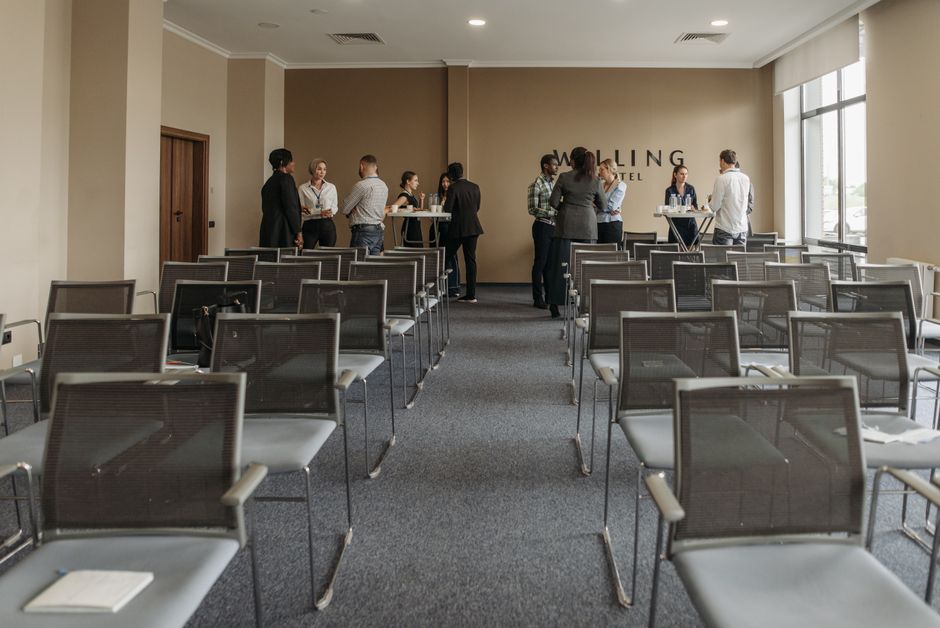
Event planners operate in one of the most unforgiving business environments imaginable. They work with fixed deadlines, demanding clients, thin margins, dozens of vendors, and virtually zero room for error. A wedding, a corporate conference, or a product launch happens once. There is no version two. The day either goes well or it doesn’t, and the entire business reputation rides on the outcome.
That pressure cooker forces event planners to develop systems, disciplines, and client management practices that most small business owners in other industries never bother to build, because they think they don’t need to. They do. Here is what the event planning industry has figured out that applies directly to whatever business you are running right now.
Deadlines Are Not Suggestions; They Are Architecture
In event planning, the deadline is not a goal. It is a structural constraint built into the product itself. The event happens at a specific time, and every piece of logistics, every vendor contract, every seating chart, and every AV setup must align to that moment. There is no room to say “we’ll get to it next week.”
Most small business owners treat deadlines as approximate. They float. They negotiate. They push back when things get busy. And every time that happens, a little bit of client trust erodes and a little bit of internal discipline decays.
The discipline to treat deadlines as architecture, not aspiration, is one of the simplest ways to differentiate your business. When you say you will deliver something by Thursday, deliver it Thursday. Not Friday. Not “end of week.” Thursday. The businesses that do this consistently build a reputation that becomes one of their most valuable assets, because most of their competitors don’t.
The Contingency Budget Is Not Optional
Experienced event planners never build a budget without a contingency line. Usually 10 to 15 percent of total costs is held in reserve for the things that go wrong: the caterer runs short, the AV equipment fails, the outdoor venue needs a tent because the weather turned, the florist doubles their price at the last minute.
Most small business owners budget for success. They project revenue at the top of their expected range and expenses at the bottom. Then when reality arrives, which it always does, they scramble.
A contingency budget is not pessimism. It is operational intelligence. It means you have already decided how much friction you are willing to absorb before the plan breaks down. That clarity alone changes how you make decisions under pressure. When the unexpected cost appears, you are not panicking. You are executing the plan.
Client Expectations Are Managed Before the Project Starts, Not After Problems Appear
The most common source of conflict in event planning is not a vendor failure or a logistics breakdown. It is a misalignment between what the client pictured and what was actually agreed upon. The client had a vision. The planner had a scope. Somewhere between the signed contract and the event day, those two things drifted apart.
Top event planners solve this by front-loading expectation management. They ask questions in the sales process that most business owners never ask. They document not just what is included but what is not included. They walk the client through every phase of what the experience will feel like, what decisions they will need to make, and what constitutes a change order versus standard service.
This approach maps directly onto almost every service business. The gap between what you promised and what the client expected is one of the most expensive gaps in your operation, as explored in depth in The Sales-to-Delivery Gap. The fix starts before the project does, not after the complaint lands.
Vendor Relationships Are a Strategic Asset
In the event industry, your vendor network determines what you can deliver as much as your own skills do. A planner with strong relationships with the right caterers, photographers, AV companies, and venues can solve problems that a planner without those relationships cannot. When a vendor cancels at 48 hours out, the planner with relationship capital makes three calls and has a replacement. The planner without it makes fifty calls and tells the client there is nothing they can do.
Most small business owners treat vendors as interchangeable. They shop on price. They switch when a better rate comes along. They never invest in the relationship beyond the transaction.
The smarter approach is to identify the five to ten vendor and supplier relationships that are most critical to your business, and then treat those relationships the way you treat your best clients. Communicate proactively. Pay on time. Refer business when you can. Send a thank-you when a project goes well. The return on that investment is not visible on your income statement. It shows up when something goes wrong and you need a favor, and it gets done.
Every Project Needs a Run-of-Show Document
Event planners build a document called the run-of-show: a minute-by-minute breakdown of every element of the event, who is responsible, and what happens if something goes off schedule. It is not glamorous. It is obsessive. And it is one of the main reasons that complex events with dozens of moving parts actually come together.
Most small businesses have the equivalent of this in their heads. The experienced employee who knows the order of operations. The owner who can tell you from memory how a project is supposed to run. That works until it doesn’t, which is usually the day that person is unavailable, the business takes on a bigger project than it has run before, or a new team member has to step in without context.
The discipline of writing down the process, step by step, who does what and in what order, is one of the highest-leverage investments any small business owner can make. The cold start problem in most businesses is not that the product is wrong; it is that the delivery process was never documented well enough to be handed off or repeated at scale.
The Post-Event Debrief Is Where the Real Value Lives
After every major event, serious event planners conduct a debrief: what went according to plan, what didn’t, what the client was happiest with, what they would change. This session usually happens within 48 hours of the event, while the details are still fresh. The notes feed directly into the next event’s planning process.
Most small businesses do a version of this informally, which means it happens inconsistently, the insights do not get captured in writing, and the same mistakes repeat six months later with a different client or project.
A structured post-project review does not need to be complicated. A one-page document with five questions answered honestly by the project team is enough. What did the client love? What caused friction? Where did we go over budget or over schedule? What would we do differently? What should we add to our process checklist? Done consistently, this practice compounds into one of the most powerful operational advantages a small business can develop.
Scope Creep Is a Budget Problem, Not Just a Headache
Event planners are professionally confronted with scope creep. The client who adds 40 guests after the headcount was finalized. The executive who wants a live band added to a dinner that was budgeted for a playlist. The corporate sponsor who asks for three more branded tables the week before the event.
The planners who stay profitable have a clear, documented change order process. The request is acknowledged, the additional cost is calculated, and the client signs off before any work begins. This is not adversarial. It is professional. It protects the planner’s margin and it sets clear expectations for the client.
Most service businesses handle scope creep by absorbing it. They say yes, do the extra work, and silently resent the client who asked. That resentment poisons the relationship eventually. The more professional and profitable approach is to treat every out-of-scope request the same way a good event planner does: acknowledge it, price it, confirm it. Locking in clear long-term agreements and defining scope precisely is central to building a sustainable revenue model, as detailed in The Contract Economy.
Pressure Is a System Test, Not a Character Test
When something goes wrong during an event, the experienced planner does not freeze or escalate to the client unless absolutely necessary. They have already rehearsed the decision tree. They know what the backup vendor is, where the extra supplies are stored, who calls the venue manager, and what the client gets told versus what the client doesn’t need to know.
That level of preparedness is not personality. It is system design. The planner built contingency protocols in advance so that when the pressure hit, the system handled it. The client experience was protected not because the planner was calm under fire but because the planner had thought through failure modes before they happened.
The SBA recommends that all small businesses develop formal contingency plans as part of their standard operations. According to the SBA’s emergency preparedness guide, businesses with documented response protocols recover faster and retain more clients after disruptions than those without them. The event industry figured this out decades ago. Most other small businesses are still relying on the owner to heroically improvise when things break down.
The Takeaway: Every Business Has a Show
The event planning industry is not special. Every business has a moment of delivery, a point where the client’s experience either matches or falls short of what was promised. The difference is that event planners cannot pretend otherwise. The deadline is visible. The failure is public. The expectation is documented.
When you apply event planning discipline to a plumbing business, a marketing agency, a retail store, or a professional services firm, you get a business that hits its commitments, manages surprises without drama, and builds the kind of client relationships that do not require a sales pitch to renew. That is what every small business owner is ultimately trying to build. The event industry just shows you what it looks like when you actually build it.
Want more frameworks, strategies, and straight talk about running a small business? Join the Hustler’s Library for free and get access to the full content archive built for business owners who are serious about growth.
Ready to Know Where You Stand?
The Business Journey dashboard maps your exact position across all 13 stages. Track your progress, unlock resources for each step, and build with a framework used by thousands of founders at Hustler's Library.

No credit card required · Takes 3 minutes · Personalized to your stage