Most business owners know they want to grow. What they rarely know is where they are right now, and why the strategies that worked last year are suddenly making things harder.
The truth is, small business growth is not a straight line. It moves in predictable stages, and each stage has its own rules, its own bottlenecks, and its own version of success. The owners who stall, burn out, or plateau are usually not lacking effort. They are applying Stage 2 thinking to a Stage 4 business.
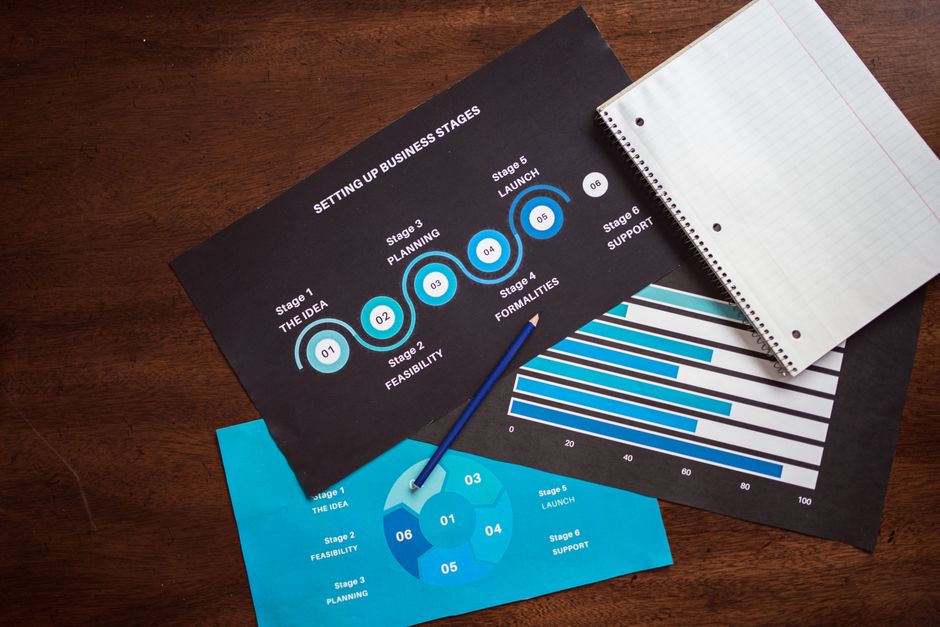
Here is a plain-English breakdown of the five stages every small business moves through, and what you need to prioritize at each one to keep moving forward.
Stage 1: Survival (Launch to First Consistent Revenue)
This is the grind stage. You are trying to answer one question: can this thing actually make money? Everything revolves around landing customers and generating enough cash to keep going.
At Stage 1, the owner is the business. You sell, you deliver, you handle problems, you do the books. The structure is minimal and the margins are thin. Most businesses that fail do so here, not because the idea was bad, but because the owner ran out of money or energy before finding product-market fit.
What to focus on at Stage 1:
- Land your first 10 paying customers. Do not optimize anything yet; just sell.
- Validate that people will pay real money for what you offer.
- Keep expenses as lean as possible. Runway is everything.
- Listen obsessively to early customers. Their words are your roadmap.
The biggest mistake at Stage 1 is over-investing in brand, systems, or staff before you have proven demand. Build proof before you build infrastructure.
Stage 2: Stability (Consistent Revenue, Repeatable Process)
You made it past survival. Customers are coming in, revenue is consistent enough to cover costs, and you have a basic sense of what works. Stage 2 is about turning your hustle into a repeatable operation.
This is where systems start to matter. If everything still lives in your head, you are a bottleneck. Every time you take a day off, things slow down or fall apart. The goal at Stage 2 is to document what works and make it repeatable without you personally executing every step.
What to focus on at Stage 2:
- Document your core processes: how you sell, deliver, and handle customer issues.
- Build a simple financial tracking routine. Know your net profit margin every month.
- Identify your best customers and figure out how to get more of them.
- Start delegating low-skill tasks so you can focus on high-leverage work.
The biggest mistake at Stage 2 is staying in founder-does-everything mode long after it stops working. Stability means building something that can function beyond your personal effort.
Stage 3: Growth (Deliberate Expansion)
Stage 3 is where the real work begins. Revenue is growing, you have a team (even if small), and now the challenge is managing that growth without things falling apart. This stage is exciting and exhausting in equal measure.
Hiring decisions become critical here. One bad hire at Stage 3 can set you back six months. Marketing needs to become a system, not a panic response. And the owner needs to shift from doing to managing to leading.
According to the SBA’s guidance on managing business finances, most businesses that stall at Stage 3 do so because they lack financial visibility and clear roles. When everyone is doing a little bit of everything, nothing gets done well.
What to focus on at Stage 3:
- Build a real team with defined roles, not just extra hands.
- Invest in your first real marketing engine: SEO, paid ads, or a referral system.
- Track the numbers that actually predict growth. If you do not have a dashboard, build one. Start with the 7 numbers every small business owner should track every week.
- Protect your margins aggressively. Growth without profitability is a treadmill.
The biggest mistake at Stage 3 is growing revenue while ignoring margin. Adding customers without adding profit is not growth. It is volume.
Stage 4: Expansion (Scaling What Works)
By Stage 4, you have a proven model. The challenge now is scaling it: adding locations, new markets, new product lines, or larger clients without breaking the culture and quality that got you here. This is where many owners discover that what made them successful at Stage 2 is now holding them back.
Leaders at Stage 4 spend most of their time on strategy, not execution. If you are still in the weeds on day-to-day operations at this stage, that is the problem to solve first.
What to focus on at Stage 4:
- Build a leadership team that can run the business without you in every room.
- Systematize your best-performing marketing and sales channels.
- Evaluate whether you are ready to scale before you do it. Read: 7 Signs Your Small Business Is Ready to Scale.
- Protect your culture. Rapid expansion without intentional culture management creates chaos.
The biggest mistake at Stage 4 is expanding too fast without the operational foundation to support it. Scaling a broken system just creates larger problems at higher speed.
Stage 5: Maturity (Optimizing and Renewing)
A mature business has stable revenue, a real team, and proven processes. Stage 5 is not an ending; it is a crossroads. You can optimize what exists, diversify into new offerings, prepare for acquisition or exit, or start a new growth cycle by innovating into adjacent markets.
The danger at Stage 5 is complacency. Businesses that stop growing eventually start declining. Markets shift, competitors improve, and what worked five years ago gets outpaced. Mature businesses need to actively invest in renewal, not just maintenance.
What to focus on at Stage 5:
- Identify your next growth lever: new market, new product, or acquisition.
- Invest in leadership development. Your next stage of growth will come from your team, not just from you.
- Review your exit or succession plan if relevant. Mature businesses have real enterprise value worth protecting.
- Watch your margins and efficiency ratios closely. In a mature business, profitability optimization is often the fastest path to more cash.
The biggest mistake at Stage 5 is treating maturity as a destination. It is a platform to launch the next chapter from.
How to Figure Out Which Stage You Are In
Most business owners instinctively know, but the clearest signal is the bottleneck you keep hitting. If your biggest problem is finding customers, you are probably at Stage 1 or 2. If your biggest problem is managing people and keeping quality consistent, you are likely at Stage 3. If your biggest problem is strategic direction and building for scale, you are at Stage 4 or 5.
Here is a simple diagnostic:
- Stage 1: No consistent revenue, still proving the concept.
- Stage 2: Revenue is consistent but still entirely dependent on you.
- Stage 3: You have a team and growing revenue but thin margins and constant fires.
- Stage 4: Revenue is scaling but operations are straining; you need better leaders.
- Stage 5: Stable, profitable, but wondering what comes next.
Why This Framework Matters More Than Any Tactic
The business internet is full of advice. Most of it is stage-agnostic, which means it is probably wrong for where you are right now. A branding strategy that works beautifully at Stage 4 is a distraction at Stage 1. A hiring framework that is perfect at Stage 3 is overkill at Stage 2.
Before you take any major action in your business, ask: is this appropriate for my current stage? The fastest path to growth is not always doing more. It is doing the right things for the stage you are actually in.
Know where you are. Know what the stage requires. Execute on that, and the next stage will come faster than you think.
Want frameworks like this delivered straight to your inbox every week? Join the Hustler’s Library for free and get practical business intelligence built for small business owners who are serious about growing.
Ready to Know Where You Stand?
The Business Journey dashboard maps your exact position across all 13 stages. Track your progress, unlock resources for each step, and build with a framework used by thousands of founders at Hustler's Library.

No credit card required · Takes 3 minutes · Personalized to your stage