If you have never exhibited at a trade show, you might think they are relics of a pre-digital era: overpriced booths, bad carpet, and lukewarm coffee. That perception is wrong, and it is costing business owners real money.
Trade shows remain one of the most concentrated opportunities you will ever get to meet buyers, partners, competitors, and industry contacts in a single room. Done right, a single trade show can unlock deals worth ten times the cost of attending. Done wrong, it is just an expensive vacation with a name badge.
This guide will walk you through how to choose the right shows, prepare so you actually get ROI, work the floor like a pro, and follow up in a way that turns conversations into closed business.
Why Trade Shows Still Work for Small Business Owners
The digital world is noisy. Your email lands in a crowded inbox. Your ad competes with a thousand others. Your LinkedIn message gets ignored. But face-to-face conversation still closes deals that no amount of digital outreach can replicate.
According to the Center for Exhibition Industry Research, 81 percent of trade show attendees have buying authority. That means most of the people walking your booth are not interns doing research: they are decision makers. And because they came specifically to evaluate solutions, they are far more receptive than someone you cold-called last Tuesday.
Trade shows also compress the timeline. What might take six months of nurturing via email and calls can happen in a 20-minute booth conversation. The sensory experience, the live demo, the handshake, all of it accelerates trust in a way that pixels simply cannot.
How to Choose the Right Trade Show
Not every trade show is worth your time. Before you book anything, ask yourself these questions:
Who attends?
Get the attendee demographics from the organizer. If your ideal customer is not in the room, no amount of great signage will make it worth the investment. Ask for specifics: job titles, company sizes, industries represented.
Is the show growing or shrinking?
Ask for attendance figures from the last three years. A declining show is a warning sign that the industry may be shifting away from in-person events, or that a competitor show has drawn away the best attendees.
What is the exhibitor-to-attendee ratio?
A show with 200 exhibitors and 500 attendees is not the same as one with 200 exhibitors and 5,000 attendees. More foot traffic per booth means more opportunities for you.
What do past exhibitors say?
Find two or three businesses that exhibited last year and ask them directly: was it worth it? Would you do it again? This 15-minute conversation can save you thousands of dollars.
For smaller budgets, consider attending as a visitor first before committing to a booth. Walk the floor, see who is there, and make connections. You can often accomplish more in one visit than you would from a booth, while spending a fraction of the cost.
Pre-Show Preparation: Where the ROI Actually Gets Built
Most small business owners wait until they arrive at the show to start building momentum. That is a mistake. The best results come from the work you do weeks before the doors open.
Set specific goals
Vague goals like “get some leads” will not hold you accountable. Set targets like: collect 50 qualified contacts, schedule 10 follow-up calls, close 2 deals on-site. When you know what success looks like, you make better decisions on the floor.
Request the attendee list in advance
Many shows provide pre-registered attendee lists to exhibitors. Use it. Identify your top 20 targets before you leave home. Send them a short, personalized note: “I will be at Booth 412. I would love to show you how we help businesses like yours with X. Could we find 15 minutes?” Some will say yes. All of them will remember your name when they see your booth.
Prepare your team
Every person in your booth needs to know your pitch, your qualifying questions, and your call to action. Run a rehearsal the day before. Tired, underprepared booth staff will cost you more than a bad location ever could. This connects directly to how you delegate and structure your team’s responsibilities before high-stakes events.
Design your booth for conversation, not decoration
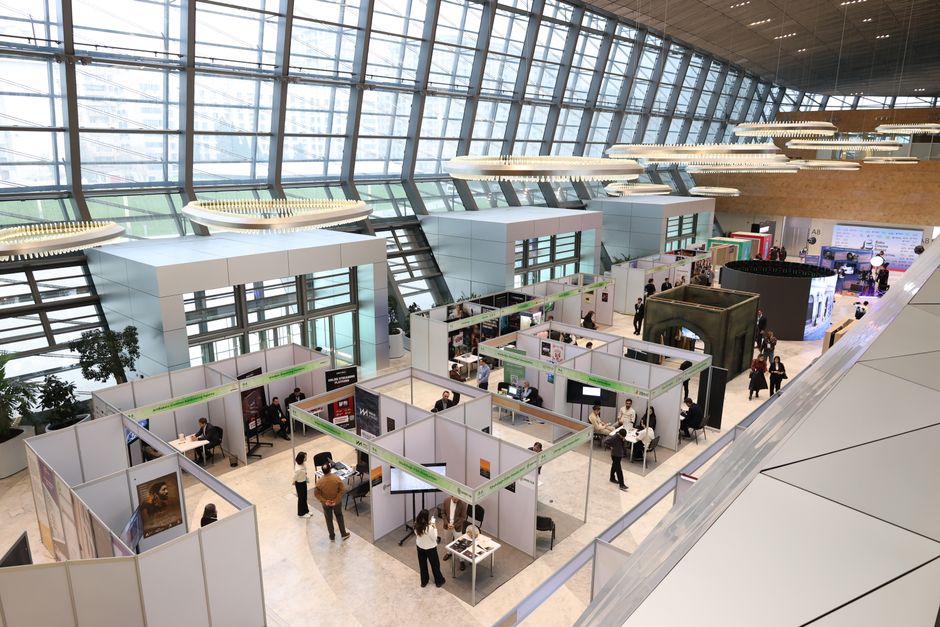
Your booth should invite people in, not impress them from a distance. Open layouts with no table barriers between you and the aisle work better than fortress-style setups. A single bold visual and one clear message outperform cluttered displays every time. If you are offering a demo, make it visible and active: people are drawn to movement and curiosity.
Working the Floor: How to Make Every Hour Count
The show floor is a controlled chaos environment. Here is how to navigate it effectively:
Lead with questions, not pitches
The fastest way to lose a prospect at a trade show is to launch into your full sales presentation the moment they stop. Instead, open with a qualifying question: “What brought you to the show today?” or “What is your biggest challenge with [industry problem]?” Listen first. Then connect what you heard to what you offer.
Qualify fast
You cannot spend 20 minutes with everyone who walks by. Within the first two minutes, you should know whether you are talking to a buyer, a researcher, a competitor, or someone killing time. Have a simple question that separates warm leads from time-wasters: “Are you currently looking to solve [problem]?” or “What does your buying timeline look like?”
Take notes on every lead
Scan or collect business cards and jot down one or two notes immediately after each conversation: what they care about, their timeline, any personal detail they shared. When you follow up three days later, those notes are the difference between a generic email and a message that makes them feel heard.
Do not neglect the floor as an attendee
Some of your best conversations will not happen at your booth. Walk the floor during off-peak hours. Attend the cocktail reception. Sit next to strangers at lunch. The informal moments are often where the real business gets done. This is the same principle behind building strategic partnerships that pay dividends long after the event ends.
The Follow-Up: Where Most People Fail
Industry research consistently shows that 80 percent of trade show leads are never followed up with. That is a stunning waste of money. The businesses that win at trade shows are not necessarily the ones with the best booths. They are the ones with the best follow-up systems.
Follow up within 48 hours
The longer you wait, the colder the lead gets. Send a brief, personalized email within two days. Reference something specific from your conversation. Attach any materials you promised. Include one clear next step: a call, a demo, a proposal request.
Segment your leads
Not all leads deserve the same follow-up. Sort them into tiers: hot (ready to buy), warm (interested, but longer timeline), and cold (worth nurturing but not urgent). Your hot leads get a phone call. Your warm leads get a more detailed email sequence. Your cold leads go into a long-term nurture flow.
Measure your results
Track how many leads you collected, how many converted to conversations, and how many turned into clients. Calculate your cost per lead and cost per acquisition. If those numbers work, double down next year. If they do not, figure out why before you write another check.
Controlling Your Costs
Trade shows can get expensive fast. Booth fees, travel, lodging, materials, shipping, and giveaways add up quickly. Here is how to stay disciplined:
- Book early for discounted booth rates; organizers often offer up to 20 percent off for early commitments
- Rent instead of buy for large booth elements you will only use once or twice
- Ship smart: carry-on what you can to avoid freight charges, which are notoriously steep at convention centers
- Skip the cheap giveaways: branded pens nobody wants do not drive sales; a useful tool or a compelling offer does
- Set a hard budget with a 15 percent buffer for surprises and stick to it
The SBA’s guide to managing business finances has solid frameworks for evaluating marketing spend and ROI that apply directly to trade show budgeting.
When You Are Ready to Turn Leads Into Clients
Trade shows get you in the room. What happens next is what closes the business. Make sure your follow-up process ties directly into your broader approach to winning new clients so the momentum from the show carries through to a signed contract.
That means having a clear proposal template ready, a calendar link for easy booking, and a short-term offer that creates urgency without feeling pushy. The follow-up phase is where your sales process either converts all that face time into revenue or lets it evaporate.
The Bottom Line
Trade shows are not for every business in every season. If you are pre-revenue with nothing to show, a trade show is probably not the right move yet. But if you have a product or service ready to sell and you are looking for a channel that puts you in front of decision makers fast, a well-chosen trade show with solid preparation can be one of the highest-ROI activities in your entire marketing mix.
The owners who walk away with nothing are the ones who showed up without a plan. The ones who walk away with full pipelines treated the show like a campaign with a before, during, and after. Be the second kind of owner.
Want more practical playbooks for growing your small business? Join thousands of entrepreneurs who get no-fluff strategies every week. Join free at Hustler’s Library.
Ready to Know Where You Stand?
The Business Journey dashboard maps your exact position across all 13 stages. Track your progress, unlock resources for each step, and build with a framework used by thousands of founders at Hustler's Library.

No credit card required · Takes 3 minutes · Personalized to your stage