In 2016, Paul Terpeluk and Steve King sat down and asked a question most founders would never dare put on a pitch deck: who is handling men’s below-the-waist grooming? The answer, as it turned out, was nobody. Not a single mainstream brand had claimed it. The shelves were full of beard oils and face washes, but the most obvious grooming territory for men had been left completely unaddressed. That silence was their business plan.
What followed was one of the most deliberate category creation stories in direct-to-consumer history. Manscaped did not stumble into a niche; they named it, built the language around it, and made themselves synonymous with it before anyone else could even spell the word. By 2021, the company was valued at over $1 billion. By the time they went public via SPAC merger, they had shipped to more than 30 countries. This is how they did it.
Step One: Name the Category Before Anyone Else Can
The most underrated move Manscaped made was not product-related. It was linguistic. They coined the word “manscaping” in a consumer context, attached it to a brand, and then backed that brand with enough marketing firepower to make the term stick culturally before any competitor could claim it.
This is a page taken directly from the playbooks of brands like Salesforce (“cloud CRM”), Red Bull (“energy drink”), and Spanx (“shapewear”). The companies that win long-term often win the naming battle first. When you name a category, you automatically become the default answer to “who does this best?” because you literally invented the question.
Terpeluk and King understood that male below-the-waist grooming existed as behavior. Men were already doing it. The market was not hypothetical. What was missing was a product designed specifically for it, a brand built around it, and vocabulary that made it socially acceptable to talk about. Manscaped supplied all three simultaneously. That is the full play: behavior exists, language is missing, brand fills the gap.
If you’re at the stage of figuring out your business structure before launching a brand like this, proper entity setup matters more than most founders realize. A tool like Northwest Registered Agent can get your LLC or corporation stood up cleanly, so you’re building on solid legal ground from day one.
Humor as a Competitive Moat
Once they had the category named, Manscaped had to figure out how to market something that most brands would treat as too awkward to advertise. Their answer: lean into the awkward, hard.
The brand built its entire creative identity around humor. Not the safe, sanitized humor of a Super Bowl car commercial. Real, slightly irreverent, self-aware humor that treated men like adults who could laugh at themselves. Their early ads featured slow-motion product shots, deadpan voiceovers, and jokes that walked the line between clever and crude without crossing it. They were funny enough to get shared, but polished enough to stay credible.
This was a calculated decision with a clear strategic outcome: humor lowers the social cost of engaging with the brand. If someone shares a Manscaped ad with their friends, they’re not awkwardly recommending a grooming product. They’re sharing something funny. The humor served as a social lubricant, reducing friction in the single most important part of DTC growth: word-of-mouth sharing.
The approach also gave them a built-in filter for their audience. People who were not their customer simply didn’t find it funny. People who were their customer found it instantly relatable. In a media environment where reaching the right 100,000 people matters infinitely more than reaching the wrong 10 million, that kind of natural filter is worth more than any targeting algorithm.
This mirrors what the best DTC founders understand intuitively: your brand voice is a filter, not just a style guide. If you want to go deeper on how the most effective entrepreneurs think about brand and positioning, the entrepreneur profiles at Hustler’s Library are worth your time.
Podcast and Influencer Distribution Before It Was Mainstream
Here is where Manscaped made a move that, in retrospect, looks like genius but at the time looked like a calculated bet on an unproven channel. Starting around 2017 and 2018, they began aggressively sponsoring podcasts. Not the mega-shows with corporate rates. The mid-tier comedy, sports, and pop-culture shows where hosts read ads live, in their own voice, to audiences that genuinely trusted them.
The fit was almost too obvious. Their target demographic: men ages 18-45 who consumed media independently, were comfortable with mature humor, and had disposable income. That demographic indexed extraordinarily high for podcast consumption. Manscaped flooded that channel before CPMs (cost per thousand listeners) had inflated, before every other DTC brand figured out the same playbook, and before podcast audiences became desensitized to ads.
The host-read ad format was critical. A host saying “I use this, it works, here’s a discount code” converts at multiples of a pre-produced ad read. Manscaped reportedly used hundreds of individual podcasts simultaneously, creating the illusion of being everywhere at once without paying the rates that “everywhere at once” would have cost on traditional media.
They then layered influencer marketing on top. Not A-list celebrity endorsements; micro and mid-tier influencers on Instagram and YouTube with highly engaged male audiences. The economics were more favorable, the authenticity was higher, and the content had a longer shelf life than a single magazine placement. This kind of scrappy, channel-first thinking shows up repeatedly in the brands that build sustainable DTC businesses before raising big rounds. It also reflects principles you’ll find in books like these recommended reads on marketing and brand building.
The Subscription Model: Building a Revenue Floor
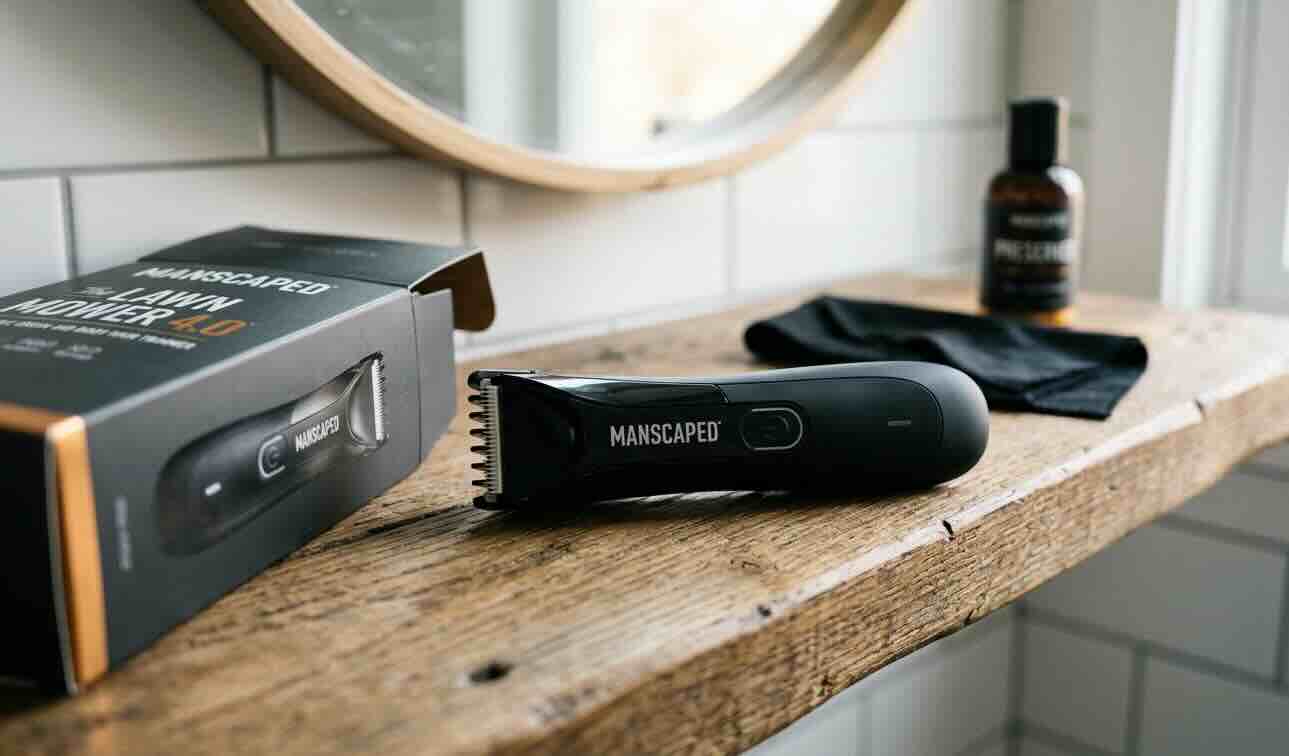
Manscaped’s hero product is The Lawn Mower, their waterproof electric trimmer. But a trimmer is a one-time purchase. Great for acquisition, terrible for lifetime value. To build a real business, they needed recurring revenue. Their answer was The Peak Hygiene Plan: a subscription that ships replacement blade heads, deodorant, ball spray (yes, that is an actual product category they invented), and other consumables on a regular cadence.
The subscription does several things simultaneously that make it worth studying. First, it converts the trimmer from a hardware purchase into an ecosystem entry point. You buy the trimmer once; the subscription is where Manscaped makes margin over time. Second, it solves a real friction point for customers. Replacement blades are boring to remember and easy to forget. A subscription removes that friction entirely. Third, it creates predictable revenue that investors value at a premium multiple compared to one-time transaction revenue.
This structure, often called a “razor and blades” model, is not new. But Manscaped executed it in a category where no comparable framework existed, which meant they could set the terms. Their subscription retention numbers have not been publicly disclosed in granular detail, but the brand’s overall growth trajectory and valuation implied strong cohort performance. You do not reach a $1 billion valuation in a grooming niche without subscription economics doing serious work.
For founders thinking about the operational side of running a subscription business, getting your back-office infrastructure right early is non-negotiable. Google Workspace handles the communication and collaboration layer cleanly as your team scales, without the complexity that slows early-stage companies down.
The SPAC Exit and What It Signaled
In 2021, Manscaped announced a merger with Bright Mountain Media through a SPAC (Special Purpose Acquisition Company), targeting a valuation of approximately $1 billion. The deal was later restructured, but the signal was clear: a brand that started by asking an embarrassing question had turned into a genuine enterprise-scale business.
CEO Paul Terpeluk was explicit in interviews about the international expansion ambition. The company had already expanded into the UK, Canada, Australia, and multiple European markets. The product line had grown from a single trimmer to a full grooming ecosystem including trimmers, body wash, toners, and accessories. Revenue for fiscal year 2021 was reported at approximately $275 million, with projections targeting $500 million within two years.
Those numbers do not happen by accident. They happen when a company correctly identifies an underserved behavior, builds the vocabulary around it, chooses distribution channels before they become expensive, and converts one-time buyers into recurring subscribers. Each of those decisions compounded on the others.
What Most Founders Miss About Category Creation
The Manscaped story gets told as a humor-and-marketing success, and the marketing was excellent. But the deeper lesson is about commitment to a category before anyone validates it externally.
Most founders want proof before they commit to a niche. They want to see a competitor succeeding before they try. Manscaped did the opposite. They planted a flag in territory that, by conventional wisdom, was either too niche or too awkward to build a company around. They did not wait for cultural permission. They created it.
This is the same move that made brands like Dollar Shave Club (men’s grooming commoditization), Warby Parker (direct-to-consumer eyewear), and Casper (DTC mattresses) into category leaders. Each of them looked at an existing behavior, identified a friction point the incumbents had ignored, and built a brand that solved it in a way that was too specific, too direct, or too disruptive for legacy players to copy quickly.
The window for this kind of move is always smaller than it looks in hindsight. Someone is always about to do what you’re thinking about doing. The advantage goes to whoever moves first and moves with enough conviction to define the terms.
For more on how sharp operators think about finding their lane and owning it, check out the Jordan Welch profile on Hustler’s Library. The underlying philosophy maps closely to what Manscaped executed at scale.
Steal This
1. Name the category first, then dominate it
If you can coin the term for what you do, you start every SEO, PR, and word-of-mouth conversation as the default answer. Manscaped did not just launch a product; they named a behavior. That naming advantage compounded for years.
2. Use humor to lower the social cost of sharing
If your product operates in a sensitive or awkward category, humor is not just a tone choice. It is a distribution mechanism. When someone shares your ad because it’s funny, they become an unpaid ambassador without the cringe of having to “recommend a grooming product.”
3. Find your channel before it’s crowded
Manscaped’s podcast strategy worked because they got in early, when CPMs were low and audiences were not yet saturated with DTC ads. The channel that works brilliantly for you today is the one your competitors have not priced up yet. Find it, own it, then move on before it commoditizes.
4. Turn the hero product into an ecosystem entry point
The Lawn Mower sold the trimmer. The subscription sold the relationship. Structure your product line so the first purchase is the door; the recurring purchase is the business. Hardware acquires, consumables retain.
Further Reading
For more on category creation strategy, Forbes Business Council and Harvard Business Review regularly publish case studies worth studying. If you want to understand the DTC playbook in depth, the DTC Newsletter is one of the best free resources in the space.
5. Commit before the market confirms you’re right
Manscaped did not wait for a competitor to prove the category existed. They built the proof themselves. Waiting for external validation in a nascent category almost always means someone else beats you to the naming and the positioning. Move first. Move with conviction. The window closes faster than you think.
Ready to Know Where You Stand?
The Business Journey dashboard maps your exact position across all 13 stages. Track your progress, unlock resources for each step, and build with a framework used by thousands of founders at Hustler's Library.

No credit card required · Takes 3 minutes · Personalized to your stage