For small business owners who want the freedom of private aviation without the operating costs of a jet, turboprop aircraft represent one of the smartest asset decisions in business travel. Three aircraft define the top of the turboprop market: the Daher TBM series, the Pilatus PC-12, and the Beechcraft King Air. Each is faster, more capable, and more cost-effective than most people realize. This guide compares all three so you can identify the best used turboprop for your specific business travel needs.
Turboprops fill the gap between piston aircraft and light jets, and for owners who travel regional routes under 1,000 miles, they often outperform jets on a cost-per-mile basis. Hustler’s Library’s guide on when private aviation makes financial sense provides the full framework for evaluating ownership decisions.
Turboprop vs Jet: The Business Case
Turboprops use propeller-driven propulsion powered by a turbine engine. They are slower than jets (typically 260 to 330 knots versus 400 to 450 knots for light jets), but they burn significantly less fuel. A TBM 960 burns approximately 60 gallons per hour. A comparable light jet burns 100 to 130 gallons per hour. Over 500 flight hours per year, that fuel cost difference can exceed $150,000 annually.
Turboprops also access shorter runways. The Pilatus PC-12 can operate from runways under 2,500 feet, opening up thousands of regional airports that jets cannot reach. For entrepreneurs who serve smaller markets, this capability is a genuine competitive advantage.
The NBAA’s turbine aircraft resources provide additional data on business turboprop operations, cost benchmarks, and pilot certification requirements.
Daher TBM Series (TBM 850, 900, 930, 940, 960)
The TBM is the fastest single-engine turboprop in production, and it is a genuine pilot’s airplane. Built in France by Daher (formerly SOCATA), the TBM seats four to five passengers and the pilot, with a pressurized cabin that cruises comfortably at FL310 (31,000 feet).
TBM Key Stats (TBM 940)
- Cruise speed: 330 knots
- Range: 1,730 nautical miles
- Fuel burn: Approximately 58 to 65 gallons per hour
- Used price range: $1.5M to $4.5M depending on year
- Cabin seats: 4 to 5 passengers
The TBM’s sweet spot is the solo operator or owner-pilot who travels with one to three colleagues and prioritizes speed and efficiency. The cabin is comfortable but not spacious. For owners who want to fly themselves, the TBM is the gold standard of single-pilot turboprops.
Pilatus PC-12
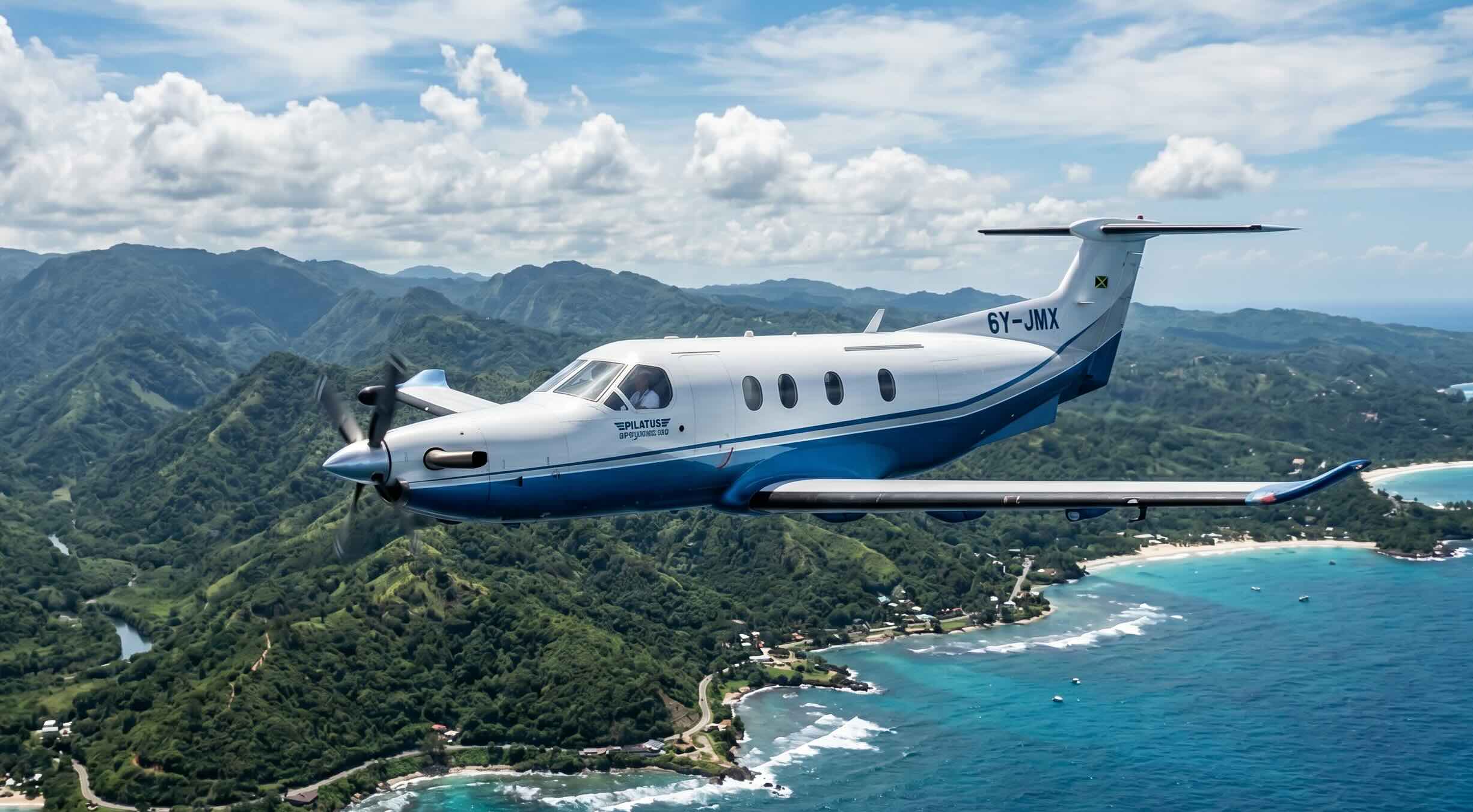
The Pilatus PC-12 is the best-selling single-engine turboprop in history. Built in Switzerland with a reputation for exceptional build quality, the PC-12 is the choice of medevac operators, regional airlines, cargo companies, and business owners who need maximum versatility in a single aircraft.
PC-12 NGX Key Stats
- Cruise speed: 290 knots
- Range: 1,803 nautical miles
- Fuel burn: Approximately 60 to 70 gallons per hour
- Used price range: $1.8M to $5M depending on year and configuration
- Cabin seats: Up to 9 passengers (or cargo configuration)
The PC-12’s defining advantage is its cavernous cabin and rear cargo door. You can configure it as a passenger aircraft on Monday and a cargo hauler on Tuesday. For owners whose business requires moving equipment, samples, or freight alongside personnel, no single-engine turboprop offers more flexibility. Pilatus’s service network is global, and the aircraft holds its value exceptionally well.
Beechcraft King Air
The King Air is the turboprop that defined business aviation. Beechcraft has been building King Airs since 1964, and the platform has accumulated more flight hours in business aviation than any other turboprop in history. The twin-engine configuration provides redundancy and peace of mind that single-engine turboprops cannot match.
King Air C90GTx / B200 Key Stats
- Cruise speed: 260 to 312 knots (varies by model)
- Range: 1,100 to 1,970 nautical miles (varies by model)
- Fuel burn: Approximately 80 to 110 gallons per hour (twin engines)
- Used price range: $800K to $4M+ depending on year and model
- Cabin seats: 6 to 9 passengers
The King Air’s twin-engine redundancy makes it the preferred choice for charter operators and business owners who regularly fly over water or mountainous terrain. The B200 is the most popular model in the fleet, and used examples at the $1.5 to $2.5 million range represent outstanding value for owners who need reliable, proven transportation for six to eight passengers.
The Verdict: Pilatus PC-12 Wins for Most Small Business Owners
The Pilatus PC-12 is the best used turboprop for most small business owners. Its combination of passenger capacity, cargo flexibility, short-field performance, long range, and exceptional resale value makes it the most versatile platform in the segment. The TBM wins if you fly solo or with one to two passengers and want maximum speed with minimum fuel burn. The King Air wins if twin-engine redundancy is a non-negotiable requirement or if you regularly carry six or more passengers.
All three qualify for Section 179 and bonus depreciation treatment as business-use aircraft. Work with an aviation CPA to structure your acquisition correctly. Also review how Hustler’s Library covers travel deduction systems in the guide to business travel expense management, which applies directly to aircraft ownership documentation.
Final Considerations Before You Buy
Used turboprop prices have risen sharply since 2020. Demand outpaced supply during the post-pandemic travel shift, and values have not fully corrected. Budget for a thorough pre-purchase inspection ($8,000 to $20,000), confirm engine program enrollment, and verify avionics compliance before closing. A good aircraft broker with turboprop specialization will save you more than their fee in avoided mistakes.
The business case for turboprop ownership is strongest when you fly 200 or more hours per year, your routes are primarily regional (under 900 miles), and your team regularly travels together. At that utilization level, the per-hour cost of ownership frequently beats charter pricing while delivering scheduling freedom that no charter provider can match.
Ready to build the business that supports assets like these? Join Hustler’s Library free and get access to the strategies, tools, and frameworks that help serious entrepreneurs scale smarter.
Ready to Know Where You Stand?
The Business Journey dashboard maps your exact position across all 13 stages. Track your progress, unlock resources for each step, and build with a framework used by thousands of founders at Hustler's Library.

No credit card required · Takes 3 minutes · Personalized to your stage