The Restaurant Business Is One of the Hardest in the World: and One of the Most Instructive
Restaurants fail at a staggering rate. Depending on which study you read, somewhere between 60 and 80 percent of new restaurants close within their first year. The margin for error is almost zero. A bad week, a slow season, a single scathing review, or one equipment breakdown can tip a profitable operation into the red.
And yet, despite all of that, the restaurant industry has produced some of the most sophisticated operational thinking in all of small business. Because when your margins are 3 to 9 percent, every decision matters. When your product has a shelf life measured in hours, inventory management isn’t optional. When your customer is sitting ten feet away making a real-time judgment about your entire operation, customer experience becomes your most important asset.
The result is a set of operational disciplines, financial habits, and customer experience principles that most businesses in other industries have never been forced to develop. If you run a small business, there’s more to learn from the restaurant industry than you might think.
Lesson 1: Know Your Cost Structure Cold
Successful restaurant operators track a metric called the prime cost: the combination of food cost and labor cost, expressed as a percentage of revenue. For a healthy full-service restaurant, prime cost typically needs to stay below 65 percent of revenue. For quick service, it’s often tighter.
What makes this discipline so valuable isn’t the specific number. It’s the habit of knowing, at all times, exactly what it costs to deliver your product or service, and watching that number like a hawk.
Most small business owners outside the restaurant world don’t do this. They know their revenue. They know their bottom line, more or less. But they don’t have a clear, real-time view of the core costs that drive profitability, and they find out too late when those costs start creeping up.
Apply this to your business: identify the two or three costs that most directly drive your profitability. Track them as a percentage of revenue every month. Set a threshold. When they drift above it, investigate immediately rather than waiting for the problem to show up in your annual review.
Lesson 2: Systems Are What Keep Quality Consistent
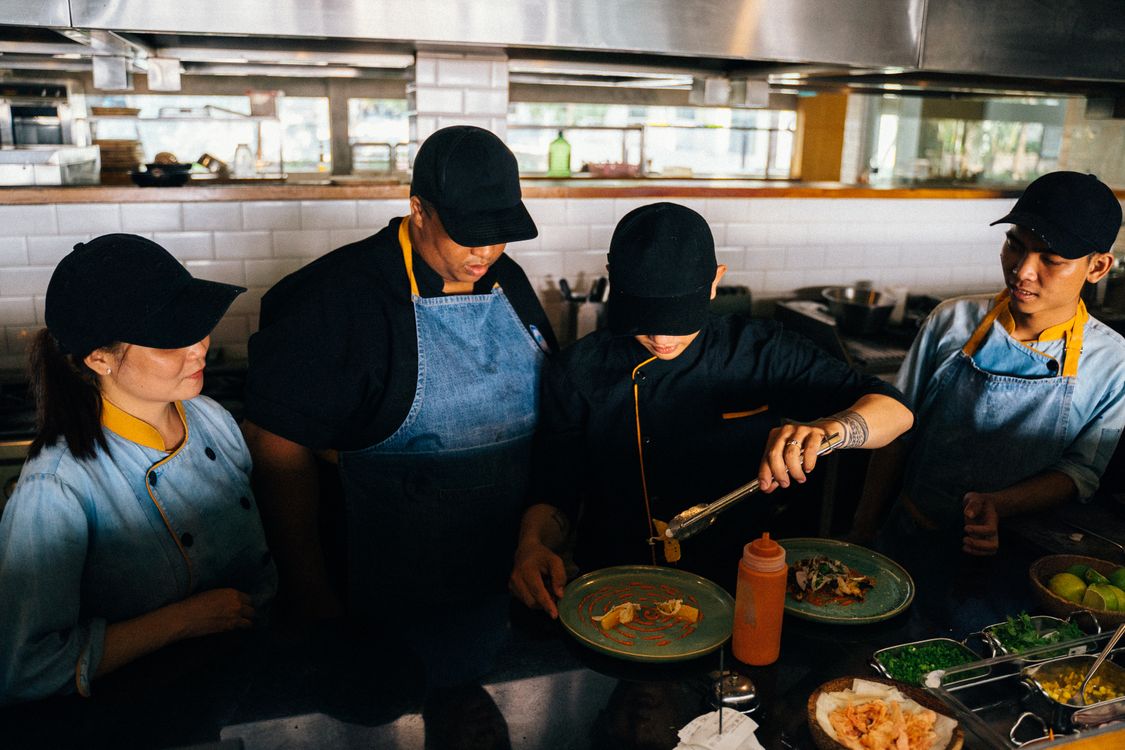
A great restaurant doesn’t rely on any one cook to be brilliant every night. It relies on recipes, prep lists, portioning guides, station setups, and line checks that are so detailed and consistent that the food comes out the same way whether the head chef is in or not.
This is what Gordon Ramsay means when he talks about consistency on his television shows. The goal isn’t perfection on your best night. It’s reliability on your worst one.
Many small business owners, especially service providers and solo operators, resist this kind of systematization. They believe their value comes from their personal touch, their intuition, their expertise. And some of that is true. But the businesses that scale, that can eventually run without the owner present, are the ones that extracted that expertise from people’s heads and put it into documented processes.
Start with your most repeated tasks. What does a perfect client onboarding look like? What’s the checklist for closing out a project? What are the exact steps your best employee takes when handling a complaint? Document those, and you’ve started building the operational backbone that lets your business grow beyond yourself.
Lesson 3: The Customer Experience Is the Product
In a restaurant, the food is necessary but not sufficient. The lighting, the noise level, the speed of service, how the server makes you feel when you walk in, whether your water glass gets refilled without you having to ask: all of it shapes the experience, and the experience is what people pay for, return for, and tell their friends about.
This is easy to forget in businesses where the product seems more tangible. You made a website. You installed the HVAC system. You filed the legal documents. But the customer’s experience of your business is always broader than the transaction itself. It includes how easy you were to reach, how professional your proposal looked, how quickly you responded when something went wrong, and what it felt like to work with you.
The best restaurant operators map every touchpoint a guest encounters, from the moment they see the restaurant online to the moment they walk out the door, and they work to make each one intentional. You can do the same. Walk through your customer’s experience from their perspective, before they even become a customer, and find the moments where the experience is weak, inconsistent, or beneath the quality of your actual work.
Lesson 4: Waste Is a Profit Problem, Not a Logistics Problem
Restaurants obsess over waste. Unused inventory is money in the trash. Over-portioning is margin erosion. A prep cook who cuts too thick is quietly affecting the bottom line. Great operators build systems around waste reduction not because it’s tidy, but because every dollar of waste is a dollar that should have been profit.
In most small businesses, waste shows up in different forms: unbilled hours, scope creep that isn’t charged for, underpriced services, time spent on tasks that should be automated or delegated, and proposals written for prospects that were never going to buy. These costs are just as real as spoiled produce, but they’re less visible and easier to ignore.
Build the habit of looking for waste in your business the same way a good chef looks for it in a kitchen. What are you producing, preparing, or spending time on that doesn’t result in revenue or a better customer outcome? That’s waste. Eliminating it doesn’t require cutting corners; it requires being intentional about where your resources actually go.
Lesson 5: Your Slowest Hours Are a Strategic Asset
Restaurants deal with the problem of uneven demand constantly. Lunch is slower than dinner. Tuesday is slower than Saturday. January is slower than December. The bad answer is to staff up for peak demand and watch payroll destroy margins during slow periods. The smart answer is to use slow periods strategically.
That’s why you see happy hour specials, prix fixe lunch menus, early bird deals, and private event offerings. Restaurants that thrive don’t just react to slow periods; they engineer demand during them.
Apply this to your business. What are your slow periods? What do you do with them? The instinct is to push harder on sales during slow seasons, but there’s often more leverage in using slow periods to prepare: building systems, training your team, creating content, developing new service offerings, or strengthening relationships with existing clients. The businesses that are always ready for the next peak are the ones that did the work in the valley.
Lesson 6: Staff Culture Is a Business Variable, Not an HR Issue
In a restaurant, a toxic kitchen culture doesn’t stay in the kitchen. It shows up in the dining room in the way servers interact with guests, in the food that comes out when morale is low, in the turnover that forces you to constantly train new people instead of building a team with accumulated knowledge and skill.
The best restaurant operators understand that culture isn’t a soft concept. It’s an operational variable that directly affects quality, consistency, and profit. They build it deliberately through how they run pre-shift meetings, how they handle mistakes, how they recognize great work, and how they treat the people doing the hardest jobs.
This is equally true for small businesses outside the restaurant industry. If your team is disengaged, the customer feels it. If turnover is high, you’re paying a constant training tax. If people are afraid to tell you when something is wrong, problems compound before you know they exist. Culture is not a luxury you’ll address once you’re big enough. It’s a daily operating choice with financial consequences.
Lesson 7: Feedback Is Information, Not Criticism
A restaurant that ignores online reviews, dismisses customer complaints, and doesn’t read comment cards is a restaurant in decline. The guests who bother to give feedback are giving you free market research. The ones who don’t give feedback and never come back are the expensive ones.
Restaurants that last develop systems for collecting and acting on customer feedback, not because they’re masochists who enjoy criticism, but because they understand that the gap between what they think they’re delivering and what the customer actually experiences is where businesses fail.
Many small business owners avoid formal feedback collection because they’re afraid of what they’ll hear. That fear is expensive. Build a simple, regular system for gathering input from your customers: a follow-up email, a brief survey, a periodic check-in call for long-term clients. What you learn will almost always be more useful than what you assumed.
For a deeper look at how to build this kind of listening system, our guide on using voice of the customer research to build a better small business walks through the process in detail. And if you want to understand how to act on what you hear, the guide on using feedback loops to build a self-improving small business is the natural next step.
One More Thing the Restaurant Industry Gets Right
Great restaurant operators are students of their craft. They eat at other restaurants. They read about techniques they don’t use yet. They study operators in other cities who are doing things differently. They treat running a restaurant as a discipline that requires ongoing learning, not a skill they mastered and can now coast on.
The small businesses that last share this quality. The owner is always a student: reading, asking questions, looking at how other industries solve problems they’re facing, and being genuinely curious about how to do the work better.
The restaurant industry has had to get brilliant about operations, margins, culture, and customer experience because it had no choice. You have the luxury of learning those lessons without having to survive on a 5 percent margin first.
Take them seriously. The principles are the same. Only the menu is different.
For more plain-English guides to running a stronger, smarter business, join Hustler’s Library for free. It’s the resource library serious entrepreneurs actually use.
Ready to Know Where You Stand?
The Business Journey dashboard maps your exact position across all 13 stages. Track your progress, unlock resources for each step, and build with a framework used by thousands of founders at Hustler's Library.

No credit card required · Takes 3 minutes · Personalized to your stage