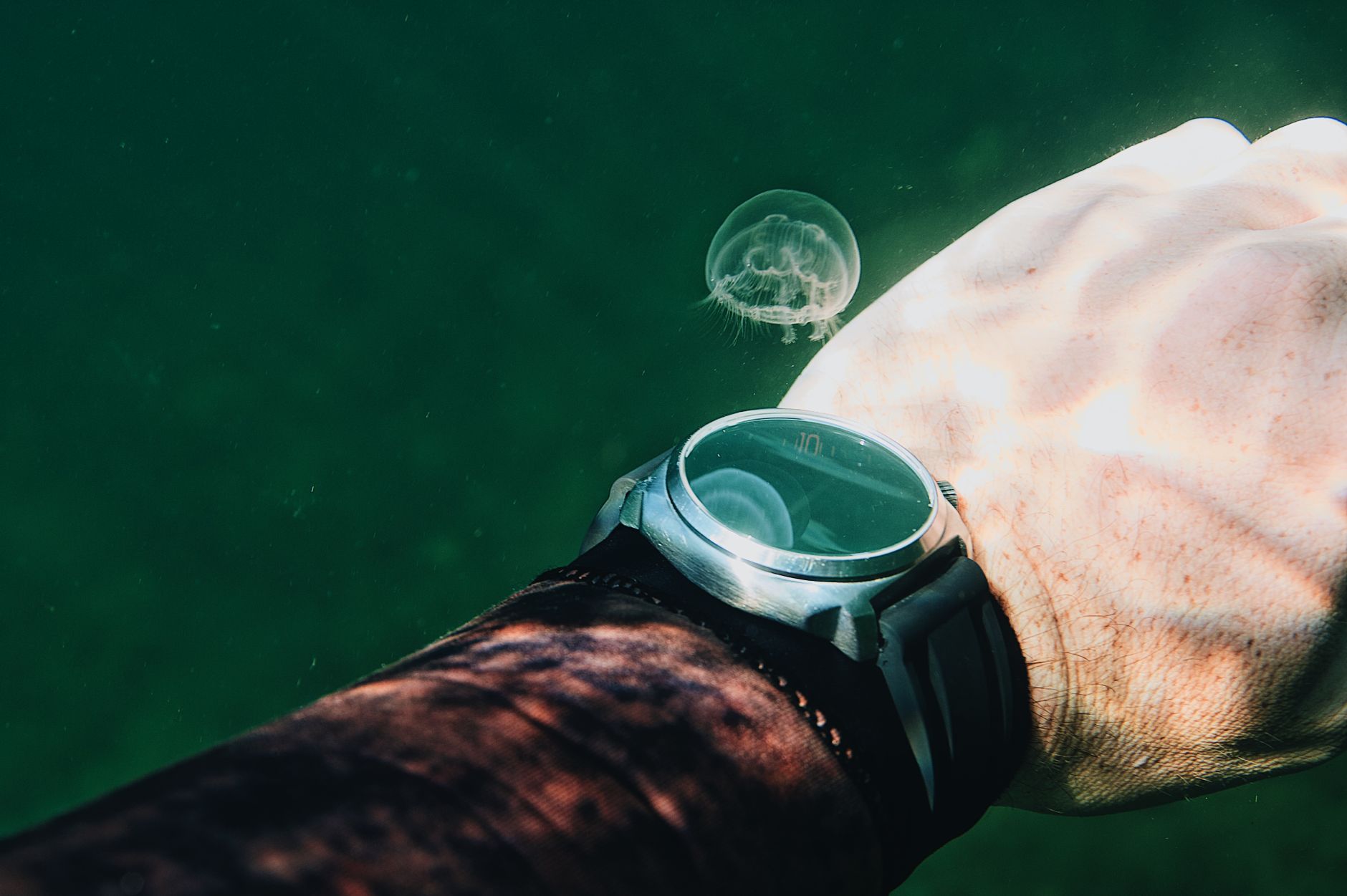
You close a deal on Friday afternoon. By Saturday morning, you’re 60 feet underwater in the Caribbean. Sunday night, you’re on a red-eye back to the boardroom. If that sounds like your life, you need a watch that can keep up.
A dive watch is the most versatile piece of gear an entrepreneur can wear on their wrist. It’s rugged enough for the water, handsome enough for a client dinner, and tough enough to take the daily abuse of a busy life without flinching. But the category has exploded, and sorting through the options is a full-time job.
This guide cuts through the noise. We looked at movement quality, water resistance, lume performance, bracelet comfort, and whether the watch actually looks good out of the water. These are automatics only. No quartz, no smartwatches. Real, mechanical dive watches built to last decades.
What Makes a Dive Watch Worth Wearing Every Day
Plenty of watches call themselves dive watches. Most are fashion pieces with a rotating bezel tacked on for aesthetics. A real dive watch meets ISO 6425 standards, which means tested water resistance to at least 100 meters, a unidirectional rotating bezel, legible dial in darkness, and a screw-down crown. That’s your baseline.
Beyond the specs, a great daily dive watch should be comfortable on a 20mm bracelet or rubber strap, look clean enough for a meeting, and wear thin enough that it doesn’t catch on a sleeve. Most importantly, it should run reliably without you thinking about it.
Budget Tier: Under $350
Seiko SKX Series (Reissue) and SPB Divers
Seiko built the modern dive watch category. The original SKX007 ran from 1996 to 2019 and became the reference point for every affordable diver that came after it. When Seiko discontinued it, the watch community panicked. The SPB317 and SPB319 Prospex divers are the spiritual successors, and they’re worth every dollar of their $350-$450 range.
The movement is Seiko’s NH35/4R35, which hacks and hand-winds. Water resistance is 200 meters. The bezel is crisp, the lume is legitimately excellent, and the bracelet is wearable right out of the box. If you want to stay under $300, the Seiko SRPH11 in the Prospex “Turtle” line runs around $265 and punches far above its price.
Trade-off: The 4R35 movement is accurate to around -15/+25 seconds per day. It’s not a precision instrument. But it’s been proven over millions of units and will likely outlive you if you service it every 5-7 years.
Orient Mako III
Orient is the overlooked Japanese brand that deserves more attention. The Mako III runs around $165-$200 and includes a 200-meter water-resistant case, a hand-winding and hacking in-house automatic, and a comfort-first bracelet. The movement actually specs better than Seiko’s budget lineup. If you want maximum value in an automatic diver, Orient is your starting point.
Trade-off: Orient’s brand recognition is essentially zero outside the watch hobby. You will not get social cred from this watch. That’s fine. The movement doesn’t care.
For a deeper comparison of these two brands, read our full Seiko vs Orient vs Tissot entry-level breakdown.
Mid-Range: $400-$1,200
Tissot Seastar 1000
Tissot’s Seastar 1000 Automatic sits around $525 and is arguably the best value in the mid-range diver category. It’s powered by an ETA 2824-2 movement, which is the Swiss standard for reliable daily wear automatics. Water resistance is 300 meters. The case is 43mm with short lugs, so it wears smaller than it sounds.
Where the Seastar wins is at the meeting table. The bracelet is genuinely polished. The proportions work under a shirt cuff. You can wear this to a pitch deck in the morning and go snorkeling after lunch, and nobody asks any questions.
Trade-off: The ETA movement in the Tissot will run $150-$200 to service at a watchmaker. Not terrible, but budget for it around the 5-year mark.
Oris Aquis Date
Oris makes what many consider the best automatic diver under $1,500. The Aquis Date starts around $1,050 and uses Oris’s Calibre 400, which is their in-house movement with a 5-day power reserve and 10-year service interval. That last part matters. If you’re busy, the idea of not needing a watchmaker for a decade is genuinely appealing.
The Aquis wears beautifully. It’s available in 41.5mm and 39.5mm. The rubber strap version wears lighter. And unlike most mid-range divers, the Oris looks like it belongs in a business casual wardrobe without any apology.
Trade-off: At $1,050, you’re getting close to premium territory without the full brand cachet. Watch people know Oris is legitimate. Civilians may not. If external recognition matters to you, read on.
Premium: $1,500-$3,500
Tudor Black Bay 58
The Tudor Black Bay 58 at around $3,825 is the dive watch people recommend when asked for the best overall automatic diver you can buy without going full Rolex territory. Tudor is Rolex’s sister brand. They share manufacturing and sourcing infrastructure. The Black Bay 58 is named for the 1958 Big Crown diver, and it’s the 36mm version that wears like nothing on the wrist.
Wait. This is important framing: $3,800 is not Submariner money ($11,000+). It’s not AP Royal Oak territory ($25,000+). At $3,825, the BB58 is respected by everyone who knows watches, and that includes the people in the room who actually know watches. It is a legitimate tool watch with a manufacture movement, a five-year warranty, and the kind of finishing that costs real money to produce.
Our full Christopher Ward vs TAG Heuer vs Ball comparison covers this price range in more detail if you want to explore alternatives before committing.
Christopher Ward C60 Trident Pro
The Christopher Ward C60 Trident Pro 600 runs $700-$1,100 depending on configuration and is one of the most underrated value propositions in the dive watch market. It’s Swiss-made, uses a Sellita movement, and delivers 600-meter water resistance in a case that looks seriously good. CW sells direct, which cuts the retail markup.
Trade-off: The brand is not yet widely recognized outside the enthusiast world. If you’re wearing it for your own satisfaction, that’s fine. If you’re wearing it to signal success, there are stronger options.
Which One Should You Buy
Here’s the honest breakdown:
- Under $300, first serious diver: Orient Mako III or Seiko SRPH11 Turtle
- $400-$550, Swiss movement on a budget: Tissot Seastar 1000
- $1,000-$1,200, best value overall: Oris Aquis with Calibre 400
- $1,500+, maximum wrist credibility: Christopher Ward C60 Pro or TAG Heuer Aquaracer
- $3,500+, buy-it-for-life diver: Tudor Black Bay 58
The Orient and Seiko are entry points. They teach you what you like before you spend real money. If you already know you want a watch for life, go Oris or Tudor and be done with it.
Whatever you buy, put it on a rubber NATO or rubber strap for anything involving actual water. Bracelets do not enjoy saltwater. Your jeweler will thank you.
One More Thing
Don’t buy a dive watch because you think you’ll dive someday. Buy one because you want a rugged, honest, mechanical watch that can handle your life without complaint. The water resistance is a bonus. The lifestyle statement is incidental. The watch itself is the point.
For more on building out your entrepreneur gear setup, check our guide on best carry-on luggage for entrepreneurs and the full automatic watch buying guide for entrepreneurs.
Want more no-nonsense gear and business breakdowns? Join the Hustler’s Library community free here.
Ready to Know Where You Stand?
The Business Journey dashboard maps your exact position across all 13 stages. Track your progress, unlock resources for each step, and build with a framework used by thousands of founders at Hustler's Library.

No credit card required · Takes 3 minutes · Personalized to your stage