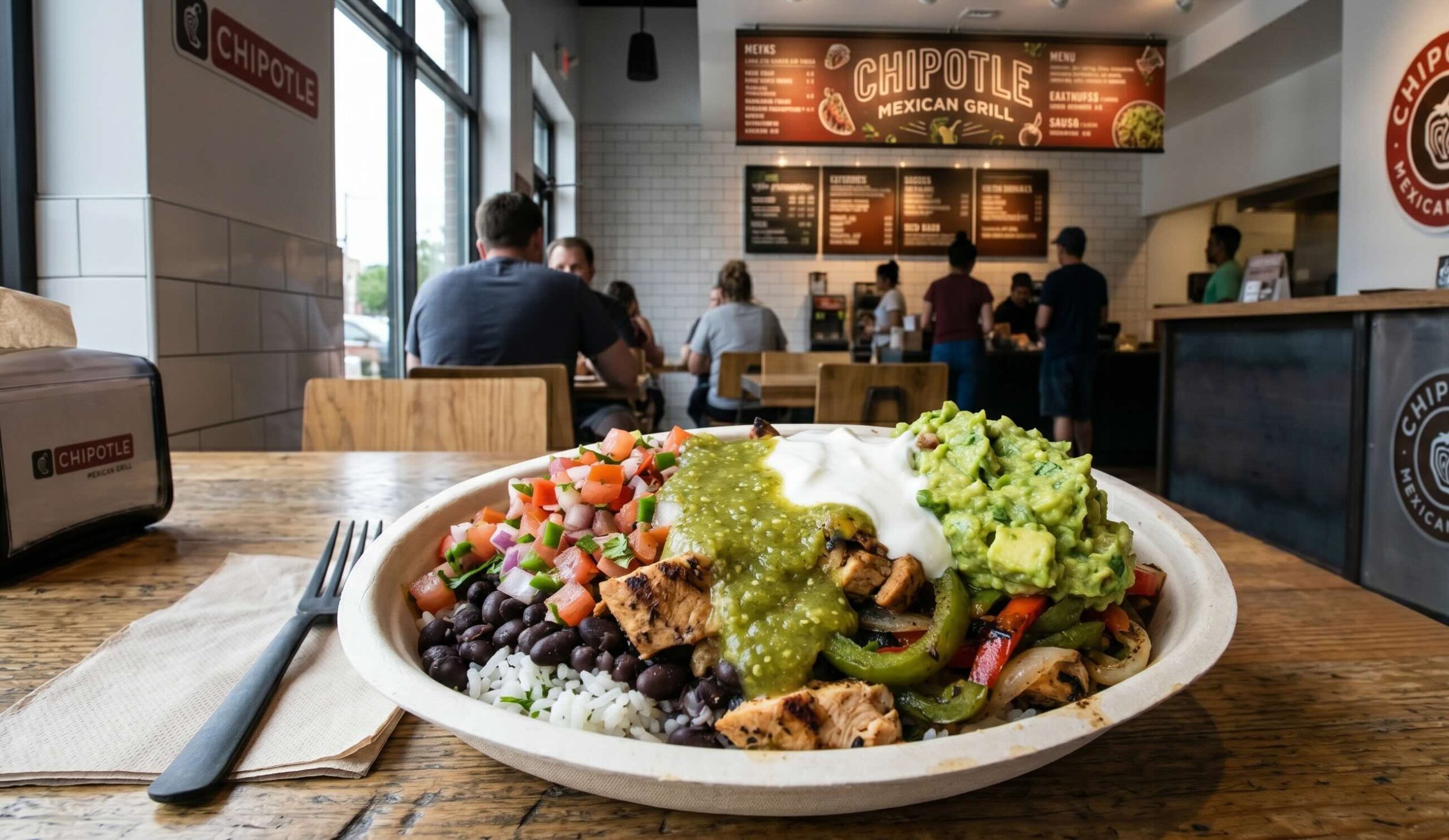
In the fall of 2015, Chipotle Mexican Grill was flying. Revenue was growing 20% annually. The stock was above $750. The brand had built one of the most loyal customer bases in fast casual dining by promising something simple: Food with Integrity. Real ingredients, responsibly sourced, prepared fresh in front of you.
Then people started getting sick.
Between July 2015 and February 2016, Chipotle was linked to multiple E. coli outbreaks across 11 states, norovirus outbreaks in California and Boston, and a Salmonella outbreak in Minnesota. Over 500 people fell ill. The brand that had staked its identity on food quality was now making national news for making people sick.
By early 2016, the stock had fallen nearly 50%. Same-store sales dropped 26% in the first quarter of 2016. The CDC was investigating. Congress was calling. And the question every investor, customer, and employee was asking was the same: can this brand survive this?
It did. And the way it came back is one of the more instructive crisis recovery stories in modern business.
What Actually Happened: The Crisis in Detail
The outbreaks weren’t a single event. They were a cascade, and that made them worse. Each new headline reopened the wound before the previous one had healed. The E. coli strain identified (O157:H7) was traced to produce in Chipotle’s supply chain, though the exact source was never conclusively identified publicly.
The norovirus outbreaks were a separate issue: sick employees handling food, which pointed to store-level operational failures rather than supply chain problems. Two different root causes, two different fixes required, one brand absorbing all of it simultaneously.
Chipotle’s initial response was, by most assessments, slow and defensive. That cost them. By the time they moved to proactive communication and temporary store closures for deep cleaning, the news cycle had already framed the story as a pattern rather than an incident.
The Rebuild: Three Pillars of the Recovery
1. Operational Overhaul
Chipotle hired a new food safety officer and brought in outside consultants to redesign food handling protocols from the ground up. They implemented high-resolution testing of produce and meat before it reached stores. Certain ingredients that had previously been prepped in-store were shifted to centralized kitchens where contamination controls were easier to enforce.
Blanching procedures for produce were added. Marinated meats moved to sous vide preparation. These weren’t cosmetic changes; they fundamentally altered how Chipotle’s supply chain operated. The tradeoff was some of the “fresh-cut” theater that customers associated with the brand, but leadership decided food safety had to come before brand aesthetics.
2. Radical Transparency
In early 2016, Chipotle launched a direct communications campaign that acknowledged the problem rather than minimizing it. CEO Steve Ells appeared in a video apology that ran as a national TV commercial. The company published detailed descriptions of its new food safety protocols. They offered free food to customers willing to come back.
The transparency play is counterintuitive. Every lawyer’s instinct is to say less, admit nothing, and limit liability. Chipotle did the opposite. The reasoning: the brand’s entire value proposition was built on trust and transparency about food sourcing. You cannot defend a “Food with Integrity” position while being opaque about a food safety crisis. The brand identity demanded radical honesty.
3. Doubling Down on the Core Brand Promise
Rather than pivoting away from “Food with Integrity” after the crisis exposed its vulnerabilities, Chipotle doubled down on it. They accelerated their commitments to responsibly sourced ingredients. They leaned harder into transparency about supply chain practices. The implicit message to customers was: we failed to live up to our own standard, and that standard is still worth fighting for.
This is important. A lot of companies in crisis mode abandon the thing that made them distinct because that thing is now associated with the failure. Chipotle bet that the brand’s identity was the asset worth saving, not the liability to discard.
By the Numbers
- Chipotle stock fell from approximately $758 to under $400 between August 2015 and February 2016: a drop of roughly 47%
- Same-store sales declined 26.1% in Q1 2016
- Over 500 people across multiple states were sickened in the 2015-2016 outbreaks
- Chipotle’s stock surpassed its pre-crisis high by 2019
- By 2023, Chipotle’s annual revenue exceeded $9.8 billion, up from $4.5 billion in 2015
- Chipotle’s market cap as of 2024 is approximately $80 billion
- Digital sales grew to over 35% of total revenue by 2023, a channel that barely existed pre-crisis
Key Takeaways
- Crisis identity alignment: Chipotle’s recovery worked because their response aligned with their brand identity. Transparency was the only credible path for a brand that had built itself on transparency.
- Slow initial response compounds damage: Chipotle’s delayed initial response let the news cycle establish a narrative before the company could shape it. Speed matters in the first 48-72 hours of a crisis.
- Don’t abandon your differentiation under pressure: The instinct to retreat from what makes you distinct during a crisis is usually wrong. What makes you distinct is what customers will return for.
- Operational fixes must be real, not PR: Customers and press can detect cosmetic responses. The supply chain and protocol changes Chipotle made were substantive and verifiable.
- Crisis creates forced innovation: Chipotle’s digital ordering and loyalty infrastructure was accelerated by the crisis. The company that emerged in 2019 was operationally stronger than the one that entered 2015.
The HL Crisis Recovery Framework
Based on Chipotle’s playbook and similar case studies, Hustler’s Library identifies four stages of successful reputational crisis recovery:
- Acknowledge fast, specifically. Vague statements buy time but cost trust. Name the problem precisely.
- Fix the root cause, not the symptom. PR moves without operational changes are transparent and temporary.
- Communicate the fix in detail. Specificity rebuilds confidence. “We hired a food safety officer and implemented these six protocols” is more credible than “we take this seriously.”
- Recommit to your core identity. Whatever made you valuable before the crisis is what customers need to see you fight for after it.
What Separates Companies That Come Back From Those That Don’t
The graveyard of reputational crises is full of brands that had recoverable situations and didn’t recover. The pattern of failure is usually consistent: denial or minimization in the early stages, cosmetic fixes that didn’t address root causes, and an abandonment of the brand identity that made the company worth saving in the first place.
Chipotle avoided all three. They acknowledged, fixed, and doubled down. The result was a company that came through the other side of a 50% stock drop to reach an $80 billion market cap less than a decade later.
If you’re building a business that will eventually face a crisis (and most will), the time to build your recovery capacity is before you need it. That means strong operational documentation, clear brand values, and communication systems that work under pressure. Tools like Google Workspace help keep teams coordinated when things move fast.
For related reading on how brand identity becomes a strategic asset, see our breakdown of how Lululemon built a $50B brand on identity. And for a case study in loyalty as a moat, the Costco membership model is worth your time.
Sources & Further Reading
- CDC investigation reports on Chipotle E. coli and norovirus outbreaks, 2015-2016 (cdc.gov)
- Chipotle Mexican Grill Annual Reports 2015-2020 (investor.chipotle.com)
- “How Chipotle Is Becoming a Stronger Company,” Fortune, 2017
- Fombrun, Charles and Van Riel, Cees. Fame and Fortune: How Successful Companies Build Winning Reputations (2004)
- “Chipotle’s Road to Recovery,” Harvard Business Review, 2018
Want more breakdowns like this? Join Hustler’s Library free and get access to our full case study vault.
Ready to Know Where You Stand?
The Business Journey dashboard maps your exact position across all 13 stages. Track your progress, unlock resources for each step, and build with a framework used by thousands of founders at Hustler's Library.

No credit card required · Takes 3 minutes · Personalized to your stage