In March 2012, a startup that had been operating for exactly one month released a video on YouTube. The video cost $4,500 to make. It featured the founder, Michael Dubin, walking through a warehouse, delivering a memorably blunt monologue about why buying razor blades at the drugstore was ridiculous and what he was going to do about it. The video ended with a declaration that their blades were excellent.
Within 48 hours, the video had been viewed 12,000 times. Then 100,000 times. Then a million times. Dollar Shave Club’s website crashed from the traffic. By the end of the week, the company had 12,000 new subscribers. By the end of the month, they had 100,000. Five years later, Unilever acquired Dollar Shave Club for $1 billion in cash.
Gillette, which had spent decades and hundreds of millions of dollars building its brand, had been disrupted by a startup with a $4,500 video, a subscription model, and a founder who understood something Gillette had forgotten: personality is a competitive advantage.
The Before: A Category Dominated by Inertia and Overengineering
By 2012, Gillette owned approximately 70% of the U.S. razor market. Their business model was the classic razor-and-blade structure: sell the handle cheaply, make the margin on replacement cartridges. The cartridges were expensive, packaged in elaborate theft-prevention cases, locked behind glass in many stores, and engineered with ever-increasing blade counts that most consumers neither needed nor wanted.
The customer frustration was real and widespread. Razors cost too much. The buying experience was annoying. The product was over-engineered for most use cases. And the branding was relentlessly macho in a way that felt dated.
The market was ready for disruption. The question was whether a startup could actually execute against a company with Gillette’s resources, distribution, and brand recognition.
The Edge: Personality as a Moat
Dollar Shave Club’s edge was not price alone. Cheaper generic razors already existed. Their edge was a brand personality so distinct, so entertaining, and so culturally specific that it made buying razors feel like an act of identity. You were not buying cheap razors. You were buying into a sensibility: the sensibility of a person who sees through corporate nonsense and values their time and money over marketing theater.
Michael Dubin understood that in the attention economy, being interesting is a distribution channel. The video did not explain the product’s features. It did not compare blade quality. It created a feeling: this is a brand with a real voice, real opinions, and real irreverence. That feeling was immediately shareable, which is why it spread without a single dollar of paid distribution.
How They Executed It: Content as Launch Strategy
1. The Video Was the Business Plan
Most companies write a business plan and then figure out how to market the business. Dollar Shave Club’s launch video was both the marketing and the proof of concept simultaneously. The overwhelming response validated the subscription model, confirmed the existence of a large, frustrated audience, and established the brand voice before a single dollar was spent on traditional advertising. The video was not a campaign. It was the company’s founding statement.
2. The Subscription Model Changed the Economics
Instead of competing for shelf space against Gillette, Dollar Shave Club shipped razors directly to subscribers on a recurring basis. This created predictable, recurring revenue that made the business fundable and scalable. It also meant that every customer acquired was not a one-time transaction but a relationship. The lifetime value math looked completely different from traditional razor retail. And because the supply chain was direct, margins could support the unit economics without requiring drugstore markups.
3. They Sustained the Personality Across Every Touchpoint
The brand voice established in the launch video was consistent across everything Dollar Shave Club did: the packaging, the product inserts, the email marketing, the website copy. A member received a small magazine called “The Bathroom Minutes” with each shipment: short, funny, perfectly voiced content that reinforced the brand relationship every month. This kind of touchpoint design turns a commodity transaction into a relationship. Dollar Shave Club grew to 3.2 million subscribers before its acquisition, with remarkably high retention for a subscription consumer product.
4. They Expanded the Relationship Beyond Razors
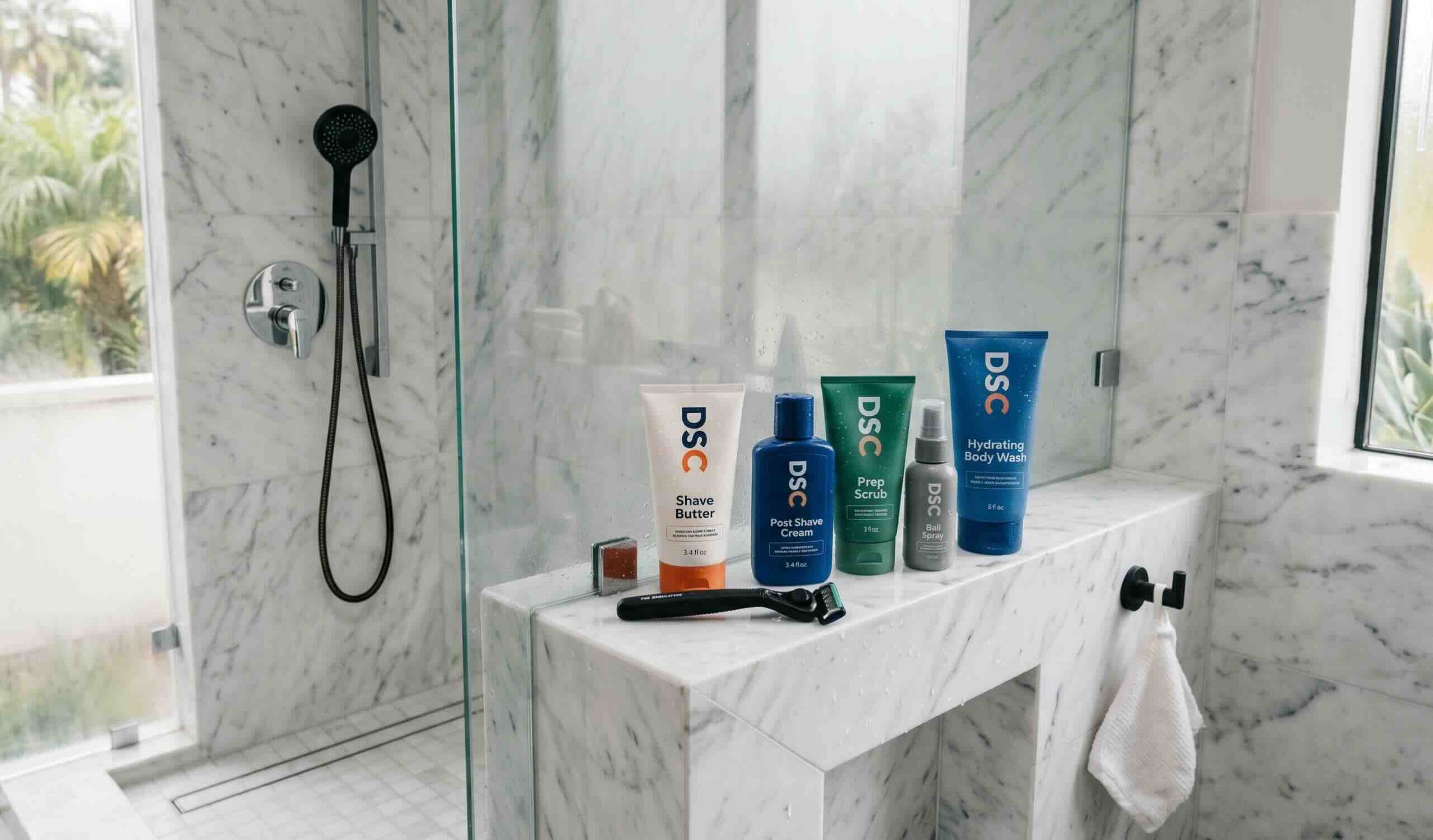
After establishing the subscription relationship, Dollar Shave Club expanded into shower, skin, and grooming products. The razor was the entry point. The brand was the real asset. A customer who trusted Dollar Shave Club to provide a good, affordable razor was willing to try their shave gel, their face wash, their body cleanser. The brand had earned permission to be in more of the customer’s bathroom.
Understanding how a brand like this positions against competitors requires looking beyond features. A real competitor analysis reveals the emotional and positioning dimensions that matter most in a market, not just the price and feature comparisons.
5. They Made Viral the Strategy, Not the Hope
Dubin had a background in comedy and digital media. He knew what made content spread: genuine humor, specific cultural references, a point of view, and a call to action that was easy to act on. The Dollar Shave Club video was not accidentally viral. It was engineered to be shareable. Every choice, from the pacing to the jokes to the warehouse setting, was deliberate. To understand how content fits into a broader growth strategy, see how it sits within a content-driven approach to building an audience from scratch.
Lessons Entrepreneurs Can Steal Today
Lesson 1: A Distinctive Brand Voice Is a Competitive Moat
Gillette could not replicate Dollar Shave Club’s irreverence without undermining their own premium positioning. A brand voice that is genuinely distinct is difficult to copy without looking desperate. Define your voice clearly, commit to it fully, and use it everywhere.
Lesson 2: One Piece of Content Can Change Your Trajectory
Dollar Shave Club proved that a single video with the right framing, the right voice, and the right distribution moment can do what millions in advertising could not. Before you build a massive content operation, ask: what is the one piece of content that, if it worked, would change everything for your business? Make that piece first.
Lesson 3: The Subscription Model Transforms Customer Economics
If your product is one that customers use regularly, a subscription model changes the value of every customer acquisition. The upfront cost of winning a subscriber is justified by months or years of recurring revenue. Model out the lifetime value before you decide how much you can spend to acquire a customer. Make sure your business finances are set up to track these metrics accurately.
Lesson 4: Direct-to-Consumer Gives You Data and Margin
Selling direct means you own the customer relationship, you control the experience, and you capture margin that would otherwise go to retail channels. It also means you collect data on purchasing behavior that brick-and-mortar retail can never provide. This data compounds into competitive intelligence over time.
Lesson 5: Expand Along the Trust Line
Dollar Shave Club expanded from razors into adjacent products because the brand had earned customer trust. Think about what your brand has earned the right to sell. Trust is horizontal: it extends across a relationship, not just to a single product. If your customers trust you in one context, you have permission to offer them more in adjacent contexts.
The Takeaway
Dollar Shave Club did not win by being cheaper than Gillette. They won by being more interesting than Gillette. In any market where the incumbent has become complacent, where the product has been overengineered, and where the buying experience has become a friction-filled chore, there is a Dollar Shave Club opportunity. You do not need their budget. You need their clarity: know exactly who you are, why your customer is frustrated, and what personality makes that frustration funny enough to share.
The $4,500 video was not a lucky break. It was the output of a founder who understood his customer, his category, and the medium. Build that understanding, and the content takes care of itself.
Ready to find your edge? Join the Hustlers Library for free and access the case studies, frameworks, and tools serious entrepreneurs use to outmaneuver the incumbents in their market.
Ready to Know Where You Stand?
The Business Journey dashboard maps your exact position across all 13 stages. Track your progress, unlock resources for each step, and build with a framework used by thousands of founders at Hustler's Library.

No credit card required · Takes 3 minutes · Personalized to your stage