If you’ve ever wondered why some small businesses seem to effortlessly attract customers and close sales while others struggle to get traction, the answer often comes down to one thing: a well-built sales funnel. A sales funnel isn’t some complicated marketing buzzword reserved for Fortune 500 companies. It’s a simple framework that maps the journey a stranger takes from first hearing about your business to becoming a paying customer. And once you understand it, you can start engineering that journey on purpose.
What Is a Sales Funnel, Really?
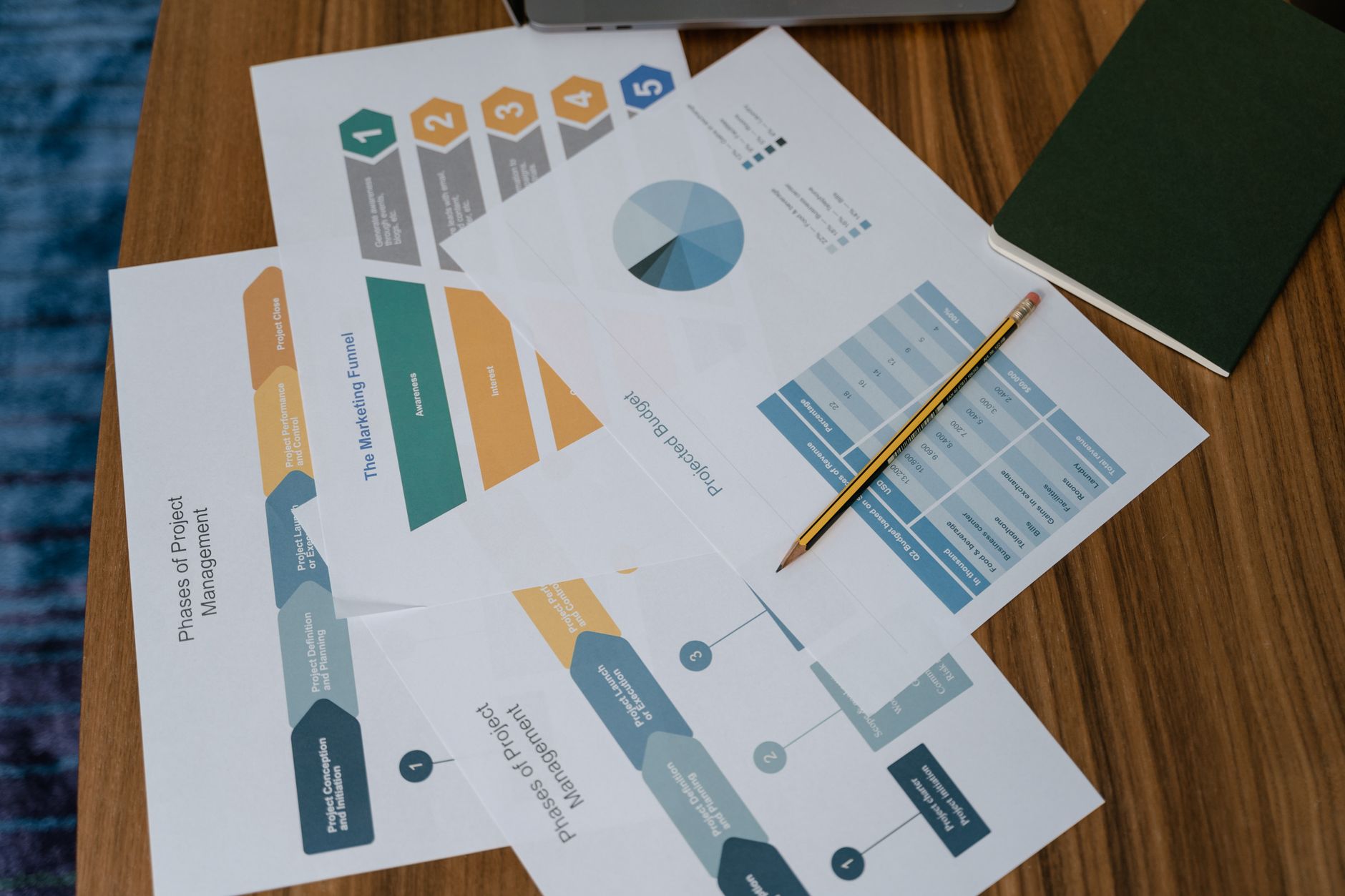
A sales funnel is a model that describes the stages a potential customer moves through before making a purchase. Picture it like a literal funnel: a large group of people enter at the top (awareness), and a smaller, more committed group makes it all the way to the bottom (purchase). The leaks in the funnel are where potential customers drop off, and your job is to patch those leaks as much as possible.
The classic funnel has four stages:
- Awareness: Someone discovers your business for the first time.
- Interest: They start paying attention and want to learn more.
- Decision: They’re weighing whether to buy from you or a competitor.
- Action: They pull out their wallet and make a purchase.
Most small business owners focus almost entirely on the bottom of the funnel (closing the sale) while neglecting the top and middle. That’s like trying to fill a leaky bucket from the bottom up. You need to be intentional about every stage.
Stage 1: Awareness (Getting Found)
Nobody can buy from you if they don’t know you exist. The awareness stage is all about generating visibility. This is where content marketing, social media, paid ads, local SEO, word of mouth, and partnerships all come into play. Your goal is to get in front of the right people: the ones who actually have a problem your business can solve.
For most small businesses, the most cost-effective awareness tools are:
- Search engine optimization (SEO): Being findable when someone searches for what you sell.
- Social media presence: Showing up consistently on the platforms your customers use.
- Referrals and word of mouth: Your happiest customers are your best unpaid sales team.
- Paid advertising: Facebook and Google ads can accelerate awareness, but only if you have the other funnel stages dialed in first.
If you want to dig deeper into maximizing your local online visibility, check out our guide on how to use Google Business Profile to get more local customers.
Stage 2: Interest (Earning Attention)
Once someone becomes aware of your business, the interest stage is about nurturing that curiosity into genuine engagement. This is where your website, your content, and your social presence all work together to answer the question every prospect is silently asking: “Is this the right solution for me?”
Key tools at the interest stage include:
- Your website: It should clearly explain what you do, who you help, and why you’re different.
- Blog posts and resources: Demonstrate your expertise by answering questions your potential customers are already asking.
- Lead magnets: A free guide, checklist, or tool that provides immediate value in exchange for an email address.
- Social proof: Reviews, testimonials, and case studies that show real results for real people.
The interest stage is where a lot of small businesses drop the ball. They generate some awareness but have nothing compelling waiting for people when they show up. Your job is to make a strong first impression that keeps potential customers engaged long enough to move to the next stage.
Stage 3: Decision (Removing Friction)
By the decision stage, your prospect is seriously considering buying. They might be comparing you to competitors, reading your reviews, or trying to figure out if your price is justified. Your job here is to remove friction and objections while reinforcing trust.
Tactics that work well at the decision stage:
- Clear pricing: If you’re hiding your prices, you’re creating friction. Be transparent, or give ranges at minimum.
- Strong guarantees: A money-back guarantee, free trial, or satisfaction guarantee reduces the perceived risk of buying.
- Comparison content: If people are comparing you to competitors, own that conversation by creating comparison content yourself.
- Proof and credibility: Certifications, awards, years in business, notable clients. Anything that says “we’re the real deal.”
- Easy next steps: Make it obvious and frictionless to take the next step, whether that’s booking a call, requesting a quote, or adding to cart.
One of the most underused decision-stage tools is a well-crafted sales script or conversation framework. When your team knows how to address objections consistently, conversion rates go up significantly. For a deep dive on this, see our guide on how to create a sales script that actually converts.
Stage 4: Action (Closing the Sale)
This is where the money changes hands. But the action stage isn’t just about getting the first sale. It’s also about making the purchase experience so smooth and positive that the customer immediately wants to come back. A clunky checkout process, unresponsive communication, or poor delivery experience can undo all the goodwill you built in the earlier stages.
At the action stage, focus on:
- Frictionless checkout: Every extra step in your checkout process costs you conversions.
- Immediate confirmation: Buyers get anxious. A fast, clear confirmation email or receipt reassures them.
- Upsell and cross-sell opportunities: The moment of purchase is the best time to offer a complementary product or upgrade.
- Onboarding experience: If you sell a service or software, a great onboarding experience dramatically increases long-term retention.
Beyond the Funnel: Retention and Advocacy
The traditional four-stage funnel ends at the sale. But smart small business owners know that the real money is in what happens after. A customer who buys once has already proven they trust you. Getting them to buy again costs a fraction of what it cost to acquire them in the first place.
Retention strategies that work:
- Follow-up sequences: Check in after a purchase, ask for feedback, and offer your next relevant product or service.
- Loyalty programs: Reward repeat customers and give them a reason to keep coming back.
- Community building: Create a space where customers can connect with each other and with your brand.
- Referral mechanisms: Make it easy for happy customers to refer friends by giving them a simple way to do it.
The SBA’s small business management resources offer additional tools and frameworks for building sustainable customer relationships over time.
How to Build Your Funnel: A Practical Starting Point
You don’t need a massive marketing budget or a team of specialists to build an effective sales funnel. Here’s a practical roadmap any small business owner can follow:
Step 1: Map Your Customer Journey
Before you build anything, talk to your existing customers. Ask them: How did you first hear about us? What made you decide to buy? What almost stopped you? Their answers will reveal exactly what your funnel needs to do.
Step 2: Audit What You Already Have
Most businesses already have pieces of a funnel in place. Your website is an interest stage asset. Your Google Business Profile handles awareness. Your checkout is the action stage. The goal isn’t to rebuild everything from scratch. It’s to identify where the biggest leaks are and patch those first.
Step 3: Add One Element at a Time
Trying to overhaul your entire funnel at once is a recipe for overwhelm and mediocre results. Pick the one stage where you’re losing the most potential customers and fix that first. Then move to the next weakest link. Incremental improvements compound quickly.
Step 4: Measure and Iterate
A funnel you’re not measuring is a funnel you can’t improve. At minimum, track: how many people visit your website, how many take your desired next step (sign up, contact you, add to cart), and how many actually buy. Even basic analytics will tell you where the leaks are.
If you’re looking to better understand the competitive landscape before investing in funnel-building, our guide on how to do a competitive analysis for your small business is a solid next step.
The Bottom Line
Building a sales funnel isn’t a one-time project. It’s an ongoing system that you refine over time as you learn more about what your customers need and where they get stuck. The good news is that even a basic, intentional funnel outperforms the alternative, which is hoping the right people show up and decide to buy on their own.
Start with one stage, build something real, measure the results, and improve from there. That’s how great sales funnels are built: one deliberate step at a time.
Want more no-fluff guides for building a business that actually grows? Join Hustler’s Library for free and get access to the full library of practical business resources.
Ready to Know Where You Stand?
The Business Journey dashboard maps your exact position across all 13 stages. Track your progress, unlock resources for each step, and build with a framework used by thousands of founders at Hustler's Library.

No credit card required · Takes 3 minutes · Personalized to your stage