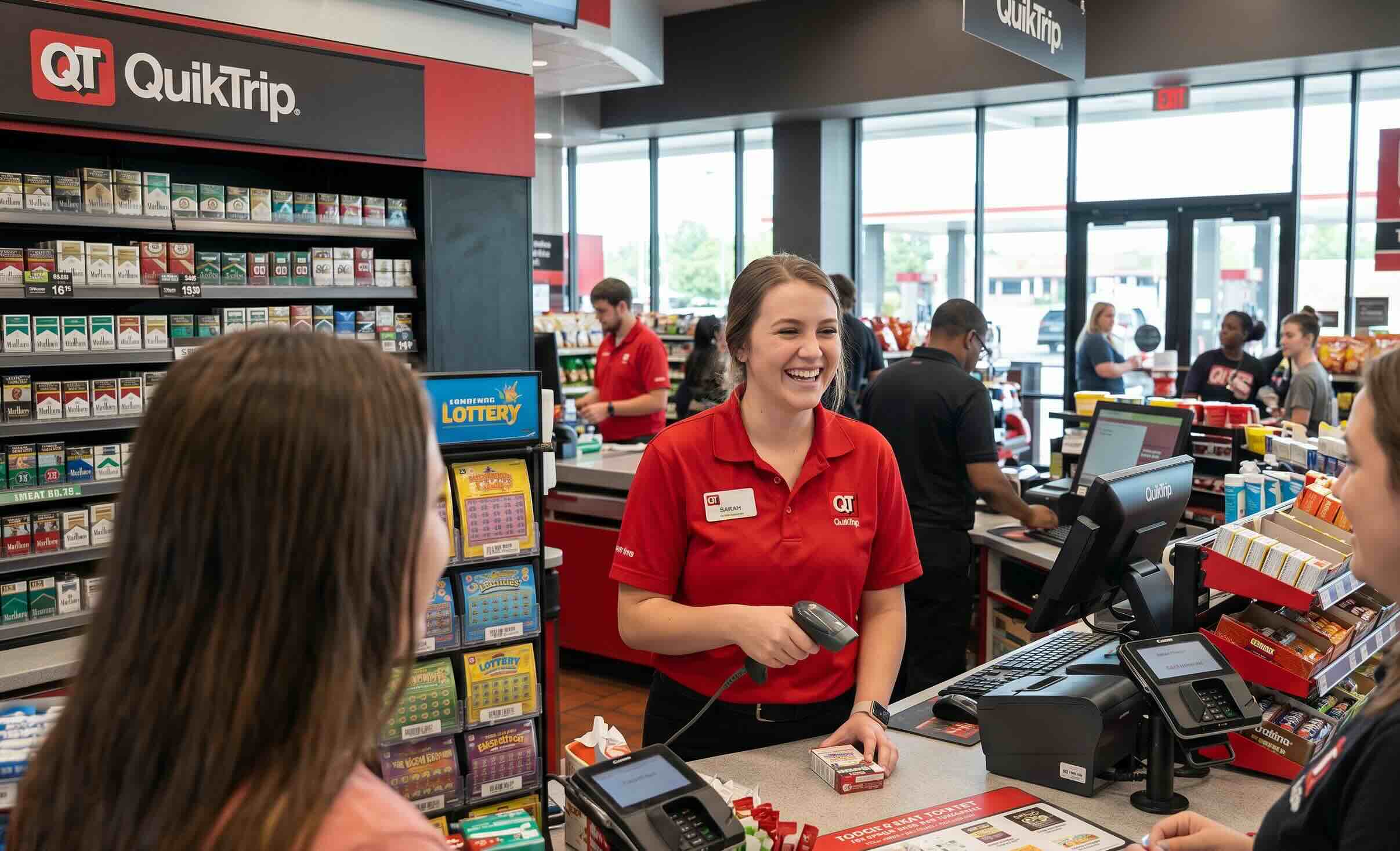
Walk into a QuikTrip at 2am. The floors are clean. The shelves are stocked. The employee behind the counter knows what they’re doing and doesn’t look miserable. Now do the same at most of their competitors, and compare what you find.
That difference isn’t luck or culture in the abstract sense. It’s the output of a specific, deliberate business model that QuikTrip has been running since the 1970s. The model starts with a simple thesis: the way you treat your employees determines the experience your customers have. Most retailers claim to believe this. QuikTrip built its entire operating system around it.
The result is a privately held company with over 1,000 locations across 16 states, annual revenues estimated above $15 billion, and a Glassdoor rating that has consistently placed it among the top 10 best large companies to work for in America. In an industry defined by high turnover, low wages, and mediocre execution, QuikTrip is an anomaly worth studying.
The QuikTrip Employee Model: What Makes It Different
Above-Market Pay and Full-Time Priority
Most convenience store chains staff heavily with part-time workers to avoid paying benefits and to maintain scheduling flexibility. QuikTrip does the opposite. They prioritize full-time employees and pay above the market rate for the industry. Starting wages for full-time employees have historically run 20-30% above local market rates, and the benefits package includes health insurance, a 401(k), and profit sharing.
This sounds expensive. And in the short term, per-hour labor cost is higher at QuikTrip than at a store paying minimum wage. But the math changes when you factor in turnover costs. The average annual turnover rate in convenience retail is estimated at 50-100%. QuikTrip’s turnover rate is reported to be well under 15%. Recruiting, hiring, and training a new employee costs an estimated $3,000 to $5,000 in the retail sector. When you retain employees, you don’t pay that cost repeatedly. The higher wage is often cheaper than the churn.
Promote From Within
QuikTrip’s management pipeline is almost entirely internal. Assistant managers and store managers are typically promoted from the part-time and full-time employee ranks, not hired externally. This creates a visible career path that changes the psychological contract between the company and its entry-level workers.
When an employee can see that their store manager started behind the same counter they’re standing behind, the job is no longer a dead end. It’s a proving ground. That changes how people show up. It also means that every level of management has direct operational experience in every role they’re managing, which improves the quality of oversight and training.
Lean Staffing and Operational Precision
QuikTrip runs fewer employees per store than most competitors, not because they’re cutting corners, but because their hiring standards and training protocols are rigorous enough to generate high output per employee. They are selective in hiring. They invest heavily in training. They trust their employees to exercise judgment rather than following a flowchart for every situation.
This operational density means each employee carries more responsibility and is compensated accordingly. It’s a system that attracts people who want to actually work, rather than people who are simply available. The filtering is embedded in the pay structure and the expectation level.
The Flywheel Effect: How Employee Investment Creates Customer Value
The HL Operational Flywheel describes how QuikTrip’s internal investment translates directly to external competitive advantage:
- Above-market pay and full-time benefits attract higher-quality candidates
- Lower turnover means employees build expertise and customer familiarity over time
- Experienced, motivated employees deliver faster, cleaner, more consistent service
- Consistent service drives customer loyalty and higher transaction frequency
- Higher revenue per location funds the above-market pay model
- Repeat from step 1
This is why the model is hard to copy. A competitor can’t just raise wages tomorrow and get QuikTrip’s results. The flywheel takes years to build. The culture, the internal career ladders, the training infrastructure, the hiring standards: all of it has to be in place and reinforced consistently over time. QuikTrip has a multi-decade head start.
Comparing QuikTrip to the Industry
The convenience store industry in America is enormous: over 150,000 stores generating roughly $800 billion in annual sales. Most of those stores compete on location and gas price. QuikTrip competes on experience.
Wawa, another convenience chain frequently cited for quality, runs a similar model with employee ownership and strong internal culture. Casey’s General Stores, dominant in the Midwest, competes on fresh food. But neither consistently matches QuikTrip’s combination of store cleanliness, employee quality, and customer satisfaction scores across such a geographically diverse footprint.
Meanwhile, chains that have prioritized cost reduction through part-time labor and high turnover have found it nearly impossible to deliver a consistent customer experience. You can’t systematize your way around people who don’t know what they’re doing or don’t care. At some point, quality is a people problem.
By the Numbers
- QuikTrip operates over 1,000 locations across 16 states
- Estimated annual revenue: $15+ billion
- Employee turnover rate: reported below 15%, vs. industry average of 50-100%
- QuikTrip has appeared on Fortune’s “100 Best Companies to Work For” list multiple times
- Glassdoor rating consistently at 4.0 or above, among the highest in retail
- Average QuikTrip store is larger than most competitors: typically 4,000-5,000 sq ft
- Founded in Tulsa, Oklahoma in 1958; still privately held by the Cadieux family
Key Takeaways
- Turnover is not free: High wages often cost less than constant recruiting and retraining. The math changes when you model total labor cost, not just hourly rate.
- Promote-from-within creates alignment: When employees can see a real career path, their incentives align with the company’s. That changes behavior.
- Labor quality is a competitive moat: A business with experienced, motivated, low-turnover staff can deliver a product that high-turnover competitors structurally cannot.
- Operational flywheels compound: The QuikTrip model took decades to build. That’s why it’s hard to replicate. The defense is in the compounding, not just the model itself.
- Lean staffing works when training is serious: Fewer, better-paid, better-trained employees can outperform more, cheaper, undertrained ones at every metric that matters.
The Business Lesson: Labor Is Either Your Biggest Cost or Your Biggest Advantage
Most businesses treat labor as a cost to be minimized. The logic is intuitive: lower labor cost equals higher margin. But this calculus ignores the relationship between labor quality and revenue generation. A store that’s cleaner, faster, and friendlier generates more transactions. A team with low turnover trains better, executes better, and produces better outcomes.
QuikTrip understood this and built a company around it. The lesson for entrepreneurs isn’t “pay everyone more.” It’s: model your full labor economics, not just the line item on your P&L. Retention, productivity, and customer experience are labor costs too. They just don’t appear on the same spreadsheet.
If you’re building a team from scratch and want to set up the right infrastructure from day one, make sure your entity structure and HR foundation are solid. Northwest Registered Agent is a reliable starting point for business formation, and LegalZoom can help you get employment agreements and HR policies in order.
For more on how operational excellence compounds into a durable competitive advantage, read our case study on how Costco turned a membership fee into a loyalty machine. The employee investment thesis runs through that story too.
Sources & Further Reading
- Ton, Zeynep. The Good Jobs Strategy (2014) — the academic case for investing in frontline labor
- Fortune “100 Best Companies to Work For” annual rankings (fortune.com)
- NACS State of the Industry Report, convenience retail turnover data (nacsoline.com)
- Glassdoor QuikTrip company reviews and ratings (glassdoor.com)
- “Why QuikTrip Is One of America’s Best Employers,” Forbes, multiple years
Want more breakdowns like this? Join Hustler’s Library free and get access to our full case study vault.
Ready to Know Where You Stand?
The Business Journey dashboard maps your exact position across all 13 stages. Track your progress, unlock resources for each step, and build with a framework used by thousands of founders at Hustler's Library.

No credit card required · Takes 3 minutes · Personalized to your stage