Most business owners are chasing the big break. The viral post. The whale client. The product launch that changes everything. And while those moments are real, they are not what separates businesses that quietly double year after year from the ones that stay stuck.
The difference is usually something far less dramatic: compounding.
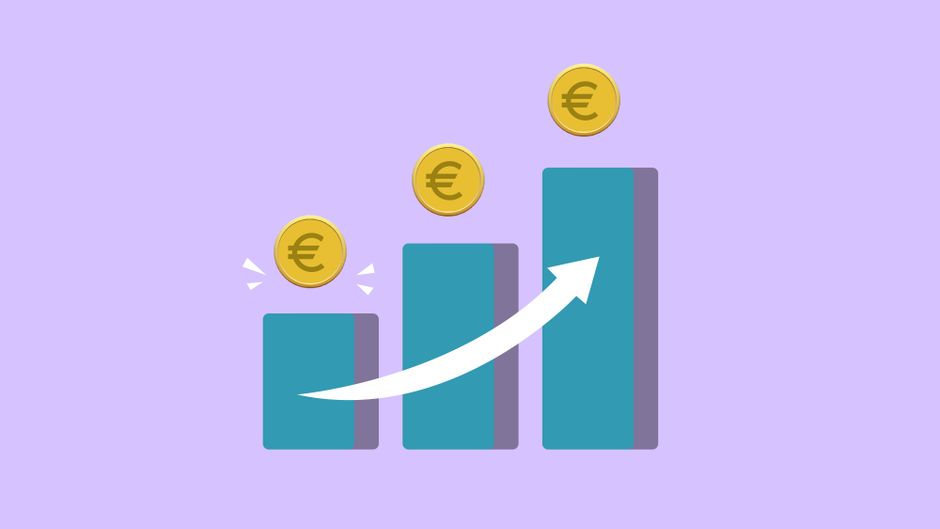
You already know compounding from personal finance. Invest $10,000, earn 10% a year, leave it alone, and in 20 years you have not $30,000 but over $67,000. The math feels almost unfair the longer you let it run. The same principle, applied to the operational and strategic decisions you make inside your business every week, produces the same kind of lopsided returns.
This is not a motivational concept. It is a practical framework. Here is how it actually works in a small business and how to start using it intentionally.
Why Small Gains Beat Big Swings
There is a well-known statistic in sports science: improving by just 1% in 38 different areas of performance produces a cumulative result that is roughly 50% better overall. The British cycling team famously used this framework to go from international mediocrity to winning Tour de France titles within a decade.
The same math applies to business. A 1% improvement in your close rate, average deal size, repeat purchase frequency, and customer retention does not add up to 4% better results. It multiplies. Each gain builds on the one before it, and over time the gap between a business that pursues compound improvement and one that does not becomes enormous.
The catch is that it requires patience and consistency. Compounding is invisible in the short run and overwhelming in the long run. Most business owners give up before the curve bends upward.
The Four Places Compounding Shows Up in Your Business
1. Relationships
Every client relationship you invest in becomes an asset that pays dividends for years. A client who trusts you refers others. Those referrals arrive already warm, close faster, and cost nothing to acquire. Over time, a business built on deep client relationships generates its own growth engine without relying on paid advertising or cold outreach.
This is why the businesses that obsess over client experience and follow-up consistently outperform those that treat each sale as a transaction. The relationship is the compounding asset. Check out how to unlock the hidden revenue sitting in your existing client base for a tactical breakdown of exactly where these gains come from.
2. Knowledge and Skills
Every sales call you make teaches you something. Every failed marketing campaign tells you something about what your customers do not want. Every difficult client interaction builds your ability to set expectations and hold boundaries.
Business owners who document these lessons, share them with their team, and actively apply them are building intellectual capital that compounds just like money in the bank. Six months from now, a sales team that debriefs after every lost deal will close circles around a team that just moves on to the next call.
3. Reputation and Authority
Every piece of useful content you publish, every speaking engagement you take, every case study you document adds another brick to your reputation. Reputation compounds because it self-reinforces: more visibility attracts more opportunities, which creates more proof, which builds more visibility.
This is why consistency in showing up matters more than any single impressive act. The business owner who publishes one genuinely useful article per week for three years will build a reputation that no single viral post can replicate.
4. Systems and Processes
A well-designed process does not just save time once. It saves time every single time it runs. And as your volume scales, so does the return. A client onboarding workflow that saves 45 minutes per client is worth $900 a month if you onboard 20 clients. Next year at 50 clients, it saves $2,250 a month. The process did not get better. The compounding did.
This is one reason being the busiest person in your business is so costly: every hour you spend doing something that could be systematized is an hour you are not investing in compound-return activities.
What Breaks the Compound Curve
Compounding only works when you do not interrupt it. In business, the most common interruptions are:
Inconsistency. You show up for 30 days and then go quiet for 60. You build a sales cadence and then abandon it when things get busy. Compounding requires continuity. A fitness analogy holds here: two weeks off does not just pause your progress, it erodes it. Business is the same.
Chasing novelty over depth. There is always a new platform, a new tactic, a new tool promising faster results. Jumping from channel to channel or strategy to strategy resets the compound clock every time. The businesses that win are usually doing something obvious very, very consistently.
Short-term thinking. Discounting your services to win a client feels like progress today but trains your market to expect lower prices and attracts clients who will leave the moment someone cheaper appears. Every short-term decision that sacrifices long-term positioning costs you compound interest.
Failing to capture gains. If you have a great month and spend everything, the next month starts from zero. Businesses that compound protect their margins and reinvest rather than spending their way back to baseline. The SBA recommends maintaining an operating reserve of at least three to six months of expenses; treating this as a non-negotiable compound buffer is part of what makes businesses durable over time. (SBA: Managing Business Finances)
How to Apply This Practically Starting This Week
You do not need a new strategy. You need to identify the two or three areas in your business where consistent small improvements will compound most significantly and then protect your investment in those areas with the same discipline you would apply to a financial asset.
Here is a simple exercise: draw a line down the middle of a page. On the left, list the activities in your business that produce compounding returns over time: relationships, reputation, team skill, documented systems, customer lifetime value. On the right, list the activities that burn energy without compounding: administrative noise, reactive firefighting, meetings without decisions, marketing experiments without follow-through.
Your goal is to shift time from the right column to the left. Not all at once. Not dramatically. Just a little more each week, consistently, over months and years.
That shift is compounding in action. And it is more powerful than any single breakthrough you are probably waiting for.
The Long Game Is Not Slow
There is a common misconception that playing the long game means slow growth. It does not. Compounding is slow at the start and fast at the end. The businesses that look like overnight successes at year seven are almost always the ones that quietly did the right things in years one through six without expecting immediate rewards.
Think about where your business will be in three years if you focus 20% more of your time on the activities that compound and 20% less on the ones that just keep the lights on. Then think about five years. The curve bends faster than most people expect once it starts bending.
Understanding the five stages of small business growth can help you identify which compounding levers matter most at your current stage. The activities that compound in year one are not always the same ones that compound in year four.
The bottom line is simple: stop looking for the big break and start protecting your compound investments. The business owners who understand this spend less time on tactics and more time on fundamentals. Less time reacting and more time building. Less time starting over and more time going deeper.
That is the compounding effect. And it is available to every small business owner willing to play long enough to see it work.
Ready to build a business that grows smarter over time? Join thousands of entrepreneurs who get the strategies, tools, and frameworks they need at Hustler’s Library. It is free to join.
Ready to Know Where You Stand?
The Business Journey dashboard maps your exact position across all 13 stages. Track your progress, unlock resources for each step, and build with a framework used by thousands of founders at Hustler's Library.

No credit card required · Takes 3 minutes · Personalized to your stage