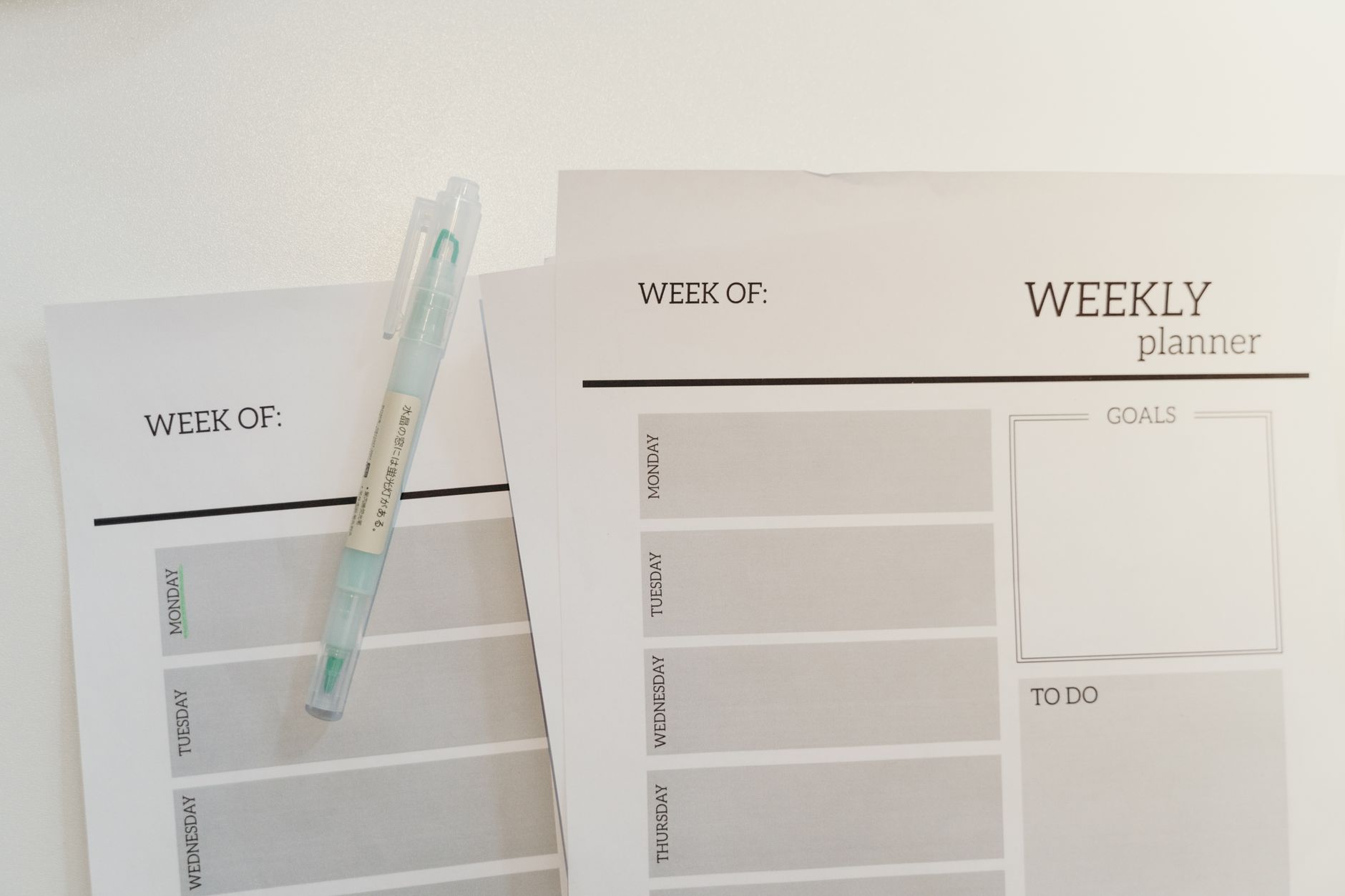
Most small business owners don’t choose their work week. Their work week chooses them.
Monday starts with a flood of emails. A client crisis derails Tuesday. Wednesday gets eaten by a meeting that could have been a text. By Friday you’re wondering where the week went and why the important stuff still isn’t done.
This isn’t a discipline problem. It’s a design problem. And like most design problems, it has a solution.
Designing your ideal work week means building a structure that puts your highest-leverage activities first, creates space for deep work, and stops you from being run by your inbox. It doesn’t mean a rigid schedule. It means a smarter one.
Here’s how to do it.
Start With Your Big Three
Before you redesign your week, you need to know what actually matters. Not everything on your to-do list is equal. A small number of activities in your business generate the majority of your results.
For most small business owners, the Big Three look something like this: revenue-generating activities (sales calls, proposals, client work), business-building activities (marketing, networking, product development), and operational activities (admin, finances, team management).
Your goal is to protect time for the first two categories and contain the third. Most owners do the opposite. They let operations expand to fill every available hour, then wonder why growth feels impossible.
Write down the three to five activities that most directly move your business forward. These are your anchors. Everything else gets scheduled around them.
Know Your Peak Hours
Your brain isn’t the same all day. Most people have a window of two to four hours when they’re sharpest, most creative, and most capable of complex thinking. For many, that’s the first part of the morning. For others it’s mid-morning. A smaller group peaks in the afternoon.
The single most important scheduling decision you can make is to figure out when your peak hours are and protect them fiercely.
That means no meetings during your peak window if you can help it. No email. No distractions. Your peak hours are for your most important work, full stop.
If you’re not sure when your peak hours are, pay attention for a week. Notice when ideas come easily, when writing flows, when you feel sharp and motivated. That’s your window. Guard it.
Build Your Week in Zones
One of the most effective week design strategies is zoning: assigning different types of work to different days or time blocks, rather than trying to do a little of everything every day.
A common structure for service-based business owners looks like this:
- Monday: Planning and admin. Review the week ahead, clear your inbox, handle finances and operational tasks. Start light, get organized.
- Tuesday and Wednesday: Deep work. Client work, revenue-generating activities, strategic projects. Your peak hours live here.
- Thursday: Meetings and people. Schedule all your calls, check-ins, and external meetings here so they don’t scatter your other days.
- Friday: Review, follow-up, and business development. Wrap up loose ends, do your weekly review, reach out to prospects.
This is a template, not a law. Adapt it to your business, your clients, and your life. The point is to stop letting every day become a grab bag of whatever shows up and start being intentional about what gets your energy and when.
The productivity gains from zoning your week are significant. When you batch similar work together, you reduce context-switching, enter deeper states of focus, and get more done in less time. For a deeper look at energy and focus, see our guide on how to manage your energy as a small business owner.
Schedule the Big Rocks First
There’s an old time-management illustration involving a jar, rocks, pebbles, and sand. The lesson: if you put the big rocks in first, everything else fits around them. If you start with sand, you never fit the big rocks.
Your big rocks are the high-priority tasks and projects that actually move your business forward. They need to go on your calendar before anything else. Not as vague intentions, but as actual scheduled blocks with start times and durations.
If your goal this week is to finish a proposal for a major prospect, that gets a two-hour block on Tuesday morning before you check email. If you need to record a sales video, that’s on Wednesday at 9 AM. If there’s a key financial review you’ve been putting off, it gets Thursday afternoon.
When you treat your most important work like a meeting with yourself, it gets done. When you leave it to “whenever I have time,” it doesn’t.
Create Boundaries Around Reactive Work
Email, texts, and requests from clients and team members are necessary parts of running a business. They’re also the fastest way to have your entire day consumed by other people’s priorities.
The solution isn’t to ignore communication. It’s to contain it.
Try checking email at two or three set times each day, rather than leaving your inbox open constantly. Set a response window expectation with clients so they know when to expect replies. If you have employees, establish clear communication norms that don’t require you to be available every minute.
The Small Business Administration consistently highlights time management as one of the top challenges for small business owners. The businesses that grow are usually run by people who learned to lead proactively, not reactively.
Build In Buffer Time
One of the most common mistakes in week design is scheduling too tight. When every hour is accounted for, one unexpected call or one task that runs long blows up the entire day.
Buffer time is the white space between commitments. It’s not wasted time. It’s the space that allows you to handle surprises without going into panic mode.
A good rule of thumb: don’t schedule more than 60 to 70 percent of your day. Leave 30 to 40 percent open for overflow, unexpected priorities, thinking time, and recovery between tasks. This feels inefficient until you realize how much more you accomplish because nothing derails you.
If you want to combine structured time with compressed execution, our guide on how to run a business sprint shows how to focus your energy into short windows to hit your biggest goals faster.
Do a Weekly Review Every Friday
The weekly review is the habit that holds your whole system together. Without it, small problems compound, priorities drift, and your carefully designed week gradually reverts back to reactive chaos.
A solid weekly review takes 30 to 45 minutes. Cover these questions:
- What did I finish this week? What didn’t get done?
- What’s on deck for next week?
- What’s in my inbox, commitments list, and project tracker that needs attention?
- What went well this week that I want to repeat? What should I change?
The goal isn’t to be perfect. It’s to stay conscious of where your time is going and make small adjustments each week so you’re always moving in the right direction.
Simplify Ruthlessly
Designing an ideal work week isn’t about packing more in. It’s about doing the right things with the time you have.
Look honestly at your current commitments. Are there recurring meetings that don’t add value? Reports you generate that nobody reads? Tasks you do out of habit rather than necessity? Cutting this dead weight is just as important as scheduling your big rocks.
The cleaner your week, the more energy you have for what matters. This principle compounds over time as your business grows and new obligations pile up faster than you realize. For more on this, see our post on how to use the power of simplicity to grow your small business.
Give Your New Structure Time to Work
The first week you try this, it will feel uncomfortable. Clients will call during your deep work block. Old habits will pull you back toward reactive mode. That’s normal.
Give your new structure four weeks before you judge it. After a month of consistent effort, most business owners report getting more done in less time, feeling less stressed, and having a clearer sense of where their business is heading.
The most successful small business owners are not the ones who work the most hours. They’re the ones who use their hours most intentionally. Your ideal work week won’t look like anyone else’s. But it should look like yours, on purpose.
Ready to build the systems that give you more time and better results?
Join thousands of small business owners learning to work smarter, not just harder. Join Hustler’s Library for free and get access to tools, guides, and strategies that actually move the needle.
Ready to Know Where You Stand?
The Business Journey dashboard maps your exact position across all 13 stages. Track your progress, unlock resources for each step, and build with a framework used by thousands of founders at Hustler's Library.

No credit card required · Takes 3 minutes · Personalized to your stage