Most small business owners have a long list of goals they want to hit. The problem isn’t ambition. It’s focus. You’re pulled in a dozen directions at once, and important projects sit half-finished for months while urgent-but-minor tasks eat up your days.
A business sprint changes that. Borrowed from the world of software development and adapted for entrepreneurs, a sprint is a short, intense burst of focused work directed at a single high-priority goal. Done right, it compresses months of progress into weeks. Here’s how to run one in your small business.
What Is a Business Sprint?
A sprint is a fixed time period, typically one to four weeks, during which you and your team commit to making serious progress on one clearly defined goal. Everything else gets deprioritized. You meet briefly each day (or weekly for solo operators) to check progress, remove blockers, and stay on track.
The concept comes from Agile project management, where software teams build products in rapid cycles rather than long, linear plans. But the same logic applies to any business. You want to launch a new service? Redesign your website? Close 10 new clients? A sprint gives you a container to make it happen.
The power is in the constraint. When you give yourself three weeks with a single objective, you stop treating that goal like a background project and start treating it like the thing that matters most. That shift in attention drives results.
Step 1: Choose One Objective
The first rule of a sprint is singular focus. Pick one objective, not three. Not a theme. One concrete, measurable goal.
Bad sprint goal: “Improve our marketing.”
Good sprint goal: “Generate 20 new qualified leads this month.”
Bad sprint goal: “Get better at operations.”
Good sprint goal: “Document our five core service delivery processes as reusable checklists.”
Your goal should be specific enough that at the end of the sprint you can clearly answer: did we hit it or not? If the answer lives on a spectrum, sharpen the definition. This is why frameworks like OKRs work well for sprint planning. If you haven’t used them before, this guide to using OKRs in your small business is a solid starting point for tying your sprint goal to broader company priorities.
Step 2: Define the Sprint Window
Choose a duration that fits your goal. Common options:
- One-week sprints: Best for focused execution tasks, like building a landing page, writing a proposal, or making 50 sales calls.
- Two-week sprints: The most common choice. Long enough to make meaningful progress, short enough to maintain urgency.
- Four-week sprints: Suited for larger goals like launching a new product, overhauling your operations, or entering a new market.
Whatever you choose, pick a hard end date and treat it as real. A sprint without a deadline is just a vague intention.
Step 3: Identify the Sprint Team and Roles
If you’re a solo operator, the sprint team is you. That’s fine. But you still need to structure your time intentionally, blocking deep work hours dedicated exclusively to sprint tasks.
If you have a team, assign a sprint owner, the one person responsible for driving the objective and reporting progress. Everyone on the sprint commits to contributing toward the goal during the sprint window. Non-sprint work doesn’t disappear, but it gets less of the team’s prime attention and energy.
For specific sprint tasks, consider using a freelancer. If you need a designer to build assets, a copywriter to produce content, or a developer to push a feature live, a sprint is the perfect use case for a short-term hire. Fiverr makes it easy to find qualified freelancers who can plug in fast without the overhead of a full-time hire.
Step 4: Build Your Sprint Backlog
Before the sprint starts, list every task you believe needs to happen to hit the goal. This is your sprint backlog. Don’t worry about perfection; just get everything out of your head and onto the list.
Then prioritize ruthlessly. Which three to five tasks, if done first, would create the most momentum or remove the biggest blockers? Those go at the top. Your job during the sprint is to work the list from the top down, not scatter your effort across everything at once.
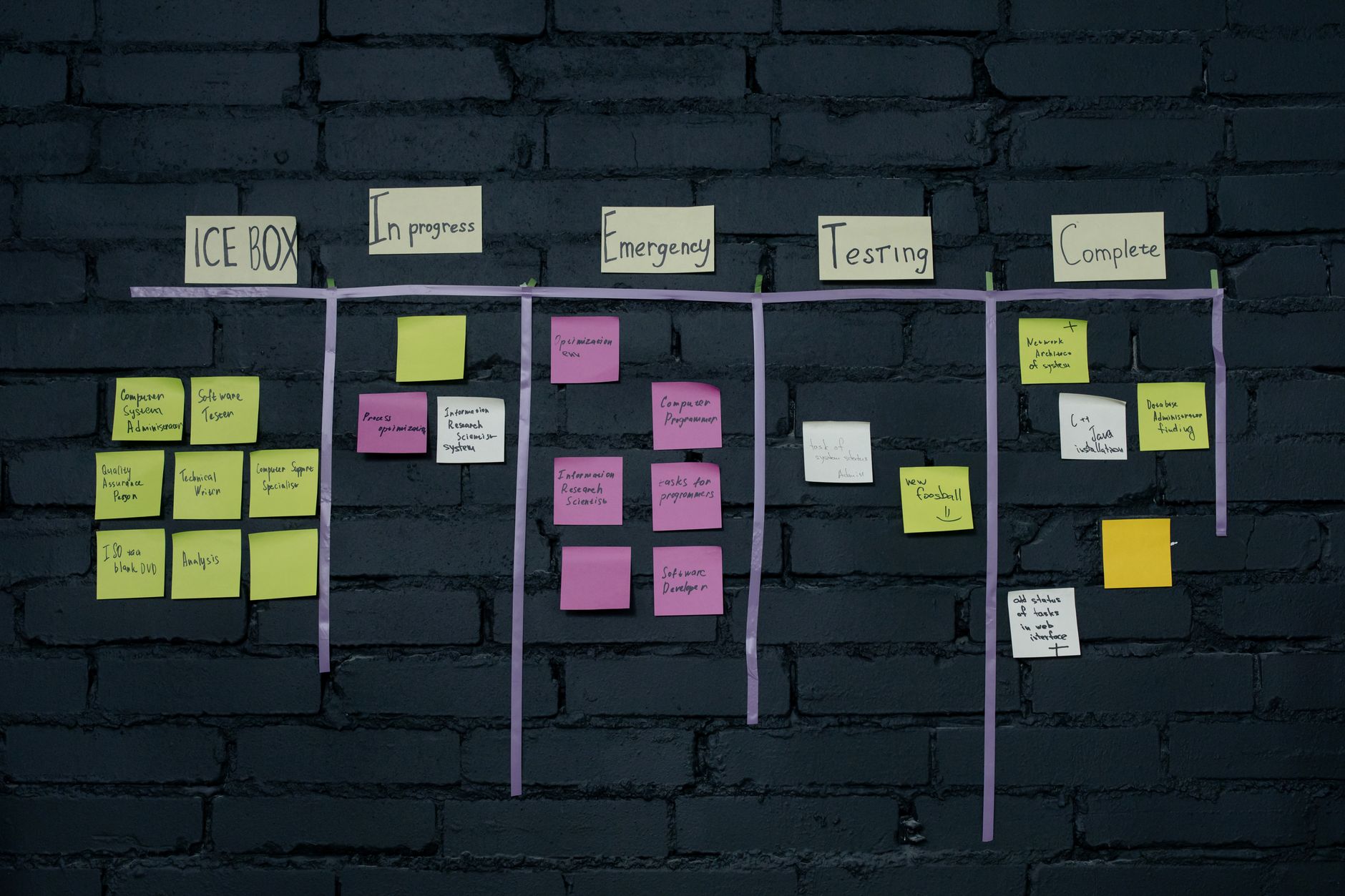
A simple spreadsheet or task board works fine. You don’t need fancy software. Columns like “To Do,” “In Progress,” and “Done” give you instant visibility into where things stand. What matters is that the list is visible and updated daily.
Step 5: Run Daily or Weekly Check-Ins
Sprints live or die by communication. In team settings, a daily standup of 10 to 15 minutes keeps everyone aligned without burning hours in meetings. Each person answers three questions: What did I do yesterday? What will I do today? Is anything blocking me?
For solo operators, a five-minute journal check-in at the start of each workday works just as well. Write down what you’re doing today to advance the sprint goal, and whether anything is in the way. That simple habit keeps your brain locked on the target instead of drifting.
This kind of consistent accountability is one of the core habits of high-performing business owners. If you want to strengthen yours, this guide to building an accountability culture lays out a framework you can use beyond the sprint itself.
Step 6: Protect the Sprint From Interruptions
The most common sprint killer is the urgent-but-unimportant interruption. A new client inquiry. An employee question. A shiny idea that has nothing to do with your sprint goal. Left unmanaged, these will fragment your focus and stall the sprint.
A few defenses that work:
- Sprint hours: Block two to three hours each morning for sprint work only. No email, no meetings, no distractions during that window.
- Interrupt protocol: Let your team know that during sprint hours, non-emergency questions wait until the afternoon.
- Parking lot: When new ideas surface during the sprint, write them down in a “parking lot” list. Review them after the sprint ends. Most won’t be as urgent as they seemed in the moment.
The goal isn’t to ignore your business. It’s to give your sprint goal the sustained attention it needs to actually get done.
Step 7: Hold a Sprint Retrospective
When the sprint ends, don’t just check the scoreboard and move on. Take 30 minutes to review what happened. Ask:
- Did we hit the goal? Why or why not?
- What worked well?
- What got in the way?
- What will we do differently next sprint?
The retrospective is where sprints compound. Each cycle you run, you get better at estimating, prioritizing, and protecting your focus. Over time, you build a repeatable system for tackling big goals that your business can rely on again and again.
Connecting Sprints to Your Bigger Strategy
Sprints are powerful on their own, but they’re most effective when they ladder up to a clear annual or quarterly strategy. If you haven’t mapped out your bigger goals yet, this guide to setting business goals that actually move the needle will help you build the foundation that makes every sprint count.
The SBA also offers free resources on building business plans and growth strategies that pair well with a sprint-based execution model.
The Bottom Line
Most small business owners don’t fail because they lack good ideas. They fail to execute because everything feels equally important all the time. A business sprint fixes that by forcing you to choose one thing and go all-in on it for a defined period.
Pick your goal. Set the window. Build the backlog. Check in daily. Protect the sprint. Review and repeat.
Run four sprints a quarter and you’ll accomplish more in 12 months than most businesses manage in three years.
Want more tools to run a sharper, more focused business? Join the Hustler’s Library community and get proven frameworks, guides, and resources delivered straight to your inbox. Join free here.
Ready to Know Where You Stand?
The Business Journey dashboard maps your exact position across all 13 stages. Track your progress, unlock resources for each step, and build with a framework used by thousands of founders at Hustler's Library.

No credit card required · Takes 3 minutes · Personalized to your stage