Nobody warned you that running a small business would feel like navigating a storm without a weather forecast. Interest rates move. Consumer spending shifts. Tariffs change overnight. An unexpected event rattles your industry, and suddenly your carefully built projections mean very little.
Economic uncertainty is not a sign that something is wrong with your business. It is the permanent condition of being in business. The owners who survive and grow through turbulent times are not the ones who predicted the storm. They are the ones who built a business capable of weathering it.
Here is a plain-English guide to doing exactly that.
Understand What You Can and Cannot Control
The first move when economic uncertainty hits is to stop trying to predict the macro and start focusing on what is actually within your control. You cannot control interest rates, inflation, or what your competitors do. You can control your expenses, your pricing, your customer relationships, and how you allocate your time and resources.
A useful framework: divide your concerns into two lists. Things inside your control and things outside it. Spend your energy entirely on the first list. Review the second list only to monitor for signals that require you to act.
This sounds simple, but it is one of the hardest disciplines for small business owners. The instinct is to fixate on the news cycle. The better habit is to pull your attention back to your business, your customers, and the levers you can actually pull.
Tighten Your Financial Visibility
In stable times, a lot of business owners run on intuition. They have a rough sense of what is coming in and going out, and it works well enough. In uncertain times, that approach will get you hurt.
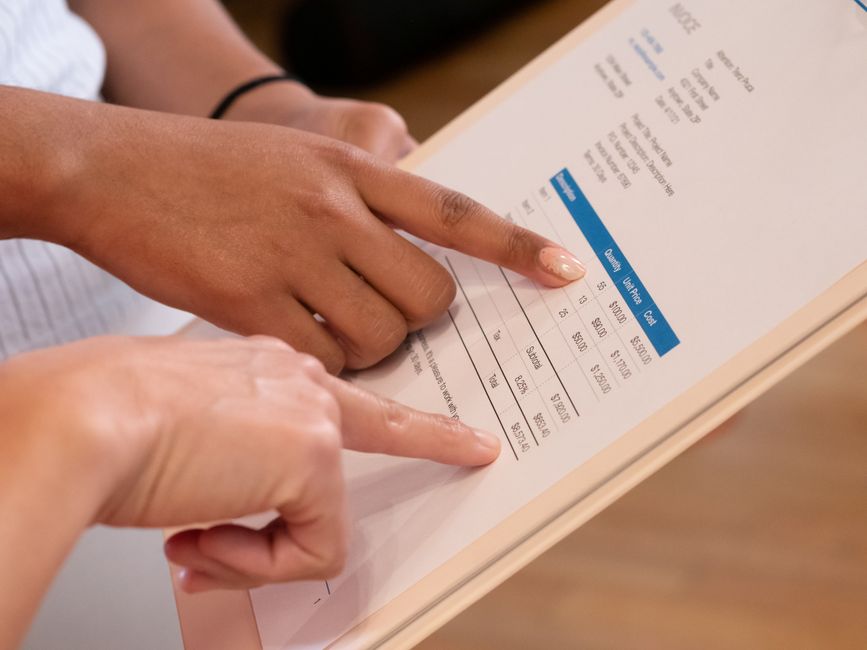
You need real numbers, reviewed frequently. That means knowing your actual monthly fixed costs, your variable costs at different revenue levels, how many months of operating expenses you have available, and what your break-even revenue looks like at your current cost structure.
If you have not already run a financial stress test on your business, now is the time. A stress test asks: what happens to my cash position if revenue drops 20 percent? 30 percent? 50 percent? How long can I sustain operations? What would I cut first? Running a simple financial stress test on your business once per quarter gives you a realistic picture of your exposure before a crisis arrives.
The goal is not to cause panic. It is to eliminate surprise. An owner who knows exactly what a 25 percent revenue drop would mean for their business can respond quickly and calmly. An owner who has never run those numbers will freeze.
Reduce Fixed Costs Without Dismantling Your Business
One of the most effective things you can do before or during an uncertain period is to reduce the weight of fixed costs. Fixed costs are what you owe regardless of revenue. The lower your fixed cost base, the more resilient your business is when revenue softens.
This does not necessarily mean layoffs or dramatic cuts. It means looking carefully at every recurring expense and asking whether you would sign up for it today at that price. Subscriptions you forgot about. Software licenses your team stopped using. Office space you are paying for but not fully utilizing. Vendor contracts that made sense at a higher revenue level but feel heavy now.
There is also a structural approach worth considering: converting fixed costs to variable costs wherever possible. Using contract workers for certain functions instead of full-time employees. Shifting to usage-based software pricing. Negotiating rev-share arrangements with vendors instead of flat monthly fees. The more your costs flex with your revenue, the more durable your business becomes.
Protect Your Best Customers First
During uncertain times, not all customers are created equal. Some customers generate most of your profit. Some customers require significant support for relatively thin margins. Some customers are loyal and will stick with you through hard times. Others will disappear the moment a competitor drops price by five percent.
The 80/20 principle almost always applies to small business revenue. A clear-eyed view of your 80/20 breakdown tells you which customers deserve your most attentive service and relationship investment right now. Know who your top 20 percent are. Reach out to them directly. Check in. Make sure they feel valued and informed. Do not assume loyalty. Reinforce it.
This is also a good time to be thoughtful about customer concentration risk. If one or two customers represent more than 30 percent of your revenue, economic uncertainty affecting them creates a direct threat to you. Diversifying your customer base is a longer-term move, but it is worth starting.
Adjust Pricing Strategically, Not Reactively
A common mistake during economic uncertainty is cutting prices to chase volume. It feels logical: if people are spending less, make yourself cheaper. The problem is that price cuts compress margins at exactly the moment when you need margin most, and they are very difficult to reverse without losing customers who have come to expect the lower price.
A better approach is to think carefully about the value you deliver and whether your pricing actually reflects it. If you are solving a real problem for your customers, the answer is rarely to become cheaper. It may be to communicate your value more clearly. It may be to create tiered offers that let price-sensitive customers stay with you while better clients access more premium service at a higher price point.
If your costs have risen and you need to adjust pricing, do it with a clear explanation to customers. Most business owners are surprised to discover that a well-communicated price increase loses fewer customers than a confusing one.
Build Optionality Into Your Strategy
Optionality means keeping your options open. It means avoiding decisions that lock you into one path when the environment is unpredictable. This shows up in a few practical ways for small business owners.
Short-term commitments over long-term ones where feasible. Month-to-month arrangements where you can negotiate them. Maintaining relationships with multiple suppliers rather than relying on one. Keeping some cash in reserve rather than deploying every dollar into growth. Slowing or pausing major capital investments until the picture clarifies.
None of this means paralysis. You still run your business, serve your customers, and look for growth opportunities. It means you do so while keeping enough flexibility that if things change sharply, you have room to adapt quickly rather than scramble.
The SBA recommends that small business owners maintain a reserve fund covering at least three to six months of operating expenses. If you are not there yet, building toward that number is one of the highest-leverage financial moves you can make. You can learn more about the SBA’s emergency preparedness resources for small business on their official site.
Keep Your Team Informed and Focused
Uncertainty is contagious. If your team senses that you are anxious and uninformed, anxiety spreads. The antidote is not false optimism. It is honest, calm communication.
Tell your team what you know, what you do not know, and what you are doing about it. Set clear near-term priorities. Give people a sense of what they can focus on that matters. When employees feel informed and purposeful, they perform better and stay longer. When they feel left in the dark, they start updating their resumes.
During uncertain periods, it also helps to increase the frequency of internal communication. Weekly check-ins, brief team huddles, or a simple written update can go a long way. You do not need to have all the answers. You need your people to know you are watching, you are thinking, and you value them.
Look for the Opportunities That Uncertainty Creates
Economic uncertainty is painful, but it also reshapes markets. Competitors who were overextended will exit. Customers who needed a better solution will be more open to change. Suppliers hungry for volume will be more willing to negotiate. Talent that was locked up at well-funded companies becomes available.
Managing lean periods effectively positions you to move quickly when opportunity presents itself. The businesses that emerged strongest from the economic turbulence of the early 2020s were not the ones that hid. They were the ones that stayed in the game, stayed close to their customers, and were ready to act when others were still recovering.
Keep a short list of moves you would make if conditions improved or if a specific opportunity appeared. Do not chase them aggressively right now. But know what they are, so that when the window opens you can move with confidence rather than starting from scratch.
The Bottom Line
Economic uncertainty will not be the last storm your business faces. Building the habits described here does not just help you survive this cycle. It builds a fundamentally stronger business for every cycle that follows.
Tighter financial visibility. Leaner cost structure. Stronger customer relationships. Flexible strategy. Calm, informed leadership. These are not emergency measures. They are the characteristics of businesses that outperform over the long run, uncertain times or not.
The owners who use periods of uncertainty to sharpen these disciplines rarely look back and call it a bad time. They call it the period that made their business better.
Want more practical guides for running a smarter small business? Join Hustler’s Library free and get the tools, strategies, and insights that serious business owners actually use.
Ready to Know Where You Stand?
The Business Journey dashboard maps your exact position across all 13 stages. Track your progress, unlock resources for each step, and build with a framework used by thousands of founders at Hustler's Library.

No credit card required · Takes 3 minutes · Personalized to your stage