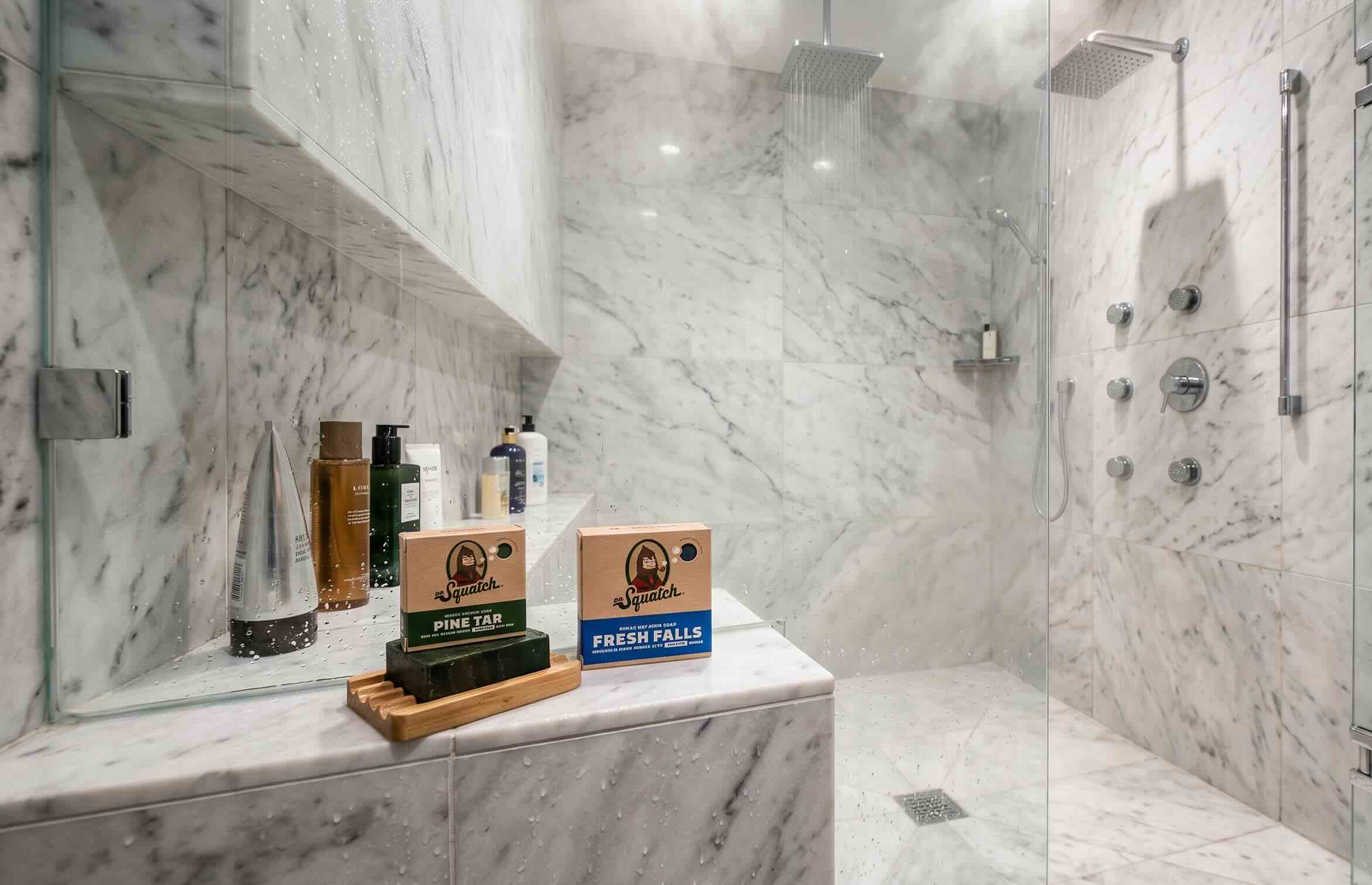
In 2013, Jack Haldrup was annoyed. He’d been using mass-market soaps loaded with synthetic detergents and artificial fragrances, and he figured most men felt the same way but had simply never been given an alternative worth switching to. So he started making natural soap in his kitchen. Fast forward a decade: Dr. Squatch hit $100M in revenue, was acquired by Unilever’s investment arm, and became one of the defining DTC success stories of the 2010s. But none of that happened because the soap was slightly better. It happened because of a video.
The Ad That Changed Everything
In 2015, Dr. Squatch released a YouTube ad called “Natural Soap for Men.” It was written and directed with the energy of a comedy sketch: fast cuts, irreverent humor, a host who talked to men like they were in on the joke. The ad did not list ingredients. It did not show a lab. It made fun of the big soap brands and positioned Dr. Squatch as the soap for guys who actually gave a damn about what they put on their body.
The video hit 100 million views. That number alone does not fully explain what it did for the brand. What it actually did was create a template: video-first, personality-driven, humor-forward DTC marketing at a moment when most men’s grooming brands were still running TV spots that looked like they were made in 2005.
Haldrup had essentially taken the playbook from Dollar Shave Club’s famous 2012 launch video and applied it to soap. But where Dollar Shave Club led with price disruption, Dr. Squatch led with identity. Their message was not “we’re cheaper.” It was “we’re for a different kind of man.” That distinction matters enormously when you’re trying to build a brand that commands a premium and generates loyalty.
Why Men’s Personal Care Was a Wide-Open Market
For decades, the men’s grooming category was treated as a shrink-it-and-pink-it afterthought. Brands would take women’s products, repackage them in dark colors, add the word “sport” or “extreme” to the label, and call it men’s marketing. The actual men buying these products were not asked what they wanted. They were expected to grab whatever was on the shelf next to their razors.
Dr. Squatch spotted the opening. Men were increasingly paying attention to what they put in and on their bodies. The wellness boom was not just a female market segment; it was reshaping how men thought about food, fitness, and personal care. But the brands serving that shift were almost all still targeting women. Natural, ingredient-conscious personal care had a massive untapped male audience.
Haldrup did not need to invent new behavior. He needed to show men that an alternative existed and give them a reason to feel good about choosing it. The viral video was the proof of concept. It showed that men would engage, share, and buy if you spoke to them correctly.
Storytelling Over Specs: The Brand Architecture
Most CPG brands, when they go natural or premium, lead with their ingredients. They put “with shea butter” or “no sulfates” on the front of the packaging and assume customers know what that means or care. Dr. Squatch took a different approach: they buried the specs and led with the story.
The brand identity was built around a character: the rugged, outdoorsy guy who lives authentically, does not settle for generic, and takes pride in the details. Product names leaned into this persona. “Pine Tar.” “Cypress and Cedar.” “Bay Rum.” These are not ingredient callouts. They are experiences. They evoke something. They make a man feel like buying soap is a statement about who he is.
This kind of brand storytelling is not accidental. It is a deliberate strategic choice that costs more upfront in creative development but pays off in customer lifetime value. When your brand has a clear persona, customers do not comparison shop the same way. They are not choosing between your bar of soap and the next guy’s bar of soap on the basis of price. They are choosing your brand because they identify with it. That is a fundamentally harder position for a competitor to attack.
Founders building early-stage brands often obsess over product differentiation when they should be obsessing over brand differentiation. The product needs to be good; it does not need to be magic. The brand needs to make the customer feel something. Alex Hormozi talks about this constantly: the offer matters, but the identity wrapper around the offer is what generates loyalty and word of mouth at scale.
The Subscription and Gifting Flywheel
Dr. Squatch’s growth engine had two primary wheels spinning simultaneously: subscription revenue and gifting occasions.
The subscription model gave them predictable revenue and dramatically improved customer LTV. A man who subscribes to a soap bundle is not a one-time transaction. He is a monthly recurring revenue line. The math on CAC flips entirely when you can model 12-24 months of retention. Dr. Squatch built their subscription around flexibility: customers could customize their bundle, adjust frequency, and pause without jumping through hoops. That friction reduction kept churn low.
The gifting angle was arguably more powerful as a growth lever. Men’s personal care is a notoriously difficult gift category. For years, the default gift for a man was a generic grooming kit from a drug store or an Axe body spray set that communicated approximately zero thought. Dr. Squatch positioned themselves as the anti-generic gift: a box of thoughtfully crafted, natural soaps with names that sounded cool and bars that smelled like something from the outdoors.
Their ads in the lead-up to Father’s Day, Christmas, and Valentine’s Day were targeted specifically at women buying for men. The call-to-action was essentially: “Stop buying your dad/husband/boyfriend the same boring thing. Give him something he will actually use.” This worked because it was true, it was easy to act on, and it created a new customer who then converted to repeat buyer once they tried the product. Every gifting season was effectively a low-cost acquisition channel with built-in social proof from the person giving the gift.
Scaling the Content Machine
The viral ad was the spark, but Dr. Squatch did not stop there. They built a content operation that kept producing video at scale, primarily through YouTube and Facebook, targeting men in the 25-45 demographic with ads that felt like entertainment rather than interruption. The creative formula stayed consistent: humor, identity reinforcement, light product demonstration, strong call to action. They tested relentlessly and scaled what worked.
This is the part most founders miss when they try to replicate what Dr. Squatch did. They see the viral video and think: “I need to make one great video.” Dr. Squatch did not have one great video. They had a system for producing content that converted. The viral video was the proof of concept. The ongoing content engine was the actual business infrastructure.
If you are serious about video-first DTC marketing, you need to think about this the same way you think about your supply chain or your customer service. It is not a campaign. It is a capability. Tools like Google Workspace become essential when you are coordinating a content team, managing review cycles for creative, and keeping production on schedule across distributed teams.
The Operational Side: Building a DTC Infrastructure
Behind the creative flash, Dr. Squatch built real operational infrastructure. They scaled manufacturing, managed a growing SKU count, ran a subscription logistics operation, and handled DTC fulfillment with the speed customers now expect. None of that is glamorous, but all of it is where most DTC brands break down when growth hits.
For founders at the early stage, the lesson here is sequencing. Get the brand and the content right first. Prove out the unit economics on a small scale. Then build the operational layer to support growth. Too many founders over-invest in operations before they have proven demand and under-invest in brand before they have proven retention.
On the legal and structural side: if you are building a DTC brand with subscription revenue, your business structure matters from day one. Subscription businesses carry specific liability and consumer protection considerations that vary by state. Setting up the right entity early is not bureaucracy; it is protection. Services like Northwest Registered Agent can handle the formation cleanly so you can stay focused on building the actual brand. If you prefer a more guided option, LegalZoom is another solid route for getting your entity structured properly.
The Acquisition and What It Signals
In 2021, Dr. Squatch was acquired by Unilever’s investment arm for a reported $255 million. That number tells you something important: the big CPG players are not winning the DTC race. They are buying the winners after the fact.
Unilever, P&G, and their peers have distribution muscle, manufacturing scale, and retail relationships that no startup can match. What they lack is the ability to build authentic, personality-driven brands that connect with digital-native consumers. Dr. Squatch had exactly that. The acquisition was not Unilever buying soap. It was Unilever buying a content-driven brand with a loyal male customer base and a proven DTC playbook.
For founders, this is the strategic signal: if you can build genuine brand equity with a defensible customer relationship, you become acquisition-ready at a multiple that rewards the creative and operational risk you took. The value was not in the soap formula. It was in the audience.
If you want to understand how other founders have thought about building audience-first brands, Donald Miller’s StoryBrand framework is one of the clearest articulations of what Dr. Squatch did intuitively at scale. And for the full playbook on DTC scaling, Jordan Welch’s breakdown of e-commerce brand building covers a lot of the same principles from a practitioner’s lens.
Steal This
1. Identity beats ingredients every time
Dr. Squatch never led with “we use better ingredients.” They led with “this is who you are when you use our product.” Build your brand around a persona and an identity, not a feature list. Features can be copied; identity cannot.
2. Video is not a campaign, it is infrastructure
The viral ad was not a one-off stroke of luck. It was the beginning of a content system. Build video production as an ongoing capability. Test constantly, scale what works, and never treat a single piece of content as a strategy.
3. Gifting is a stealth acquisition channel
If your product is giftable, build a marketing track specifically for gift-givers. They are often not your core customer, but they introduce your brand to new users with built-in social endorsement. That is word-of-mouth at paid media scale.
4. Subscription revenue changes the unit economics of everything
A subscribed customer changes how you think about CAC, creative spend, and channel investment. Build subscription into your model early, make it easy to join and easy to manage, and watch your LTV math transform what you can afford to spend on acquisition.
5. Find the underserved identity in your category
Men’s natural personal care was not a new product category. It was an underserved identity. Look at your market not just for product gaps but for identity gaps: who is being ignored, spoken to poorly, or lumped in with the wrong audience? That is where the brand opportunity lives.
Ready to Know Where You Stand?
The Business Journey dashboard maps your exact position across all 13 stages. Track your progress, unlock resources for each step, and build with a framework used by thousands of founders at Hustler's Library.

No credit card required · Takes 3 minutes · Personalized to your stage