Walk into any Apple store and you’ll notice something before you ever touch a product: everything looks deliberate. The boxes are crisp. The tissue paper is folded just so. The bag has weight to it. None of that is accidental, and none of it is cheap to produce. Apple spends a significant amount per unit on packaging alone because they understand something most small business owners overlook: the way you present your product or service is part of the product itself.
You don’t need Apple’s budget to apply this principle. Whether you sell handmade candles, run a consulting firm, or own a restaurant, packaging and presentation shape how customers perceive your value before they ever experience what you’re actually selling. Get it right, and you can charge more, generate more referrals, and build a brand that customers feel proud to share. Get it wrong, and even a great product can feel forgettable.
This guide breaks down how to use packaging and presentation strategically, even on a limited budget.
Why Packaging Is a Pricing Tool, Not Just a Container
Most business owners think about packaging as a cost to minimize. Smart business owners think of it as a lever to pull. Research consistently shows that customers use visual and tactile cues to judge quality before they’ve experienced the product itself. A higher-end package signals higher-end value, and that perception directly affects how much people are willing to pay.
This isn’t manipulative; it’s communication. When someone orders from your business and receives a package that feels intentional, they conclude that you care about details. And a business that cares about details probably delivers quality in the actual product too. The packaging becomes proof before the proof.
Candle brand Homesick sells essentially the same product you could buy at a drug store for a fraction of the price. Their packaging: a clean matte box, branded inner tissue, a thoughtful font choice, that single detail, combined with their nostalgic marketing, helped them get acquired for well over $100 million. The product didn’t change. The presentation created an entirely different category.
The Five Elements That Define Presentation Quality
Whether you sell a physical product or a service, these five elements determine how your business is perceived:
1. Visual Consistency
Your fonts, colors, logo, and overall aesthetic should be the same across every touchpoint: packaging, website, invoices, email signatures, and social media. Inconsistency signals amateur. Consistency signals authority. You don’t need to be the most beautiful brand in your market. You just need to be visually predictable in a way that communicates confidence.
2. Tactile Quality
For physical products, the weight and feel of materials matter. A flimsy box that dents on arrival communicates carelessness. Thick cardboard, matte finishes, and ribbon pulls communicate premium. Even a small upgrade from a plain poly mailer to a kraft paper mailer with a custom sticker seal can shift perception significantly. Service businesses can apply this through the quality of printed materials, proposal documents, and even the pens they leave behind.
3. The Unboxing Experience
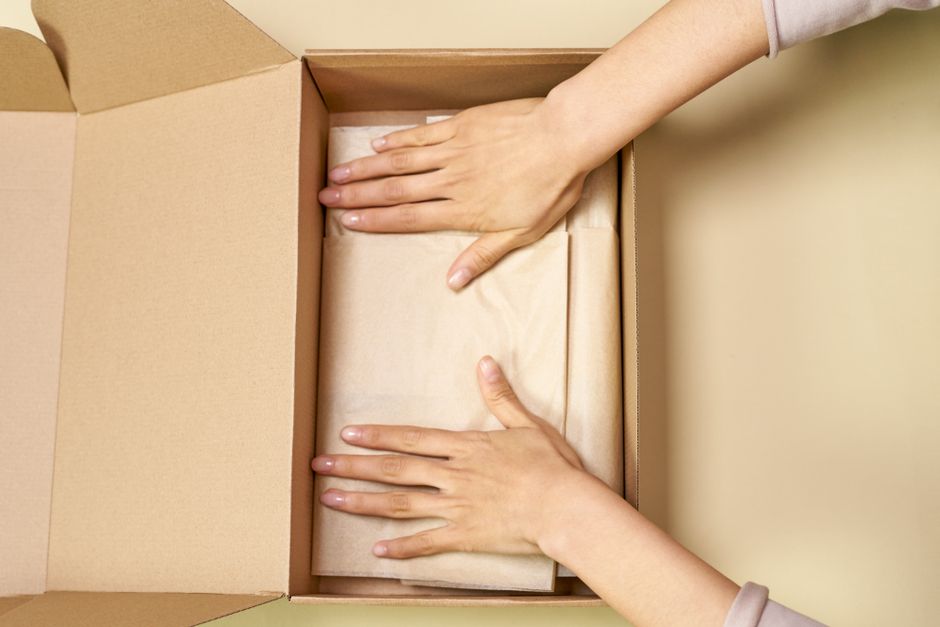
Unboxing has become its own content category for a reason: people are wired to respond to reveals. Think about what it feels like to open your packaging. Is there a logical sequence? Is there a small thank-you card? Is the product protected and presented rather than just dumped in a box? Every layer your customer removes should feel intentional. A crinkle-cut paper fill, a branded sticker seal on the inner bag, a handwritten note on a small card: these small touches cost almost nothing individually and create outsized impressions.
4. Copy and Messaging on the Package
The words on or inside your packaging are an underused asset. Most businesses print a logo and nothing else. But your packaging can reinforce your brand story, include a call to action (follow us, leave a review, scan this QR code), and create a moment of delight. A card that says “You’re going to love this. Here’s why…” before explaining what makes your product different is a sales conversation happening after the sale, reinforcing the customer’s decision and increasing the likelihood they come back.
5. Sustainability Signals
For many consumers, especially those under 40, sustainability has become a quality signal. Packaging made from recycled materials, soy-based inks, or compostable wraps communicates responsibility and tends to skew upmarket. If your packaging is already eco-friendly, say so explicitly. If it isn’t, consider whether a switch is feasible: it often costs the same or less than conventional materials in bulk, and it gives you a positioning advantage worth communicating.
How Service Businesses Can Apply This Framework
If you sell a service rather than a physical product, presentation still determines perceived value. Think about every touchpoint a client experiences with your business:
- Proposals and contracts: Are they in a branded PDF with a cover page, or a plain Word document? The same terms in a polished format feel more professional and justify higher fees.
- Onboarding materials: A welcome packet, a clearly designed onboarding checklist, or a short video that walks clients through next steps all signal that you run a serious operation.
- Deliverables: Reports, designs, and presentations should look like finished work, not internal drafts. Headers, white space, brand colors, and a consistent format turn a functional deliverable into something that feels valuable.
- Client gifts: A small, well-chosen gift at the start or end of a project, packaged thoughtfully, creates a memory that far outlasts the gesture itself.
If you want to close better clients at higher rates, consider reading how to use a service guarantee to build trust: a polished presentation and a strong guarantee together create a nearly irresistible package for high-value buyers.
Budget-Friendly Ways to Upgrade Your Packaging Right Now
You don’t need to overhaul everything at once. Here are practical upgrades you can make for under $200:
- Custom stickers: A branded sticker seal is one of the highest-ROI packaging upgrades. Services like Sticker Mule offer runs of 50 stickers for under $20. One sticker on a plain bag transforms it into branded packaging.
- Tissue paper and filler: Branded tissue paper or simple crinkle-cut kraft filler costs pennies per unit and immediately elevates the unboxing experience.
- Thank-you cards: A small card printed at VistaPrint or Canva costs almost nothing and creates a human moment. Handwriting a name adds another level that customers notice and share.
- Ribbon or twine: For gift-oriented products, a simple ribbon or jute twine adds a tactile finishing touch that photographs well and feels premium.
- Consistent outer packaging: Switching from random boxes to a consistent size and color is a low-cost move that makes your brand look intentional and camera-ready.
Using Presentation to Justify Premium Pricing
The most direct benefit of better packaging is pricing power. When your product looks and feels like it belongs in a higher price tier, you can charge accordingly. This requires that your core product actually delivers, but even when it does, poor presentation keeps you stuck competing on price.
Consider running a simple test: package the same product two ways and show each to a small group of customers. Ask what they’d pay. The difference is often 20 to 40 percent based on packaging alone. That’s not manipulation; that’s the market communicating what presentation is actually worth to buyers.
Presentation also affects referrals. A beautifully packaged product gets photographed, shared, and talked about. An unremarkable package gets thrown in the recycling. When you’re trying to figure out how to build a brand voice that resonates, remember that your packaging communicates before a single word is spoken.
When to Invest in a Full Packaging Redesign
There are moments when a full redesign makes sense:
- You’re raising prices and want to signal the upgrade visually
- You’re entering a new sales channel (wholesale, retail, online marketplaces) where visual shelf presence matters
- Customer feedback indicates the current packaging feels cheap or misaligned with the product quality
- You’ve rebranded your business and the packaging doesn’t match
A packaging redesign doesn’t have to mean hiring an expensive agency. Platforms like Fiverr have packaging designers who specialize in small business work for a few hundred dollars. A clear brief, a mood board, and a few reference brands you admire are all you need to get strong results without a big agency budget.
The SBA’s business resource center also provides guidance on brand development as part of broader marketing strategy, including how small business grants can be used for brand identity work.
Packaging as a Customer Retention Strategy
First impressions drive conversions. But second impressions, and third ones, drive lifetime value. A customer who opens your package and feels a spark of delight is primed to reorder, to recommend you, and to pay more next time. Packaging isn’t a one-time cost; it’s a recurring investment in your customer relationship.
Think about the last time you received something in the mail that made you smile. What was it? Probably something someone clearly thought about. That’s what your customers will say about you when you invest in presentation. And that kind of word-of-mouth is the most efficient marketing you’ll ever do. For more on building that kind of sustained loyalty, read how to write a strategic plan that builds long-term momentum.
The Bottom Line
Packaging and presentation are not afterthoughts. They’re a pricing tool, a retention strategy, and a brand signal all rolled into one. You don’t need to spend a fortune to make your business look like it belongs at a higher price point. You just need to be intentional, consistent, and willing to see packaging for what it actually is: part of the product.
Start small. Upgrade one thing this week. Notice how customers respond. Then keep going.
Want more strategies for growing your small business?
Join thousands of small business owners who read Hustler’s Library for practical, no-fluff business advice. Join for free here.
Ready to Know Where You Stand?
The Business Journey dashboard maps your exact position across all 13 stages. Track your progress, unlock resources for each step, and build with a framework used by thousands of founders at Hustler's Library.

No credit card required · Takes 3 minutes · Personalized to your stage