Demand for video content has never been higher, and the people creating it consistently hit the same wall: they know how to shoot, but editing takes time they do not have. That gap is where freelance video editors make their living.
This guide covers what the work actually involves, what you need to get started, realistic income expectations, and a clear path to landing your first paying clients.
What Freelance Video Editors Actually Do
Video editing is the process of assembling raw footage into a finished product. That includes cutting and sequencing clips, adding music and sound design, color grading, inserting graphics and text overlays, syncing audio, and exporting in the right format for each platform.
The work spans a wide range of formats and clients:
- YouTube creators: Long-form content, shorts, course videos
- Social media content: Instagram Reels, TikToks, LinkedIn clips, brand videos
- Corporate clients: Training videos, product demos, company culture videos, internal communications
- Real estate agents: Property walkthrough videos and listings
- Podcasters: Video podcast editing and audiogram clips
- Wedding and event videographers: Post-production on shoots they filmed
Editors who specialize in one or two of these categories earn more and find clients more easily than generalists trying to serve everyone.
Startup Costs: What You Actually Need
Video editing has real equipment requirements, but you do not need to spend $5,000 to get started. Here is an honest breakdown:
Computer
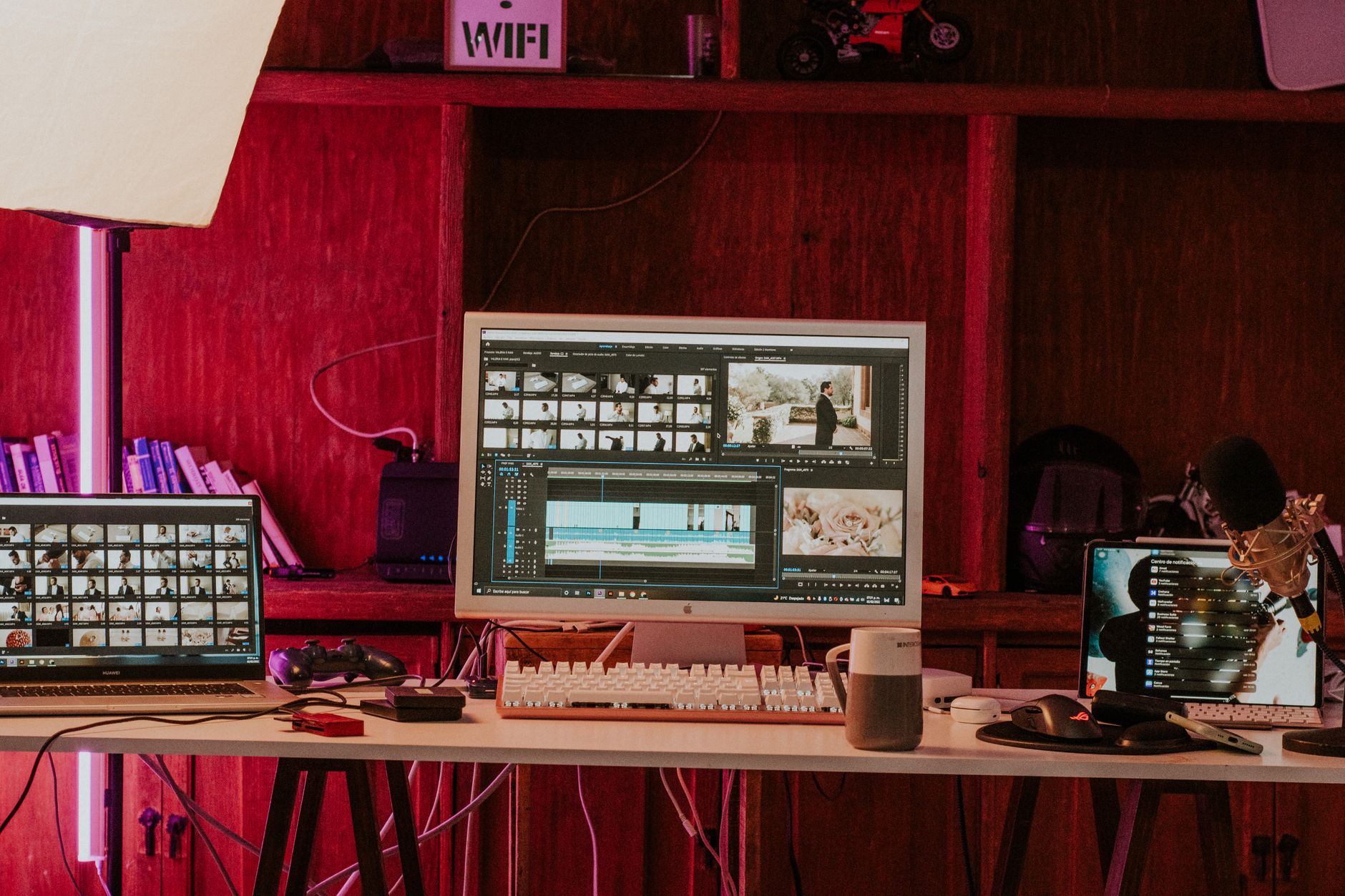
This is your most important investment. Video editing is processor and RAM intensive. For basic editing (1080p footage, social media content), a modern laptop with 16GB RAM and a dedicated GPU works fine. For 4K editing and color grading, you want 32GB RAM and a fast SSD. A used Mac Mini M1 or M2 performs excellently for under $600. A mid-range Windows PC with an AMD Ryzen 7 or Intel Core i7 and an NVIDIA card works well for $800 to $1,200 if built yourself.
Software
- Adobe Premiere Pro: The industry standard. About $55/month as part of Creative Cloud. Most client files arrive as Premiere projects, so knowing it is close to mandatory for agency and corporate work.
- DaVinci Resolve: Free for the core version, $295 for Studio (one-time). Resolve’s color grading tools are widely considered better than Premiere’s. Many independent editors prefer it, and the free version is legitimately professional.
- Final Cut Pro: Mac only. $300 one-time. Fast, intuitive, great for social content and YouTube. Less common in corporate environments than Premiere.
- CapCut: Free. Increasingly popular for social media editors. Worth knowing for TikTok and Instagram-focused clients, though it is not a full professional NLE.
Storage
Raw video files are large. A 1-hour 4K shoot can easily be 50 to 100GB. You need an external SSD for client files (around $80 to $120 for 1TB) and a backup drive or cloud storage. Do not skip the backup. Losing client footage is a career-ending error that is completely preventable.
Total realistic startup cost: $800 to $2,000 if you need a new computer. If you already have a capable machine, you can start with $0 to $300 (DaVinci Resolve is free, and hard drives are inexpensive).
How Much Do Freelance Video Editors Earn?
Rates vary significantly by project type, experience, and whether you are pricing per project or per hour. Here is what the market actually looks like:
- Entry level (0 to 1 year): $25 to $50/hour or $150 to $400 per finished video (5 to 10 minutes). Many beginners on platforms like Upwork start at the lower end to build reviews.
- Mid level (1 to 3 years): $50 to $100/hour or $400 to $1,200 per video. At this point you have a portfolio, can handle most formats, and are faster. This is where most editors building a sustainable side income land.
- Senior / specialist (3+ years, niche focus): $100 to $200/hour. Corporate video, broadcast-level production, motion graphics, and color grading specialists command premium rates because their output is measurably different.
- Retainer clients: The best business model. A brand that needs 8 to 12 social clips per month paying $800 to $2,000/month on a retainer is more valuable than chasing individual projects. One retainer client can cover rent.
Monthly income at scale: An editor working 20 hours per week at mid-range rates ($65/hour) earns about $5,200/month gross. Many part-time editors working evenings and weekends clear $1,500 to $3,000/month within their first 12 months.
Building a Portfolio Before You Have Clients
You need work to show before most clients will hire you, and you need clients to get work. Here is how to build samples fast:
- Edit stock footage into something compelling. Download free footage from Pexels Videos or Pixabay and edit it into a 60-second brand video, a travel reel, or a product showcase. This costs nothing and demonstrates your skills in a format clients recognize.
- Offer to edit for free once. Find a local business, a nonprofit, or a YouTube creator you genuinely respect and offer one free edit. Do exceptional work and ask for a testimonial and permission to use the video in your portfolio.
- Recut existing footage. Take a publicly available YouTube video, download it (for portfolio-only use), and recut it differently. Show your version alongside the original. This works particularly well for demonstrating pacing and storytelling instincts.
- Create your own content. A 90-second video showcasing your editing style, shot on a phone and edited by you, says everything a portfolio needs to say. Post it on YouTube, Instagram, and LinkedIn.
Where to Find Your First Clients
Freelance Platforms
- Upwork: Create a specific profile (“YouTube video editor” or “short-form social media editor” rather than “video editor”). Apply to small, lower-budget jobs first to get reviews. Your first 3 reviews unlock better visibility and higher-paying projects.
- Fiverr: Create gigs around specific deliverables. “I will edit your YouTube video up to 10 minutes” with clear pricing tiers performs better than generic listings. A well-structured gig on Fiverr can generate inbound inquiries passively once it ranks.
- YouTube Creator Marketplace: YouTube has a tool where creators find collaborators. Worth signing up and filling out a complete profile.
Direct Outreach
Platform work is good for getting started. Direct clients are where the real income is.
- Search Instagram or TikTok for creators in a specific niche (fitness, cooking, real estate, business) who post video content but whose editing quality is mediocre. DM them with a specific, short pitch and a link to one relevant sample.
- Email real estate agencies in your area. Real estate video content is in high demand, the clips are short, and agents pay well for polished walkthroughs ($200 to $600 per video).
- Reach out to podcast hosts who record video but are not turning it into social clips. Offer to produce 5 social clips from their latest episode as a paid trial at a flat rate.
- Check local Facebook groups for business owners. Many small businesses have footage sitting unused because they do not know what to do with it.
Referrals and Communities
Join communities where video creators and business owners hang out. The r/VideoEditing subreddit, Facebook groups for YouTube creators, and LinkedIn are all sources of work. Be genuinely helpful in these communities, share your work, and clients find you. Referrals from one satisfied client are consistently the best source of new business once you have your first few projects done.
Essential Skills to Build
Technical editing skills are table stakes. What separates good editors from great ones is storytelling instinct: the ability to sense rhythm, decide what to cut, and build emotional momentum in the viewer. That takes time and repetition to develop, but it is learnable.
Specific skills worth prioritizing:
- Color grading: Even basic color correction dramatically improves perceived production quality. DaVinci Resolve’s color page is the best free tool for learning this.
- Motion graphics: Adobe After Effects opens up a whole new category of work and significantly higher rates. Lower thirds, animated titles, and kinetic text are skills clients will pay a premium for.
- Audio: Most footage sounds mediocre. Learning basic audio cleanup (noise reduction, EQ, leveling) in Adobe Audition or Resolve’s Fairlight page is a meaningful differentiator.
- Platform specs: Know the right export settings for YouTube, Instagram, TikTok, and LinkedIn cold. Clients notice when an editor delivers a file that looks wrong on the platform it was built for.
Time to First Dollar
If you sign up on Upwork and Fiverr today with a basic portfolio, you can realistically land your first paid job within 2 to 4 weeks. Setting up a Fiverr gig correctly often generates the first inquiry faster. Direct outreach to local businesses or creators can produce results even faster if your pitch is specific and your sample is strong.
The Bureau of Labor Statistics projects 8% employment growth for film and video editors through 2032, faster than the average for all occupations. The freelance market is growing even faster as independent creators, brands, and businesses all need video content and cannot afford full-time in-house editors.
If you are exploring other remote creative freelance paths, our guides on how to become a freelance graphic designer and how to make money doing voiceover work from home cover parallel skillsets with similarly strong earning potential.
What Makes This Sustainable Long-Term
The editors who build durable businesses do a few things consistently well. They communicate like a professional: clear timelines, proactive updates, clean deliverables. They specialize rather than competing on price. And they move clients toward retainer arrangements as soon as the relationship is established, because monthly recurring revenue is far more stable than project-to-project hunting.
If you need support on the business side (invoicing, contracts, or client management tools), you can find vetted freelance business consultants through Fiverr to help set up your workflow infrastructure as you scale.
Freelance video editing is not a passive income stream. It is skilled work that rewards people who take it seriously. If you enjoy the craft, are willing to put in time on technical skills, and treat clients like a real business would, there is a clear path from your first $100 project to a full-time income editing video for a living.
Ready to build something real?
Join the Hustler’s Library community free and get the practical guides, tools, and honest breakdowns you need to start and grow a side income.
Ready to Know Where You Stand?
The Business Journey dashboard maps your exact position across all 13 stages. Track your progress, unlock resources for each step, and build with a framework used by thousands of founders at Hustler's Library.

No credit card required · Takes 3 minutes · Personalized to your stage