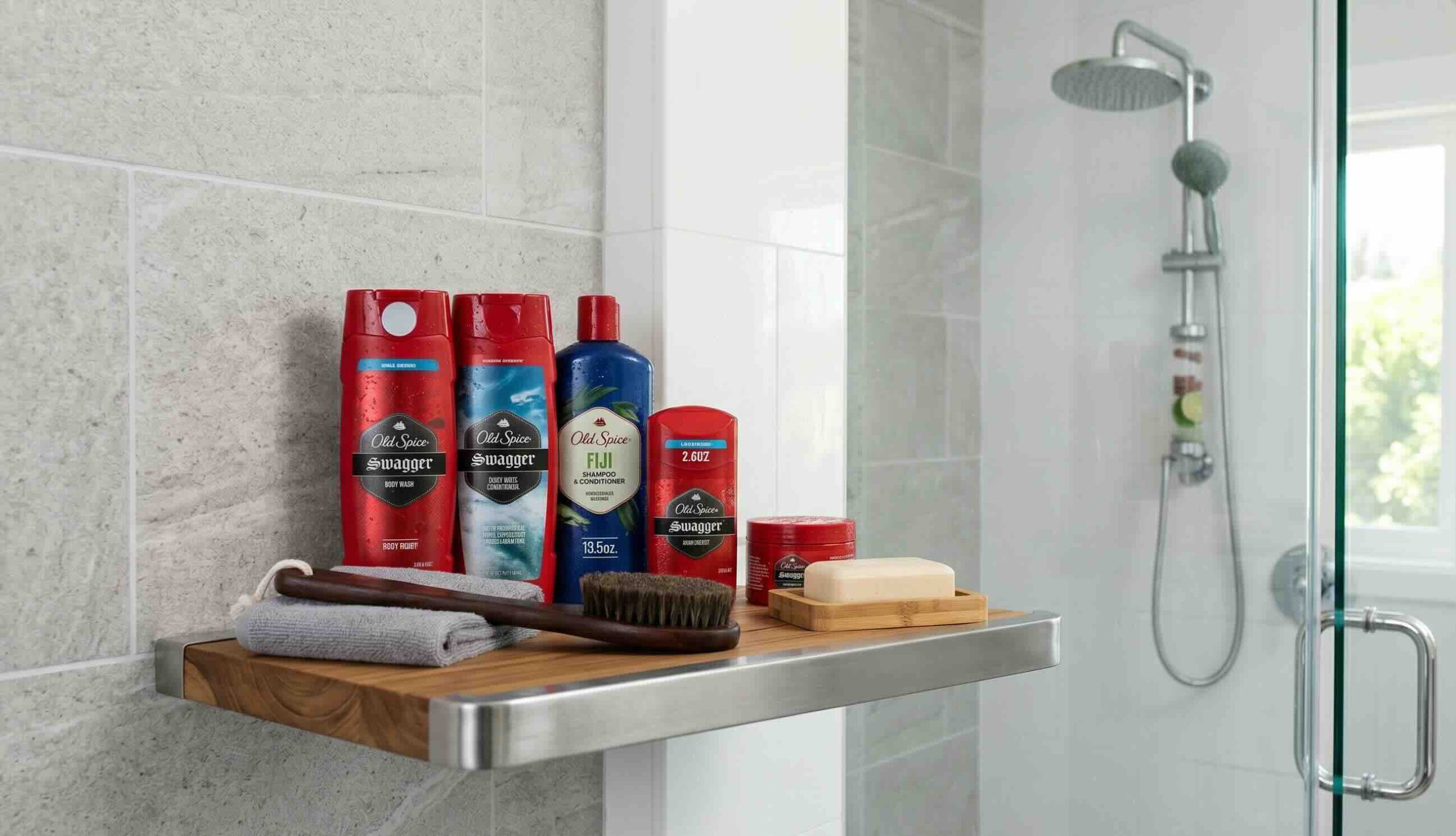
In 2010, Old Spice was a brand your grandfather used. That was not a compliment. Sales were sliding, the demographic was aging out, and the brand carried zero cultural relevance for the buyers P&G actually needed to reach: men under 35 and, critically, the women who bought grooming products for them.
What happened next is studied in business schools, referenced in marketing conferences, and still replicated today. P&G and their agency Wieden+Kennedy did not quietly refresh the logo or run a discount campaign. They decided to be completely, intentionally absurd, and it worked.
The Brand Was Dying. Here Is the Evidence.
By the mid-2000s, Old Spice had a real problem. Newer brands like Axe (known as Lynx in the UK) had stormed into the male grooming space with edgy, youth-targeted advertising. Old Spice, founded in 1937, was stuck with an image problem it could not shake: it smelled like something from your dad’s medicine cabinet.
P&G acquired Old Spice in 1990 and spent the next two decades trying to modernize it with mixed results. The “Odor Blocker” and “Fresh Collection” line extensions moved some units, but the brand’s core identity remained frozen in amber. The word association for most consumers under 40 was: old.
The irony was that Old Spice had real product quality. The problem was perception, not performance. That distinction matters enormously for what came next.
The Brief That Changed Everything
Wieden+Kennedy, the Portland-based independent agency behind Nike’s “Just Do It” era, took on the Old Spice account with a deceptively simple brief: make Old Spice relevant to a younger audience without alienating the existing buyer base.
The insight they landed on was counterintuitive. Rather than running from the brand’s heritage, they would lean into it, but with a wink. The campaign would be absurdist, self-aware, and deliberately over-the-top. It would acknowledge the brand’s reputation and then flip it into a strength.
The creative team also identified a crucial audience insight: women make a significant portion of men’s grooming purchases. The campaign would technically speak to women (“The Man Your Man Could Smell Like”) while making men want to be the man being described. It was a double-targeting move that few brands had executed so cleanly.
“The Man Your Man Could Smell Like”: Breaking Down the Ad
The hero spot debuted during Super Bowl XLIV in February 2010. Isaiah Mustafa, a former NFL practice squad wide receiver, delivered a rapid-fire monologue directly to camera while the scene transformed impossibly around him: shower to beach to boat, all in one continuous shot.
The writing was deliberately absurd: “Hello, ladies. Look at your man, now back to me, now back at your man, now back to me. Sadly, he isn’t me, but if he stopped using ladies’ scented body wash and switched to Old Spice, he could smell like he’s me.”
Everything about the execution was precise. The pacing was fast enough to feel fresh, the humor was surreal without being alienating, and Mustafa’s delivery was confident without being threatening. The brand appeared exactly once, at the end, but every second of the spot built toward it.
Within 24 hours of the Super Bowl, the ad had more views online than the game itself. Within a week, it was the most-watched online ad in history at that time.
The Real-Time Response Campaign: When It Got Genius
The viral moment was impressive. What Wieden+Kennedy did next was something else entirely.
In July 2010, the agency assembled a production team and filmed Isaiah Mustafa responding in real time to social media comments, questions, and shout-outs from celebrities and ordinary fans alike. Over two days, they produced and uploaded nearly 200 personalized video responses to YouTube.
Alyssa Milano tweeted at Old Spice. She got a response video. Reddit asked a question. Reddit got a response video. A marriage proposal came in. Old Spice responded with a video helping the man propose. Each video was written, filmed, edited, and live within hours of the original message.
This was not just a stunt. It was a demonstration of what a brand could do when it treated social media as a live conversation rather than a broadcast channel. At the time, most brands used Twitter and YouTube as billboards. Old Spice turned them into a two-way dialogue, and the internet lost its mind.
The response campaign generated 35 million YouTube views in its first week. Old Spice’s Twitter following increased 2,700%. Their Facebook fan interactions went up 800%.
Brand repositioning: the strategic process of changing how a target audience perceives a product or company, usually by shifting associations, tone, or positioning in the market. When done well, it does not erase the past; it reframes it.
By the Numbers
- Old Spice body wash sales increased 125% year-over-year within six months of the campaign launch
- The hero spot became the most-watched online ad in history at the time of its release
- The real-time response campaign generated 35 million YouTube views in its first week
- Twitter following grew 2,700% during the response campaign
- Facebook fan engagement increased 800%
- Old Spice became the #1 selling men’s body wash brand in the US within one year
- The campaign won the Grand Prix at Cannes and an Emmy for Outstanding Commercial
The Business Lesson: Courage to Be Weird
Most companies facing a brand relevance problem do one of two things: they run a discount campaign, or they hire a consultant to produce a brand refresh that looks exactly like every other brand refresh. Neither works, because neither addresses the actual problem, which is that no one is paying attention.
What P&G and Wieden+Kennedy understood was that attention is earned, not bought. You can spend $10 million on media and generate zero cultural impact if the creative is forgettable. Old Spice spent money, but more importantly, they spent courage. They approved something genuinely strange: a fast-talking man in a towel performing magic tricks and telling women to smell their husbands.
This connects to a principle we call Contrast Positioning (Hustler’s Library framework): the idea that in a crowded market, being memorably different beats being marginally better. Old Spice did not claim to smell 15% fresher than the competition. They claimed to be the impossible ideal of masculinity, delivered with a smirk, and let the product catch up to the promise.
The real-time response campaign added a second layer: Participatory Marketing, where the audience becomes part of the content itself. Instead of broadcasting at potential customers, Old Spice pulled them into the story. That shift from passive viewer to active participant is what drives the kind of organic sharing that no media buy can replicate.
Compare this to how Dr. Squatch turned a bar of soap into a $100M brand using a similar playbook: they did not compete on specs, they competed on story and personality. Old Spice was doing it first, and at far greater scale.
There is also a structural lesson here about the courage required internally. P&G is one of the most process-driven, research-heavy consumer goods companies on the planet. Getting an ad this weird approved at that level of the corporate hierarchy is itself an achievement. Someone at P&G said yes to a man on a horse delivering oysters. That decision made the company hundreds of millions of dollars.
What This Means for Your Business
You do not need a Super Bowl budget to apply these principles. The Old Spice playbook works at any scale because it is fundamentally about creative courage and audience understanding, not spend.
Ask yourself three questions about your own brand:
- What negative perception does your brand carry that you have been trying to hide? Old Spice leaned into “old.” What is your equivalent?
- Who is actually making the purchase decision? Old Spice aimed the campaign at women buying for men. Who is your real buyer?
- Are you broadcasting or conversing? The real-time response campaign was the internet era’s most powerful proof that engagement beats reach.
If you are building a brand and need the operational infrastructure to support it, getting your business properly structured is worth doing early. Services like Northwest Registered Agent can help you set up the legal entity quickly, so you can focus on the work that actually grows the brand.
And if you want to see how another legacy company rebuilt its identity from the ground up using authenticity as a weapon, read our breakdown of how Patagonia turned anti-marketing into its most powerful growth engine. Different category, same core principle: stand for something specific, and say it without apology.
Key Takeaways
- Heritage is not a death sentence. Old Spice was 73 years old when it ran this campaign. Age becomes ironic-cool when you own it with confidence.
- Target the decision-maker, not just the user. Women were buying men’s grooming products. Targeting them was the insight that unlocked the whole campaign.
- Weird creative outperforms safe creative. Safe ads get politely ignored. Absurdist ads with a clear brand message get shared, argued about, and remembered.
- Social media is a conversation, not a billboard. The real-time response campaign was not a stunt; it was a proof of concept for participatory marketing that still has not been topped at that scale.
- Speed is a competitive advantage. Filming, editing, and publishing 200 personalized videos in two days was a production and strategic achievement. Execution speed amplified the creative.
- Product quality has to back up the promise. The campaign drove trial. The product kept customers. Without the actual body wash performing, the campaign would have generated buzz and no retention.
Sources & Further Reading
- Wieden+Kennedy: The Man Your Man Could Smell Like campaign case study (2010)
- Nielsen: Old Spice sales data, 2010 body wash category report
- Adweek: “Old Spice Responds to Fans With Personalized YouTube Videos” (July 2010)
- Cannes Lions Archive: Old Spice Grand Prix winner, Film category, 2010
- Harvard Business Review: “The New Science of Viral Ads” (2012)
Want more breakdowns like this? Join Hustler’s Library free and get access to our full case study vault.
Ready to Know Where You Stand?
The Business Journey dashboard maps your exact position across all 13 stages. Track your progress, unlock resources for each step, and build with a framework used by thousands of founders at Hustler's Library.

No credit card required · Takes 3 minutes · Personalized to your stage