Choosing the best electric vehicles for business use in 2026 means balancing purchase price, range, cargo capacity, and the tax deductions that make the real cost dramatically lower than the sticker price. The IRS Section 179 deduction and the Clean Vehicle Credit under the Inflation Reduction Act have made EV ownership one of the most tax-advantaged moves available to small business owners this year. This guide breaks down the top EVs for business, what they cost after deductions, and how to claim every dollar you are entitled to.
Why Electric Vehicles Make Financial Sense for Business in 2026
The math on business EVs improved significantly after 2023. The Inflation Reduction Act created a Commercial Clean Vehicle Credit (Form 8936) worth up to $7,500 for vehicles under 14,000 lbs and up to $40,000 for heavier commercial vehicles. This credit applies to EVs purchased for business use, and unlike the consumer credit, the commercial version has no income cap and no MSRP ceiling.
Stack that with Section 179 expensing, which lets you deduct the full purchase price of qualifying business vehicles in the year of purchase up to $1,160,000 in 2026, and bonus depreciation rules, and the after-tax cost of a business EV can be dramatically lower than the purchase price. A $60,000 EV purchased for a business operating in a 30% tax bracket could have a true after-tax cost closer to $30,000 to $35,000 depending on how you structure the deduction.
Fuel and maintenance savings compound the advantage. The average cost to charge an EV is roughly one-third to one-quarter the cost of gasoline per mile, and EVs have significantly fewer moving parts that wear out. Brake pads, transmission fluid, and oil changes are largely eliminated from your operating cost structure.
Best Electric Vehicles for Business Use in 2026
1. Ford F-150 Lightning Pro: Best Work Truck
The F-150 Lightning Pro is built specifically with commercial buyers in mind. The base Pro trim starts around $49,995, making it one of the more accessible business EVs. It offers 230 miles of range in standard battery configuration and up to 320 miles in extended range. The Pro Power Onboard system turns the truck into a mobile generator, delivering up to 9.6 kW of exportable power: a major operational advantage for contractors and field service businesses. Payload capacity is 2,000 lbs and towing is rated up to 10,000 lbs on extended range models. The Lightning Pro qualifies for the Commercial Clean Vehicle Credit and Section 179.
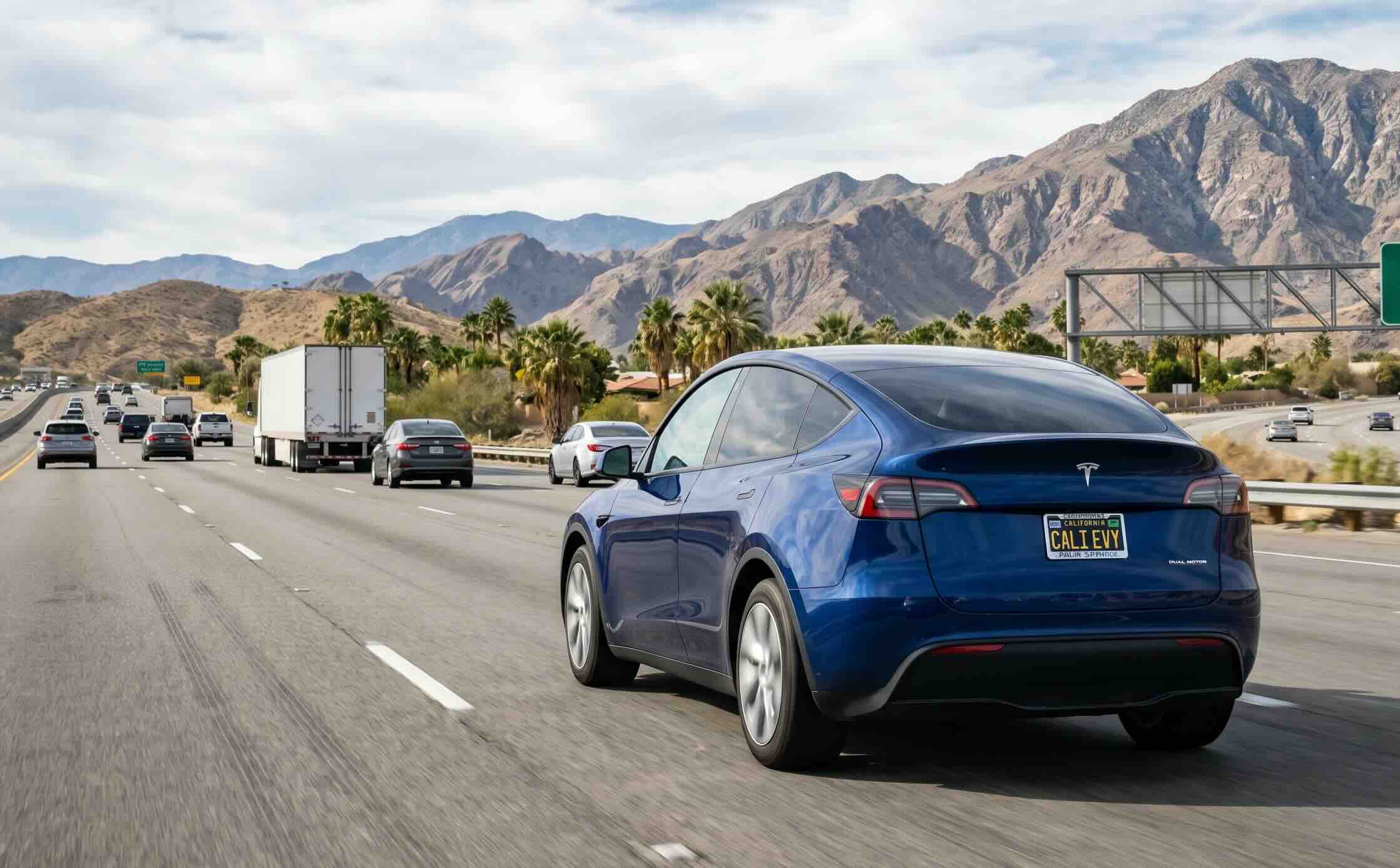
2. Tesla Model Y Long Range AWD: Best for Sales and Service Professionals
The Model Y is the best-selling electric vehicle in the United States and for good reason. Starting around $47,990 for the Long Range AWD version, it delivers 330 miles of range, a best-in-class charging network through Tesla Superchargers, and a cargo volume of up to 76 cubic feet with rear seats folded. For sales reps, consultants, and service professionals who rack up high mileage, the combination of range, charging infrastructure, and low operating costs makes the Model Y the most practical business sedan or crossover available. Software over-the-air updates mean the vehicle improves over time without additional cost.
3. Rivian R1T Commercial: Best for Fleets and Delivery
Rivian has moved aggressively into commercial fleet territory, and their R1T platform offers capabilities that are difficult to match. The Rivian Commercial Fleet program offers volume pricing, fleet management software integration, and dedicated account support for businesses purchasing five or more vehicles. The R1T delivers up to 410 miles of range and a unique gear tunnel plus bed storage system that contractors and field teams find highly practical. Pricing starts around $67,500 before incentives, but volume fleet discounts and the Commercial Clean Vehicle Credit bring that number down substantially.
4. Chevy Equinox EV LT: Best Value Business EV
The Chevrolet Equinox EV launched at under $35,000 for the base configuration, making it the most affordable mainstream business EV with serious range (around 319 miles EPA estimated). For businesses that need a reliable commuter or client-facing vehicle without the premium price of a Tesla or Rivian, the Equinox EV delivers solid range, a spacious interior, and GM reliability. It qualifies for the Commercial Clean Vehicle Credit and may qualify for state-level incentives on top of the federal credit depending on your location.
5. Mercedes-Benz eVito Van: Best for Service and Delivery Fleets
For businesses that need commercial van capacity, the Mercedes eVito delivers up to 108 miles of urban range in a proven platform. While the range is lower than passenger EVs, it fits the typical urban delivery and service route perfectly. Load capacity reaches 1,000 kg and the familiar Vito platform means fleet managers already know how to maintain and operate it. Pricing in the US market starts around $45,000 before incentives.
How to Claim the EV Tax Deductions: Step by Step
The Commercial Clean Vehicle Credit (Form 8936)
To qualify, the vehicle must be purchased new (not leased or used), used primarily for business (at least 50% business use), and placed in service during the tax year. The credit is 15% of the vehicle cost for plug-in hybrids and 30% for fully electric vehicles, up to $7,500 for vehicles under 14,000 lbs. File Form 8936 with your business return. Per the IRS guidance on the Clean Vehicle Credit, keep all purchase documentation and the vehicle identification number readily available.
Section 179 Deduction
Section 179 allows you to deduct the full purchase price of qualifying equipment and vehicles in the year of purchase rather than depreciating over several years. For SUVs, the Section 179 deduction is capped at $28,900 in 2026. For vehicles over 6,000 lbs GVWR (like the F-150 Lightning), the full vehicle cost can be deducted subject to the overall $1,160,000 annual limit. Combine Section 179 with the Commercial Clean Vehicle Credit for maximum impact: you can claim both on the same vehicle.
Tracking your vehicle expenses correctly from day one matters. For related guidance on managing business expenses effectively, see our breakdown on business travel expense management and our guide to maximizing business travel deductions.
Key Numbers to Know
- Commercial Clean Vehicle Credit: up to $7,500 (vehicles under 14,000 lbs)
- Section 179 deduction limit (2026): $1,160,000 total; $28,900 cap for SUVs
- Bonus depreciation (2026): 40% first-year bonus depreciation on qualifying property
- Average EV fuel cost vs. gasoline: approximately $0.03-0.05/mile vs. $0.10-0.14/mile
- Average EV maintenance savings vs. comparable ICE vehicle: $1,000-$1,500 per year
- F-150 Lightning Pro base MSRP: ~$49,995
- Tesla Model Y Long Range AWD: ~$47,990
- Chevy Equinox EV LT: starts under $35,000
Our Recommendation: Best Overall Business EV
For most small businesses, the Tesla Model Y Long Range AWD is the clear winner if you primarily need a passenger vehicle. The combination of 330 miles of real-world range, the unmatched Supercharger network, and the lowest total cost of ownership in its class makes it the most practical choice for high-mileage business use. If you need a truck or van, the Ford F-150 Lightning Pro is the commercial standout. Both qualify for the full Commercial Clean Vehicle Credit and Section 179, making the true after-tax cost far lower than the sticker suggests.
Consult with a CPA familiar with Section 179 and the IRS Clean Vehicle Credit rules before purchase to confirm your specific qualification. The IRS Inflation Reduction Act clean vehicle guidance is also updated periodically and worth bookmarking.
Key Takeaways
- The Commercial Clean Vehicle Credit provides up to $7,500 on qualifying business EVs with no income cap and no MSRP ceiling.
- Section 179 and bonus depreciation can reduce your taxable income by the full vehicle purchase price in year one for qualifying vehicles.
- The Tesla Model Y is the best overall business EV for passenger use; the Ford F-150 Lightning Pro is the best work truck.
- EVs reduce ongoing fuel and maintenance costs by an estimated $1,500 to $3,000 per year compared to equivalent gasoline vehicles.
- Stack the commercial tax credit with Section 179 for maximum after-tax benefit on the same vehicle.
Ready to build a smarter, more tax-efficient business? Join Hustler’s Library free and access our full resource vault for entrepreneurs.
Ready to Know Where You Stand?
The Business Journey dashboard maps your exact position across all 13 stages. Track your progress, unlock resources for each step, and build with a framework used by thousands of founders at Hustler's Library.

No credit card required · Takes 3 minutes · Personalized to your stage