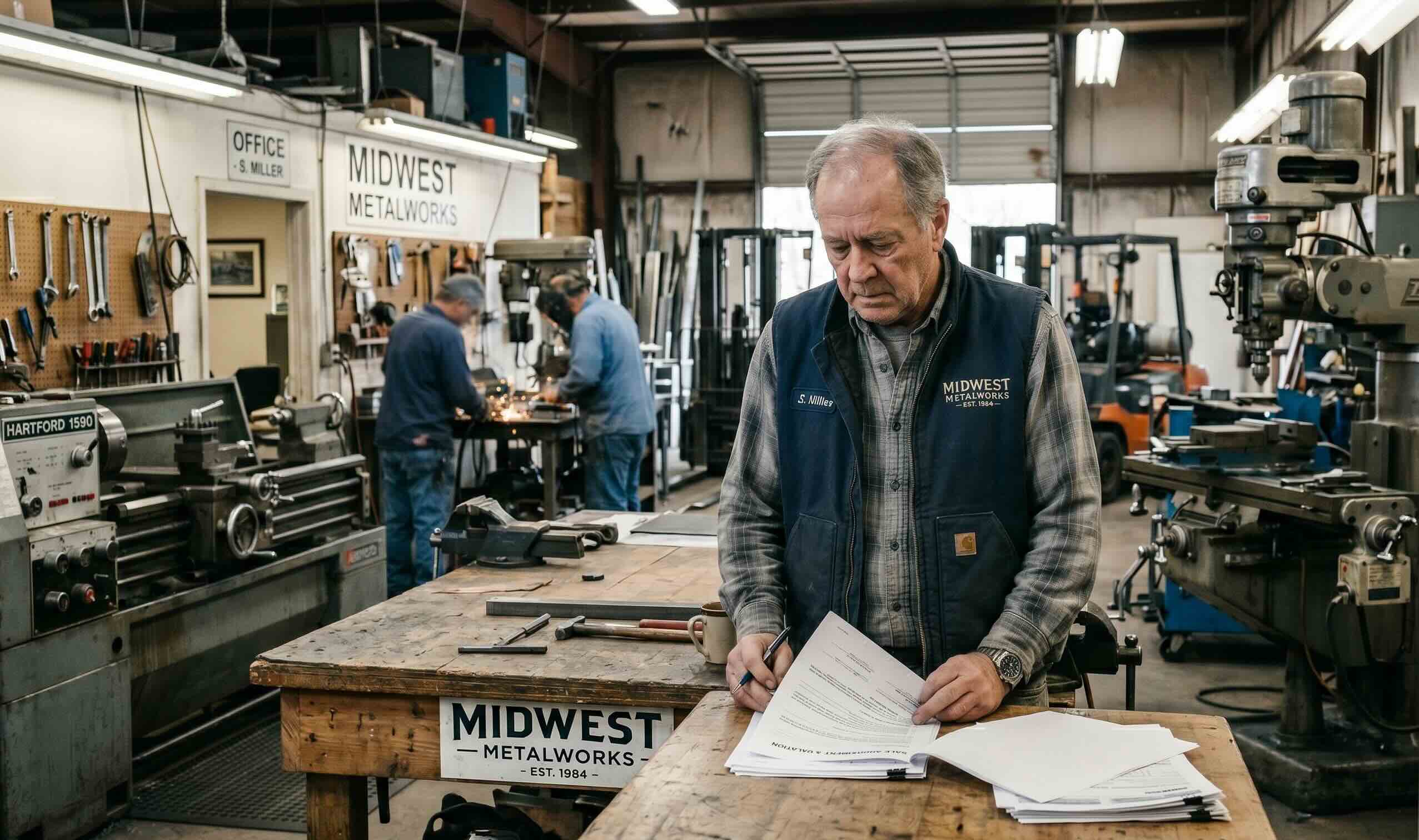
Most small business owners think about their business as a job they own. A place they show up to every day, where their presence keeps everything moving. And that mindset, while understandable, is quietly limiting how far they can go.
The smartest operators think differently. They think about their business the way a product manager thinks about software: as something that should work on its own, deliver consistent value, and become more useful over time with intentional improvements.
That shift in perspective, from owner-operator to product thinker, changes everything about how you build, grow, and eventually profit from your business.
What It Actually Means to Treat Your Business Like a Product
A product has a few defining characteristics. It works the same way every time. It doesn’t depend on one specific person to function. Its value can be explained to a stranger in two minutes. And it can be handed off, sold, or scaled without rebuilding from scratch.
Most small businesses are the opposite of that. The owner is the product. Their relationships bring in revenue. Their judgment makes the decisions. Their energy keeps the team going. If they step away, the output drops.
That’s not a business. That’s a self-employment arrangement with employees.
Treating your business like a product means designing it so that the value it delivers is embedded in the system, not stored in your head. It means asking: if someone bought this company tomorrow, could they run it? If the answer is no, your business still needs work as a product.
Why This Mindset Matters Even If You Never Plan to Sell
Here’s what most owners miss: building a sellable business and building a great business are essentially the same thing. The qualities that make a company attractive to buyers are the same qualities that make it easier, more profitable, and more enjoyable to run.
A business that runs without constant owner involvement generates more consistent revenue. A business with documented processes scales faster and with fewer errors. A business with a clear value proposition wins clients more easily and commands better pricing.
None of that requires a sale to pay off. It pays off in your day-to-day operations, your margins, your ability to take a vacation without catastrophe, and your capacity to grow.
If you want a useful benchmark, read through these signs that your small business is ready to scale. Many of them are directly tied to whether the business functions as a product or as a personal operation.
The Five Dimensions of a Business That Works Like a Product
1. Repeatability
A great product delivers a consistent experience every time. Your business should too. That means your onboarding process works the same way for every new client. Your service delivery follows a documented workflow. Your team knows what to do without asking you.
Repeatability isn’t about being robotic. It’s about building the reliability that turns one-time customers into repeat buyers and lets your business grow without you recreating the wheel every engagement.
2. Independence from the Founder
This is the hardest shift for most owners to make. Your instinct is to be involved in everything, because you care, because you know best, and because it’s faster to do it yourself. But that’s exactly the trap.
If the business can’t generate revenue without you physically present, it isn’t a product. It’s a performance. Genuine independence comes from clear roles, trained people, and systems that carry institutional knowledge beyond any single person.
If you recognize yourself in any of that, this piece on the real cost of being the busiest person in your business is worth a read before you do anything else.
3. Measurable Outcomes
Every good product has metrics. Conversion rates, retention rates, satisfaction scores, load times. Your business needs the same clarity. What are your revenue trends? What’s your client retention rate? What does a healthy month look like in numbers versus a struggling one?
When your business has well-defined performance metrics, you can diagnose problems before they become crises, track the impact of changes you make, and demonstrate value to partners, investors, or buyers in objective terms.
4. A Clear Value Proposition
Products live or die on clarity. What problem does this solve? For whom? Why this one instead of the alternatives? Your business needs the same crispness.
If you can’t explain in one sentence why a client should choose you over every other option, you don’t have a clear product. You have a business that wins clients through personal hustle and relationships, which works until it doesn’t scale.
Sharpening your value proposition is the first step toward making your business a product that markets itself, even a little.
5. Continuous Improvement Built In
The best products are iterated on constantly. Small changes based on user feedback, performance data, and changing market conditions compound over time into massive advantages.
Your business should work the same way. That means building in regular reviews, soliciting and acting on client feedback, watching what competitors are doing, and treating your own operations as something that can always be improved. Not because something is broken, but because better is always possible.
How to Start the Transition Right Now
You don’t need to overhaul everything. Start with these three moves:
Document one core process this week. Pick the thing you do most often and write out every step. Don’t filter it. Just capture it. That document is the beginning of your business running without you needing to explain it from scratch every time.
Identify your three most important metrics. Revenue is one. Pick two more that are specific to how your business actually works. Client retention rate, average project value, lead-to-close ratio, whatever matters most in your model. Track them weekly.
Write a one-paragraph business description from a buyer’s perspective. Pretend you’re a stranger evaluating whether to acquire this company. What do you have? What does it do? Why would a customer choose it? How does it make money? If you can answer those questions clearly, your business is starting to look like a product.
If you want to go deeper on this, the framework for building a board-ready small business lays out exactly how to make your company legible and attractive to serious capital and partners.
The Payoff
Owners who build their businesses like products get options that others don’t. They can step back and the revenue doesn’t collapse. They can bring in partners or investors without scrambling to explain how it all works. They can sell when the timing is right, not when they’re burned out and desperate.
But even if you never do any of those things, you’ll enjoy running it more. A business that works like a product is a business that works. That alone is worth building toward.
Most owners don’t start thinking about this until they’re exhausted or ready to exit. The ones who think about it early are the ones who end up with something genuinely valuable on their hands.
Start now. Your future self will thank you.
Ready to build a stronger, more systematic business? Join thousands of entrepreneurs getting real, actionable strategies delivered straight to their inbox. Join Hustler’s Library free right here.
Ready to Know Where You Stand?
The Business Journey dashboard maps your exact position across all 13 stages. Track your progress, unlock resources for each step, and build with a framework used by thousands of founders at Hustler's Library.

No credit card required · Takes 3 minutes · Personalized to your stage