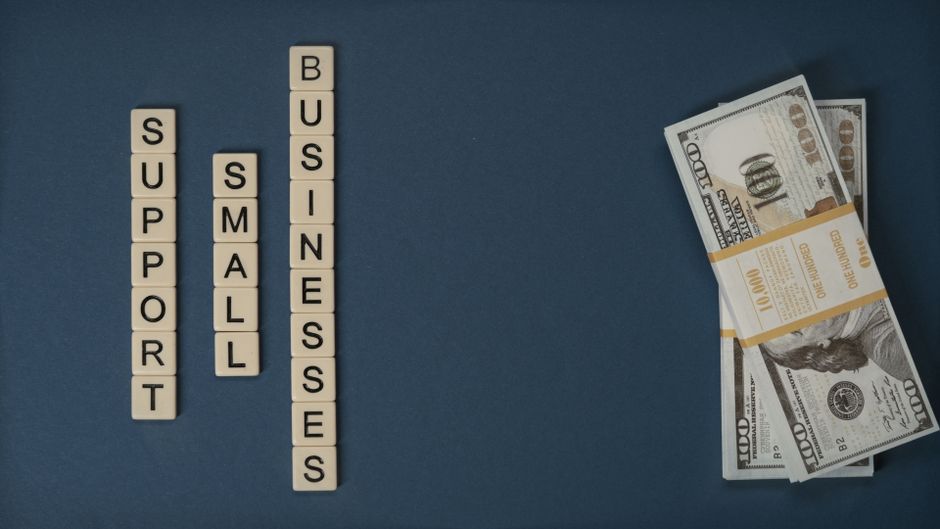
After a rough stretch to start the year, America’s small businesses are showing signs of life. The Bank of America Institute released its latest Small Business Checkpoint this week, flagging a summer rebound in small business consumer spending. According to the Institute, which tracks anonymized card and account data across millions of small business customers, spending trends improved measurably heading into August 2026 — a welcome reversal from the sluggish Q1 and Q2 numbers that had owners on edge.
This isn’t a boom story. But for the 33.2 million small businesses operating in the U.S. right now, any upward movement in consumer spending is signal worth paying attention to.
What This Actually Means
Here’s the plain-English version: people are spending money at small businesses again. The Bank of America Institute data tracks real transaction behavior — not surveys, not sentiment indexes. When it says spending is rebounding, it means customers are showing up.
The rebound appears to be concentrated in service-based businesses and local retail, sectors that took the hardest hits earlier this year as consumers got cautious. If you run a restaurant, a local boutique, a service business, or any operation that lives and dies by foot traffic and repeat customers, this is your data point.
What’s driving it? A mix of factors: summer travel patterns boosting local hospitality and dining, wage growth finally filtering into discretionary spending, and — importantly — small business owners who adapted their pricing and offerings during the slow months are now seeing those adjustments pay off. The owners who didn’t freeze, who kept marketing and tightening their operations, are the ones positioned to capture this rebound.
The Numbers Behind It
To understand why this matters, some context:
- The NFIB Small Business Optimism Index held at 98.6 in Q1 2026 — below the 50-year average of 98, but showing stability rather than freefall. The summer rebound in spending data is now giving that cautious optimism some actual backing.
- The Federal Reserve’s 2025 data found that 43% of small business owners work more than 60 hours per week. These are not people with the luxury of waiting for good news — they’re already working the problem. A spending uptick means that work is starting to convert.
- According to the SBA, small businesses account for 99.9% of all U.S. businesses and employ nearly half the private workforce. A rebound at the small business level isn’t a niche story — it’s a macro signal about the broader economy.
The Hustler’s Library Take
The Bank of America Institute doesn’t do hype. These are researchers looking at real card data from real accounts. When they call something a “summer rebound,” they’re not writing a headline — they’re describing a pattern in transaction flow.
What this report is quietly saying: the small businesses that survived the slow period are now in a better competitive position than they were six months ago. The businesses that closed or scaled back are gone. The ones that stayed in it, kept their cash flow tight, kept their products sharp, and kept marketing — those are the ones capturing the spending that’s coming back online.
That’s not lucky. That’s what good operators do during a slow cycle: they don’t stop moving, they reposition. And right now, they’re being rewarded for it.
There’s also a capital angle here. The same week this data dropped, the U.S. Chamber of Commerce reported that small business growth expectations are rebounding too. Lenders follow data like this. If you’ve been trying to access capital and got pushback during the slow months, a spending rebound is the kind of macro shift that changes those conversations.
What You Should Do
1. Don’t wait for permission to market aggressively. The consumer spending rebound means your potential customers have money to spend right now. August is historically when many small businesses coast — don’t be one of them. Reactivate your email list, push your social presence, run a late-summer promotion. The floor is rising; put yourself in front of it.
2. Review your pricing before Q4. If you held prices flat during the slow stretch to keep customers, that was probably the right call. But the data now suggests the market can bear an adjustment. Audit your margins before the holiday run-up and make sure you’re not leaving money on the table during what could be a strong Q3 finish. Check out this guide on expanding your small business distribution while demand is building.
3. Use this moment to strengthen your financial position, not just your revenue. A spending rebound that shows up in revenue but not in savings or paid-down debt is a missed opportunity. Every incremental dollar coming in over the next two months should have a job: building your cash reserve, paying down high-interest debt, or investing in a specific growth lever. A strong Q3 that sets up a strong Q4 is worth more than a strong Q3 that fades.
Want more intelligence like this delivered every morning? Join Hustler’s Library free and stay ahead of what’s moving in small business.
Ready to Know Where You Stand?
The Business Journey dashboard maps your exact position across all 13 stages. Track your progress, unlock resources for each step, and build with a framework used by thousands of founders at Hustler's Library.

No credit card required · Takes 3 minutes · Personalized to your stage