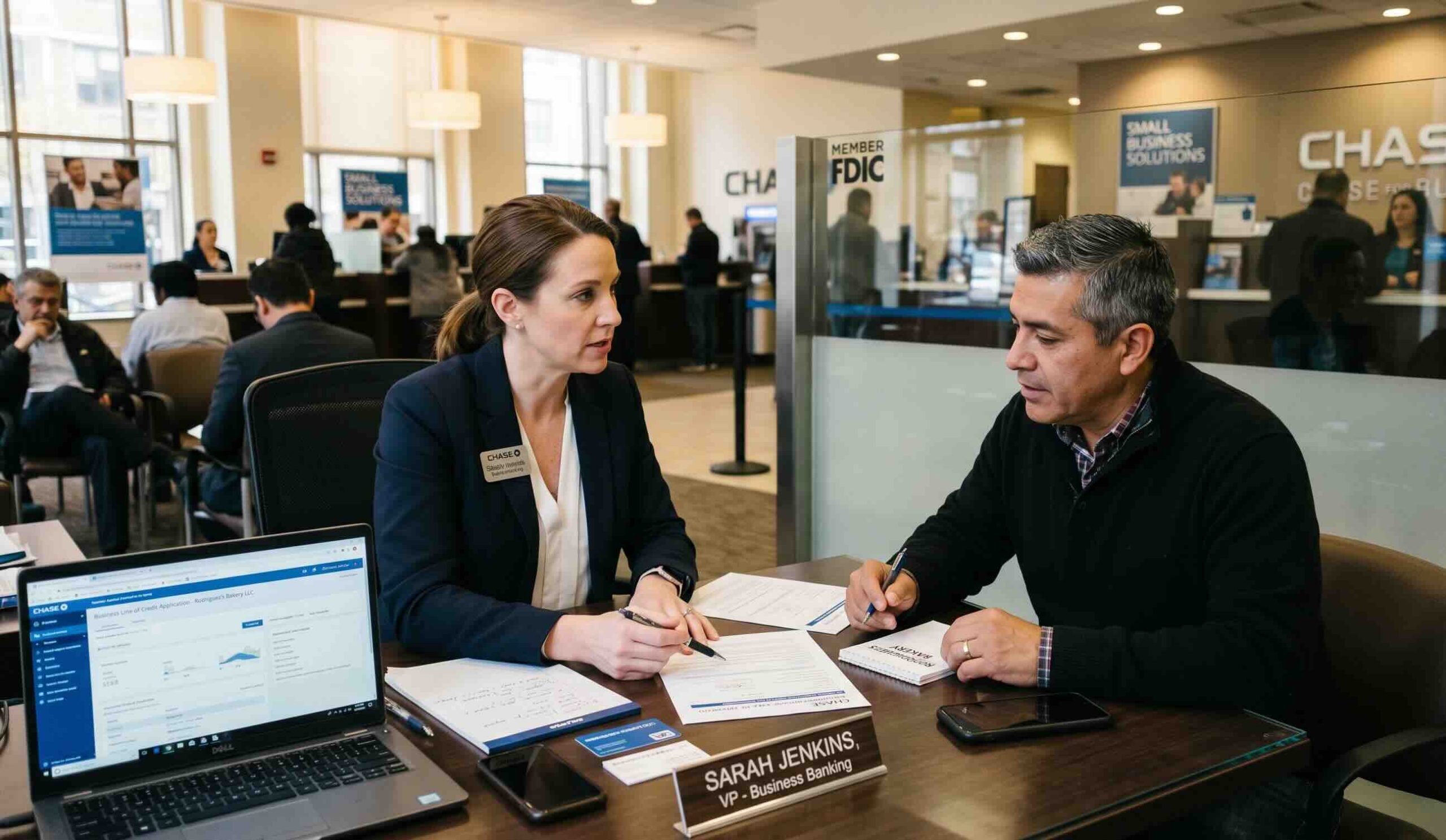
A business line of credit is one of the most flexible financing tools available to small business owners. Unlike a term loan where you receive a lump sum and repay it over a fixed schedule, a line of credit lets you draw funds when you need them, repay, and draw again. You only pay interest on what you use.
Who this is for: Business owners who need flexible access to capital for managing cash flow gaps, purchasing inventory, covering payroll during slow seasons, or taking advantage of short-term opportunities. If your cash needs vary month to month, a line of credit is worth understanding thoroughly.
- A business line of credit is a revolving credit facility with a set limit
- You draw only what you need and pay interest only on the outstanding balance
- Typical qualification requirements: 1+ year in business, $50K+ annual revenue, 600+ credit score
- Credit lines range from $5,000 to $500,000 depending on the lender and your qualifications
- Revolving lines refill as you repay; non-revolving lines close after one draw cycle
Business Line of Credit vs Term Loan vs Business Credit Card
These three financing tools are often confused. They serve different purposes and cost differently. Here’s how they compare:
| Feature | Business Line of Credit | Term Loan | Business Credit Card |
|---|---|---|---|
| How you receive funds | Draw as needed | Lump sum upfront | Swipe or charge |
| Repayment structure | Flexible; revolving | Fixed monthly payments | Minimum monthly payments |
| Interest charges | Only on drawn amount | On full loan balance | On unpaid balance |
| Typical APR range | 8% to 60%+ | 6% to 30% | 18% to 30%+ |
| Best for | Cash flow gaps, short-term needs | Equipment, expansion, large investments | Everyday expenses, rewards |
| Collateral required | Sometimes (secured lines) | Often (depends on type) | Generally no |
Revolving vs Non-Revolving Lines of Credit
Most business lines of credit are revolving, meaning your credit replenishes as you pay it down. Draw $20,000 from a $50,000 line, repay $10,000, and you have $40,000 available again. This makes revolving lines extremely powerful for ongoing operational needs.
A non-revolving line (sometimes called a “draw period” line) works more like a term loan with a single draw window. Once you draw funds and repay, the line closes. These are less common and less flexible, but occasionally used for specific project financing.
Secured vs Unsecured Lines of Credit
An unsecured line of credit requires no collateral. It’s based on your creditworthiness, revenue history, and business financials. Easier to get, but typically comes with lower limits and higher interest rates.
A secured line of credit is backed by collateral, usually accounts receivable, inventory, or real estate. Because the lender has an asset to claim if you default, they’ll typically offer a higher limit and lower rate. Secured lines make sense once your business has meaningful assets to pledge.
How to Qualify for a Business Line of Credit
Qualification requirements vary by lender, but here are the typical benchmarks:
- Time in business: Most traditional lenders want at least 2 years. Online lenders may approve businesses as young as 6 months to 1 year.
- Annual revenue: Banks often require $250,000 or more in annual revenue. Online lenders may start at $50,000 to $100,000.
- Credit score: A personal credit score above 650 is a baseline for most lenders. A score above 700 opens better rates and higher limits. Some online lenders work with scores as low as 600.
- Business financials: Expect to provide bank statements, profit and loss statements, and potentially tax returns. The more organized your records, the faster the process.
- Existing debt: Lenders look at your debt service coverage ratio (DSCR). If your existing debt payments consume most of your income, a new line becomes harder to get.
How to Use a Business Line of Credit Strategically
A line of credit is most powerful when used for short-term, high-turnover needs. Here’s how smart business owners use theirs:
- Bridge payroll: If revenue comes in 30 days after your payroll cycle, draw on the line to cover payroll and repay when the invoices clear.
- Purchase inventory for a large order: Win a big client, buy the inventory you need to fulfill it, then repay the line once you’re paid.
- Capture supplier discounts: Suppliers often offer 2% to 5% discounts for early payment. Drawing on a line at 10% APR to capture a 20% annualized discount is a strong play.
- Smooth seasonal cash flow: Businesses with seasonal revenue patterns use lines to fund off-season operations and repay during peak months.
Avoid using a line of credit for long-term investments like equipment or real estate. That’s what term loans are for. Carrying a line balance for months at 20% to 40% APR is expensive. See our guides on best SBA lenders and invoice factoring alternatives if your cash flow needs are more complex.
Top Lenders for Business Lines of Credit in 2026
- Bank of America: Best for established businesses with bank relationships. Competitive rates, high limits.
- Wells Fargo: Strong for businesses with 2+ years in operation and good revenue history.
- Bluevine: Online lender with fast approval, lines up to $250,000, and flexible qualification. Good for newer businesses.
- Fundbox: Ideal for businesses with irregular revenue; draws against outstanding invoices to create a hybrid LOC/factoring product.
- OnDeck: Fast online approval; higher rates but accessible for businesses with moderate credit profiles.
The SBA’s lending programs page also lists SBA-backed lines of credit, which carry lower interest rates but require more documentation and time to approve. Worth exploring if you qualify.
Key Takeaways
- A business line of credit gives you flexible, revolving access to capital you pay interest on only when you use it
- It’s best for short-term needs like cash flow gaps, inventory, and payroll bridges; not for long-term assets
- Qualify with 1-2 years in business, $50K-$250K+ revenue, and a 600+ personal credit score
- Secured lines offer lower rates and higher limits; unsecured lines are easier to access but cost more
- Open a line before you need it so you’re approved when your business is in a strong position
- Compare online lenders like Bluevine and Fundbox alongside traditional banks for the best terms
Frequently Asked Questions
What is the difference between a business line of credit and a business credit card?
Both are revolving credit facilities. The key differences are how you access funds and interest rates. A line of credit deposits cash directly into your account and typically carries lower rates than a card. A business credit card is more convenient for everyday purchases and often comes with rewards. Credit cards are not ideal for covering large cash needs like payroll.
Does opening a business line of credit hurt my credit score?
The application causes a hard inquiry, which may temporarily lower your personal credit score by a few points. However, once open and managed responsibly, a line of credit can improve your credit profile over time by lowering your overall utilization ratio and adding a positive payment history.
Can a startup get a business line of credit?
It’s difficult but not impossible. Most traditional lenders require 1 to 2 years in business. Some online lenders will work with businesses as young as 6 months if revenue is strong. Alternatively, a business credit card or a secured line backed by personal assets may be accessible options for early-stage businesses.
What happens if I don’t use my line of credit?
Many lenders charge an annual fee or an inactivity fee if you don’t draw on the line. Some lenders may also reduce or close an inactive line after 12 to 24 months. Check your agreement for these terms and make at least minimal use of the line to keep it active if you want to maintain it.
Is a business line of credit tax deductible?
The interest you pay on a business line of credit is generally tax-deductible as a business expense, provided the funds are used for business purposes. The principal repayment is not deductible. Consult a tax professional to confirm how your specific draws and usage affect your deductions. Credit Karma
Ready to build a stronger business? Join Hustler’s Library free and get the resources, guides, and community every entrepreneur needs.
Ready to Know Where You Stand?
The Business Journey dashboard maps your exact position across all 13 stages. Track your progress, unlock resources for each step, and build with a framework used by thousands of founders at Hustler's Library.

No credit card required · Takes 3 minutes · Personalized to your stage