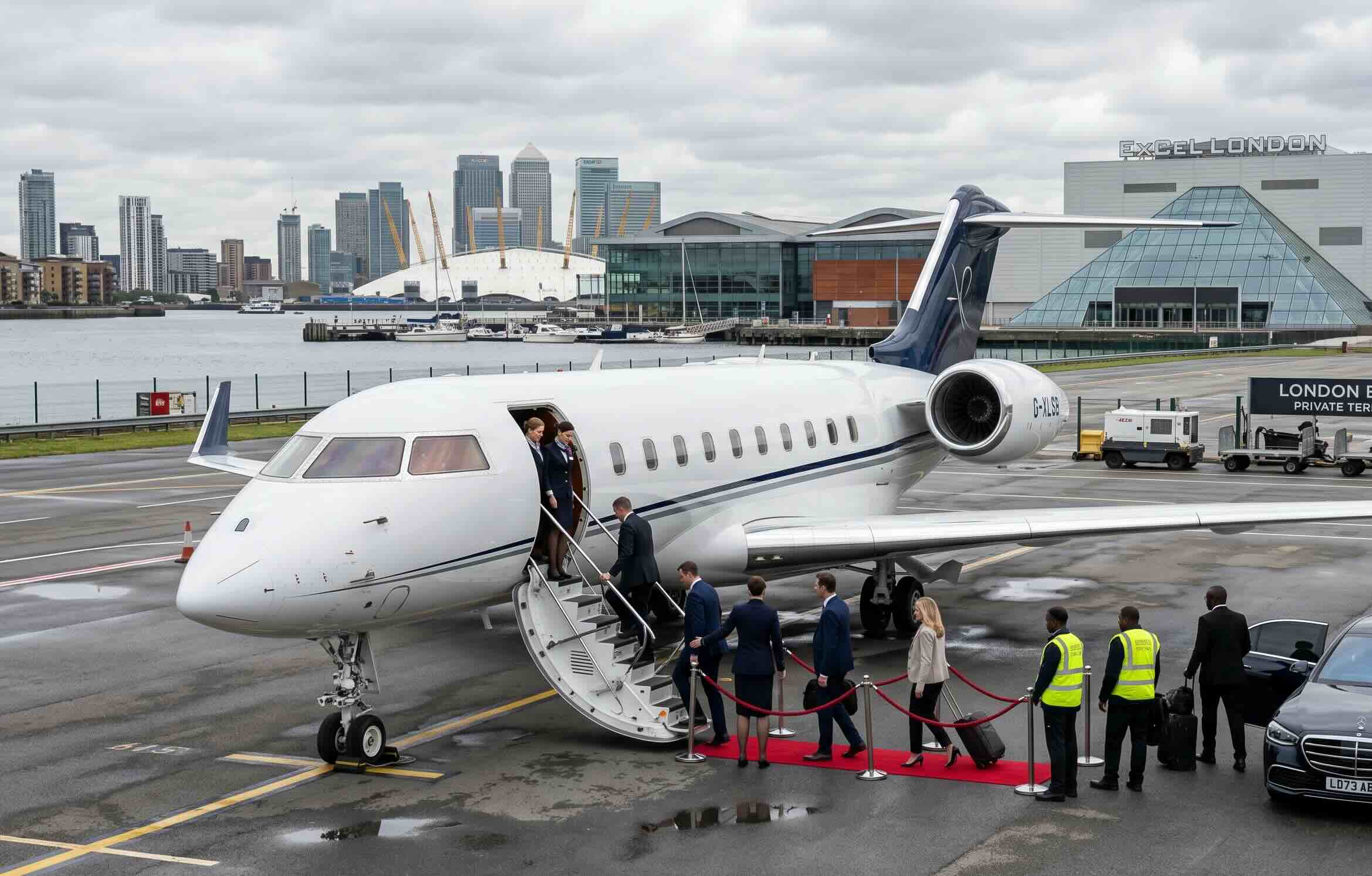
Fractional jet ownership puts a private aircraft at your disposal without the full cost of whole ownership. NetJets, Wheels Up, and Flexjet dominate this market, and the differences between them matter more than most buyers realize before they sign. This comparison breaks down pricing, aircraft quality, service levels, and which program is actually the right fit depending on how and how often you fly. If your business involves significant travel and you are serious about optimizing your time, this is a decision worth getting right.
How Fractional Jet Ownership Works
In a fractional ownership model, you purchase a share of a specific aircraft type. That share typically represents a guaranteed number of flight hours per year: a 1/16th share usually translates to approximately 50 hours of flight time annually. You pay an upfront acquisition cost for the share, a monthly management fee, and an occupied hourly rate when you fly. The fractional provider operates and maintains the aircraft, handles crew scheduling, and coordinates your access across the fleet when your specific aircraft is unavailable.
The key advantage over charter is guaranteed availability, typically with as little as four to ten hours notice depending on the provider. The key disadvantage versus whole ownership is that you do not control one specific aircraft and share its availability across other fractional owners.
NetJets: The Industry Standard
Who They Are
NetJets invented the fractional jet ownership model in 1964 and remains the largest fractional operator in the world. Owned by Berkshire Hathaway since 1998, NetJets operates a fleet of over 750 aircraft across multiple cabin classes. Their scale creates a genuine operational advantage: with that many aircraft in the fleet, availability windows are shorter and repositioning costs are lower. For buyers who prioritize reliability and consistency above all else, NetJets is the benchmark.
Aircraft and Pricing
NetJets offers fractional shares across five aircraft categories: light jets (Citation CJ3+), midsize jets (Citation Latitude), super-midsize jets (Citation Longitude), large-cabin jets (Challenger 650 and Gulfstream G650), and ultra-long-range jets (Gulfstream G700). A 1/16th share in a Citation CJ3+ starts around $290,000 in acquisition cost. Occupied hourly rates run $3,200 to $6,500+ depending on aircraft category. Monthly management fees range from $8,000 to $18,000+ depending on share size and aircraft type. Total annual cost for a light jet 1/16th share: typically $150,000 to $200,000 all-in at 50 hours.
Strengths and Weaknesses
Strengths: unmatched fleet size, global reach with European operations through NetJets Europe, Berkshire Hathaway financial backing, consistent crew quality. Weaknesses: premium pricing compared to competitors, less flexibility in contract structure, resale value of shares has historically varied. NetJets suits high-volume flyers who need reliability and global coverage without compromise.
Wheels Up: Best for Flexibility and Entry-Level Private Aviation
Who They Are
Wheels Up launched in 2013 with a membership model rather than pure fractional ownership and has since become the second-largest private aviation company in the US. Their approach is more flexible: members pay an annual fee and then access aircraft through a combination of owned fleet, fractional aircraft, and charter partners. Delta Air Lines acquired a majority stake in Wheels Up in 2023, adding financial stability and operational scale to the platform.
Aircraft and Pricing
Wheels Up’s core fleet centers on the King Air 350i turboprop (ideal for regional routes under 1,000 miles), the Citation Excel/XLS midsize jet, and the Citation X for transcontinental flying. Membership tiers range from the Connect tier (starting around $2,995/year) to the Core tier ($7,995/year) and UP tier ($14,995/year), with each level unlocking better availability windows and pricing. Occupied hourly rates start around $4,000 for turboprops and run to $7,500+ for jets.
Strengths and Weaknesses
Strengths: lower entry cost, flexible membership structure, growing fleet and network post-Delta acquisition, strong digital booking experience. Weaknesses: less consistent aircraft quality across the network, historically faced operational challenges during peak periods. Best for: cost-conscious buyers who fly mostly domestic routes and want flexibility over fractional commitment.
Flexjet: Best for Luxury and Premium Service
Who They Are
Flexjet was founded in 1995 as a Bombardier subsidiary and is now independently owned. They have positioned themselves as the premium alternative to NetJets, with a strong emphasis on aircraft quality, crew consistency, and interior design. Flexjet has won multiple J.D. Power awards for customer satisfaction and is known for assigning dedicated crew teams to fractional owners. Their Red Label program represents the top tier of their service offering.
Aircraft and Pricing
Flexjet operates a modern fleet heavily weighted toward Bombardier and Embraer aircraft: the Phenom 300E (light), Praetor 500 (midsize), Praetor 600 (super-midsize), Challenger 350 and 3500 (large cabin), and Global 7500 (ultra-long-range). A 1/16th share in a Phenom 300E starts around $250,000 in acquisition cost. The fleet is notably newer on average than NetJets, which matters for cabin comfort, fuel efficiency, and technology.
Strengths and Weaknesses
Strengths: newer fleet, dedicated crew teams, superior interior quality, strong J.D. Power ratings. Weaknesses: smaller total fleet size than NetJets, less global reach, less flexible than Wheels Up for irregular flyers. Best for: high-frequency flyers who prioritize service quality and will use 50+ hours per year consistently.
Head-to-Head Comparison
| Factor | NetJets | Wheels Up | Flexjet |
|---|---|---|---|
| Entry cost | High | Low-Medium | High |
| Fleet size | Largest (750+) | Large (hybrid) | Medium (300+) |
| Aircraft age | Mixed | Mixed | Newest average |
| Availability notice | 4-10 hours | 24 hours typical | 10 hours |
| Dedicated crew | No | No | Yes (Red Label) |
| Global coverage | Best (Europe) | Domestic focus | Good |
| Best for | High-volume, global | Flexible, entry | Premium domestic |
The Business Case: When Fractional Makes Sense
Fractional ownership makes financial sense when you are flying 50 to 400 hours per year. Below 50 hours, charter typically beats fractional on a pure cost basis. Above 400 hours, whole aircraft ownership starts to win economically. The real value of fractional is the middle band: enough hours to justify guaranteed access and consistent service, not enough to justify a whole aircraft.
For entrepreneurs and executives, the time value calculation often changes the math entirely. At Hustler’s Library, we look at private aviation the same way we look at any efficiency investment: the question is not what it costs in dollars, but what it costs in lost productivity and deal quality to fly commercial. Our guide to managing time zone travel and jet lag puts that calculation in context.
Our Recommendation: Clear Winner
NetJets is the overall winner for buyers who prioritize guaranteed availability, global reach, and institutional reliability. Flying 50+ hours per year on international or complex itineraries? NetJets’ fleet depth is the difference that matters. Flexjet is the winner on quality and crew experience for domestic-focused, premium-oriented buyers. Wheels Up wins on flexibility and entry cost for buyers newer to private aviation or flying under 50 hours annually.
Before committing to any fractional program, review the contract structure carefully and understand the buyback and exit terms. Factor in how fractional costs interact with your broader business expense and tax strategy. Our guide to business travel expense management covers how to document and deduct aviation costs properly at the business level.
For authoritative regulatory and safety data on private aviation operators, see the FAA Air Taxis and Charter resource.
Key Takeaways
- NetJets has the largest fleet, best global reach, and strongest operational reliability: the default choice for high-volume flyers.
- Flexjet wins on aircraft quality, newest fleet, and dedicated crew assignment: best for premium domestic flying.
- Wheels Up offers the lowest entry point and most flexible structure: best for buyers flying under 50 hours per year.
- Fractional ownership is most cost-effective between 50 and 400 hours per year. Outside that range, charter or whole ownership typically wins.
- Always negotiate contract terms, understand buyback provisions, and involve an aviation attorney before signing.
Want more frameworks like this? Join Hustler’s Library free and get access to our full business resource vault.
Ready to Know Where You Stand?
The Business Journey dashboard maps your exact position across all 13 stages. Track your progress, unlock resources for each step, and build with a framework used by thousands of founders at Hustler's Library.

No credit card required · Takes 3 minutes · Personalized to your stage