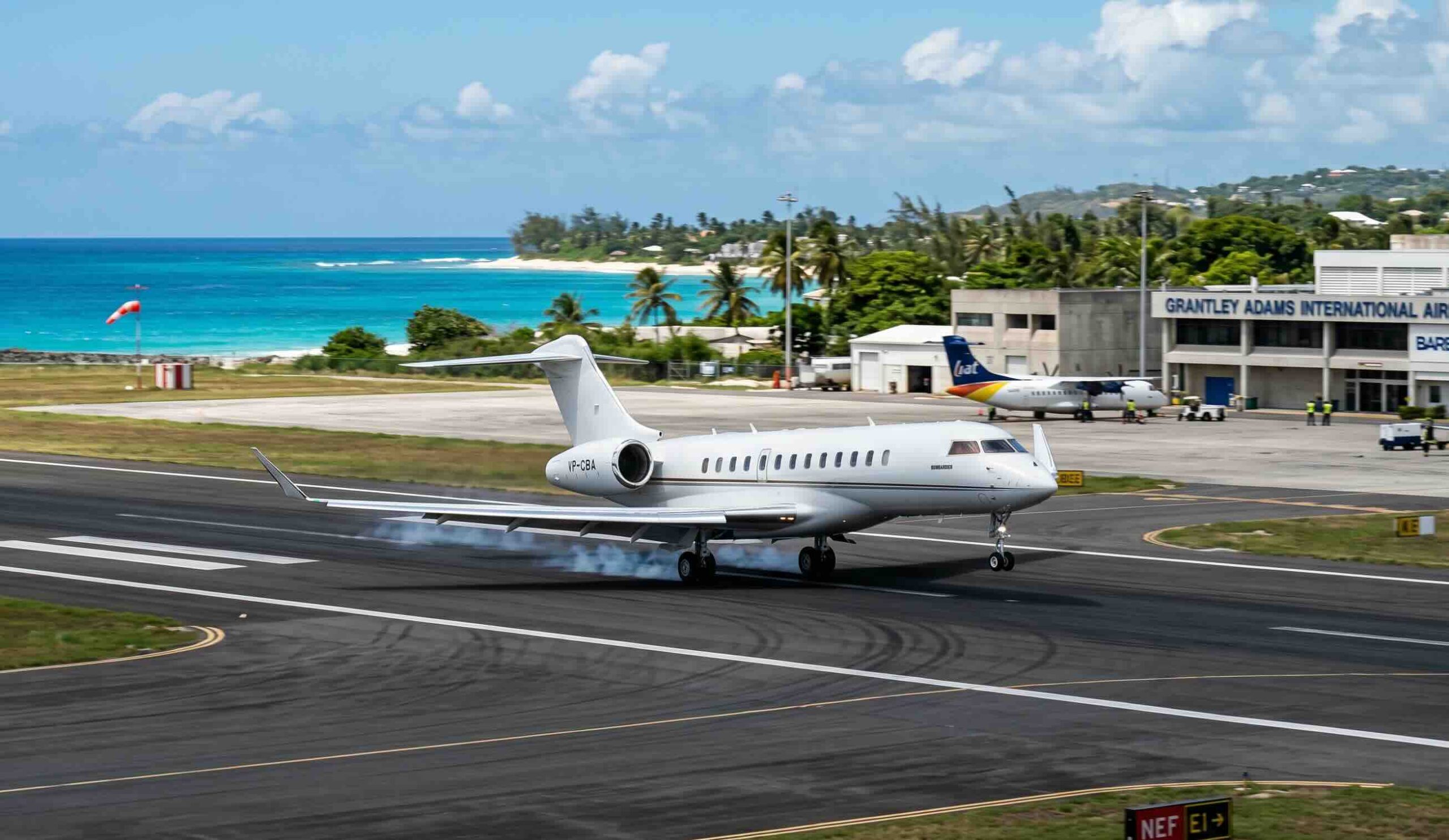
When your business reaches a certain level, the question of private aviation stops being a fantasy and starts being a real financial calculation. Charter vs own vs fractional jet ownership: what makes financial sense for your business depends entirely on how often you fly, where you go, and how you structure the cost. This guide breaks down all three models so you can make an informed decision rather than an emotional one.
The Three Models: How Each One Works
Before crunching numbers, you need to understand what you are actually buying in each scenario.
Charter: Pay Per Flight
With charter, you pay for each flight individually. You contact a broker or operator, request a specific aircraft for a specific route, and pay a quoted price. No long-term commitment, no asset on your balance sheet, no maintenance headaches. Pricing varies by aircraft category: a light jet charter from New York to Miami might run $8,000 to $12,000. A heavy jet transcontinental flight can exceed $50,000 each way. Charter is highly flexible but inconsistent in pricing and availability.
Fractional Ownership: Buy a Share
Fractional programs like NetJets, Flexjet, and Wheels Up sell you a share of an aircraft, typically starting at 1/16th, which equates to roughly 50 flight hours per year. You pay a one-time acquisition cost, a monthly management fee, and an occupied hourly rate. The operator handles all maintenance, crew, and scheduling. You get guaranteed availability within a specified notice window, usually 10 hours. Fractional makes sense if you fly 50 to 200 hours annually and want consistency without full ownership responsibility.
Full Ownership: Own the Asset
Buying a jet outright means you own the aircraft, hire a flight crew, pay for a hangar, insurance, maintenance, and all operating costs. A midsize jet like a Citation CJ3 might cost $5 million to $8 million new. Annual operating costs add another $700,000 to $1.2 million. Full ownership only pencils out if your organization is flying 300 or more hours per year and you need maximum scheduling control. At that volume, the per-hour economics begin to justify the capital outlay.
The Financial Breakdown: Cost Per Hour Comparison
The cleanest way to compare these models is cost per occupied flight hour.
- Charter: $3,500 to $12,000 per hour depending on aircraft category. No fixed costs. Fully variable.
- Fractional (1/16th share, midsize jet): Acquisition around $500,000 to $1 million. Monthly management fees of $8,000 to $12,000. Occupied hourly rate of $2,000 to $3,500. All-in cost per hour when amortized: roughly $5,000 to $8,000.
- Full ownership (midsize jet): Capital cost of $5M to $10M. Operating costs spread across 300+ hours annually can reduce the effective per-hour cost to $2,500 to $4,500. But the capital requirement is enormous.
The National Business Aviation Association (NBAA) publishes annual cost benchmarks that are worth reviewing before any purchase decision. Their data consistently shows that charter wins on flexibility and capital efficiency below 50 hours per year; fractional wins from 50 to 250 hours; full ownership becomes cost-competitive above 300 hours.
Tax Considerations You Cannot Ignore
The IRS has specific rules around business aircraft deductions. Under MACRS depreciation, a business-owned aircraft can be depreciated over five years. Bonus depreciation rules may allow a significant first-year write-down depending on current tax law. However, the IRS requires that the aircraft be used at least 50 percent for qualified business purposes. Personal use by owners or employees is considered a taxable fringe benefit and must be imputed as income. Charter and fractional costs are generally treated as ordinary business expenses when travel is for a legitimate business purpose.
Work with a CPA who specializes in aviation taxation before committing. The tax treatment can materially shift the true cost of each option. Hustler’s Library covers business expense strategy alongside resources from the IRS and major accounting firms; the fundamentals of smart deduction planning apply directly here. For more on how high-level business deductions work, see our breakdown of Business Travel Expense Management.
Which Model Wins for Most Business Owners?
The honest answer: charter wins for the majority of business owners. If you are flying fewer than 50 hours per year, the flexibility and zero capital commitment of charter is hard to beat. You can access different aircraft sizes for different trips, you carry no asset risk, and you are not locked into a long-term contract.
Fractional ownership becomes the right move when you reach consistent flying patterns: the same routes, predictable scheduling, and 50 to 150 hours annually. The guaranteed availability and consistent service quality justify the premium over ad-hoc charter at that volume.
Full ownership is a corporate-level decision, not a small business decision. Unless aviation is central to your operations and your flight hours reflect that, the capital could almost certainly be deployed more productively elsewhere in the business.
For the executive who is just beginning to explore private aviation, start by tracking how many commercial flights you take per year and calculate the time cost of each one. The Private Jets for Business: When Charter Actually Makes Financial Sense guide on Hustler’s Library gives a practical decision framework for exactly this calculation. You should also read about why the wealthy obsess over time, not money to understand the real ROI case for private aviation.
Questions to Ask Before You Decide
- How many hours per year are you realistically flying on business?
- Are your routes consistent or highly variable?
- Do you need guaranteed availability, or is 24 to 48 hours lead time acceptable?
- What is your liquidity position? Can you tie up $500,000 to $1 million in a fractional share without constraining growth capital?
- Have you modeled the tax implications with an aviation-specialized CPA?
Private aviation is a tool for compressing time and expanding access. Like any business tool, its value depends entirely on whether you are using it at the right volume and for the right purpose. Run the numbers, know your flight patterns, and make the decision based on data rather than prestige.
Ready to build the financial systems and decision frameworks that support serious business growth? Join Hustler’s Library free and get access to the resources that help entrepreneurs make smarter financial decisions at every stage.
Ready to Know Where You Stand?
The Business Journey dashboard maps your exact position across all 13 stages. Track your progress, unlock resources for each step, and build with a framework used by thousands of founders at Hustler's Library.

No credit card required · Takes 3 minutes · Personalized to your stage