The moment a business starts describing its growth strategy as a “funnel,” it’s revealing something important: it sees customers as things to be acquired, processed, and moved through a pipeline. Funnels leak. Funnels require constant refilling. Funnels are about transactions.
Flywheels are different. A flywheel compounds. Each rotation makes the next one easier. Eventually it moves so fast under its own momentum that stopping it takes more force than starting it did.
The best businesses in the world don’t run funnels. They run flywheels.
Where the Concept Comes From
Jim Collins introduced the flywheel concept in his 2001 book Good to Great after studying companies that made the leap from average to exceptional performance and sustained it for 15+ years. His finding: none of these companies had a single defining moment, a revolutionary strategy, or a breakthrough event. What they had was a series of consistent, compounding actions that reinforced each other over time.
The flywheel metaphor captures this perfectly. Imagine a massive metal disc weighing 5,000 pounds. Getting it moving takes enormous effort. But once it’s moving, each push adds momentum. After enough pushes, the flywheel is generating far more force than you’re putting in. That’s when the business becomes hard to stop.
Collins later wrote an entire short book called Turning the Flywheel (2019) focused exclusively on this concept, which suggests how important he considered it.
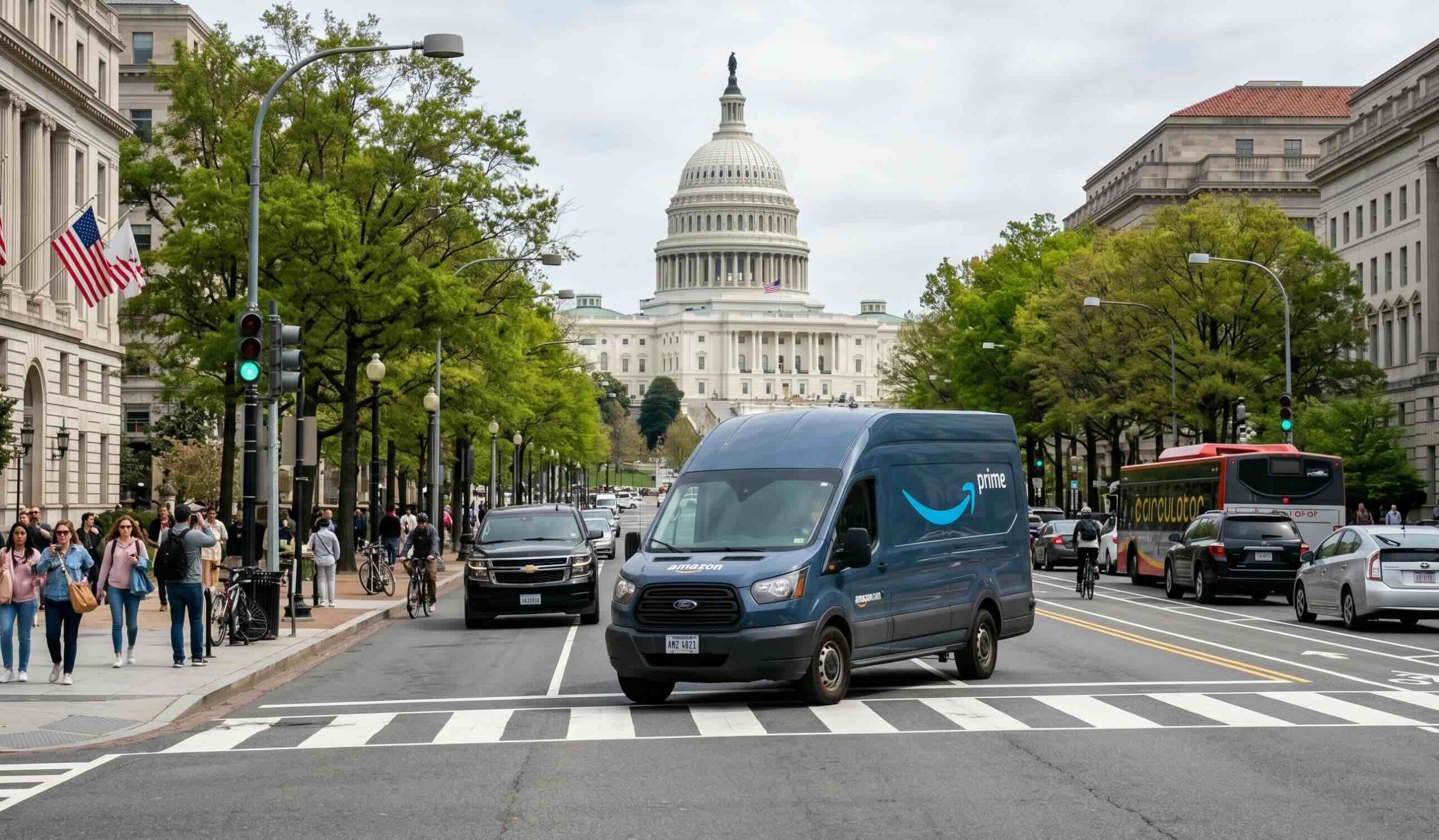
Amazon’s Flywheel: The Virtuous Cycle
Jeff Bezos sketched Amazon’s flywheel on a napkin in the early 2000s. It has been described as one of the most important business diagrams in history. Here’s how it works:
- Lower prices attract more customers
- More customers attract more third-party sellers
- More sellers create more selection
- More selection improves customer experience
- Better customer experience drives more traffic
- More traffic makes selling on Amazon more attractive to sellers
- More seller competition drives prices down
- Lower prices attract more customers
And it loops. Endlessly. Each turn of the flywheel reinforces every other element. The fixed cost infrastructure (fulfillment centers, tech infrastructure) gets spread over more and more transactions, which drives costs down further, which lets prices go lower, which attracts more volume.
AWS grew out of this same flywheel logic. Amazon built server infrastructure for itself; then realized it could sell that infrastructure to others, creating a new flywheel where more AWS customers funded more infrastructure investment, which made AWS more capable, which attracted more customers.
Costco’s Flywheel: Membership as the Engine
Costco’s flywheel is equally elegant. The full breakdown is in our case study: How Costco Turned a Membership Fee into a Loyalty Machine. But here’s the structure:
- Membership fees provide guaranteed revenue that doesn’t depend on sales margin
- That guaranteed revenue lets Costco price products near cost
- Near-cost pricing creates extraordinary value for members
- Extraordinary value drives member loyalty and renewal (90%+ renewal rates)
- High renewal rates attract new members who want in on the deal
- More members means more purchasing volume
- More volume gives Costco more negotiating leverage with suppliers
- More supplier leverage means lower input costs
- Lower costs let Costco price products even closer to cost
- Back to step 2
Notice that Costco’s flywheel doesn’t require advertising spend to keep turning. The membership model provides the fuel. The value proposition does the marketing. New members join because existing members tell them it’s worth it.
Why Flywheels Beat Funnels
Funnels are linear. Customers enter at the top, and you extract value as they move down. When a customer exits (churns, buys once, doesn’t return), they’re gone. You need new customers to refill the top. Growth requires constant input.
Flywheels are circular and compounding. Each customer or transaction adds to the energy of the system rather than simply passing through it. Loyal customers bring new customers. More volume reduces costs. Lower costs improve the offer. Better offers generate more loyalty. Growth accelerates with less incremental effort over time.
The practical difference: funnel businesses have roughly constant customer acquisition costs. Flywheel businesses see customer acquisition costs decline as the wheel spins faster. Word-of-mouth replaces paid acquisition. Efficiency replaces hustle.
The HL Flywheel Design Framework
Here are the five steps from Hustler’s Library for designing your own business flywheel:
Step 1: Identify Your Core Value Exchange
What is the single most important thing your business delivers to customers that makes them stay, return, or refer others? This is the engine of your flywheel. Everything else should feed into or flow from this.
Step 2: Map the Reinforcing Loop
Draw a circle. At each point on the circle, place one element that flows from the previous element and feeds the next. Aim for four to six elements. The test: if any one element improves, do all the others eventually improve too? If yes, you have a flywheel. If no, you have a list.
Step 3: Find the Compounding Element
Every great flywheel has one element that compounds over time: data that accumulates, a network that grows, a reputation that builds, a cost structure that improves with scale. Identify which element in your loop has this property. That’s where to invest most heavily.
Step 4: Remove Friction
A flywheel doesn’t just need fuel; it needs low friction. Identify the slowest, most friction-heavy part of your loop. Where do customers drop off? Where does the process slow down? Friction in a flywheel is the enemy. Eliminate it ruthlessly.
Step 5: Resist the Temptation to Add New Loops
The most common flywheel mistake is adding a second flywheel before the first one is spinning fast. Two slow flywheels beat one fast flywheel only after both are spinning fast. Focus. Amazon didn’t launch AWS until its retail flywheel was already running at enormous scale.
Flywheel Examples for Entrepreneurs
You don’t need to be Amazon to build a flywheel. Here’s how this applies at smaller scales:
Agency or consulting business: Great client results generate case studies; case studies attract new clients; new clients generate more results and more varied experience; more experience improves results; stronger results generate more and better case studies.
Content business: Quality content attracts an audience; the audience signals what content is most valuable; better-targeted content attracts a larger audience; a larger audience attracts sponsors or product revenue; revenue funds better content production.
E-commerce brand: Strong reviews drive organic discovery; organic discovery reduces paid acquisition costs; lower CAC means more margin for product quality investment; better product quality generates stronger reviews. Dollar Shave Club ran a version of this before being acquired for $1 billion. See: How Dollar Shave Club Dethroned Gillette With a $4,500 Video.
Running these systems at scale requires solid infrastructure. Tools like Google Workspace keep the operational side of a growing flywheel organized without adding friction to the loop.
By the Numbers
- Amazon’s third-party seller services represented approximately $140 billion in 2023 revenue, a direct product of the marketplace flywheel
- Costco’s membership renewal rate has exceeded 90% for over a decade in North America
- Collins studied 11 companies that transitioned from good to great; all exhibited flywheel patterns, none attributed success to a single event or initiative
- AWS reached $90 billion in annual revenue in 2023 after compounding consistently since its 2006 launch
- Airbnb’s flywheel (more hosts = more listings = more traveler options = more bookings = more hosts) allowed it to reach 7.7 million listings globally with minimal traditional marketing
Key Takeaways
- A flywheel is a self-reinforcing loop where each improvement in the system feeds every other improvement. Funnels process customers; flywheels compound them.
- Amazon’s flywheel connects lower prices, more customers, more sellers, more selection, and lower costs in a loop that has been spinning for 25 years.
- Costco’s flywheel uses membership revenue as the fuel that makes near-cost pricing possible, which drives loyalty, which funds more volume, which drives supplier leverage.
- The compounding element in your flywheel (data, network, reputation, cost structure) is where to invest most heavily.
- Friction is the enemy of a flywheel. Identify and eliminate the slowest point in your loop before adding new loops.
- Focus on one flywheel until it’s spinning fast. Two slow flywheels are worse than one fast one.
Sources & Further Reading
- Collins, Jim. Good to Great: Why Some Companies Make the Leap and Others Don’t. HarperBusiness, 2001.
- Collins, Jim. Turning the Flywheel: A Monograph to Accompany Good to Great. HarperBusiness, 2019.
- Stone, Brad. The Everything Store: Jeff Bezos and the Age of Amazon. Little, Brown and Company, 2013.
- Amazon 2023 Annual Report and Shareholder Letter
- Costco Wholesale Corporation 2023 Annual Report
Want more breakdowns like this? Join Hustler’s Library free and get access to our full case study vault.
Ready to Know Where You Stand?
The Business Journey dashboard maps your exact position across all 13 stages. Track your progress, unlock resources for each step, and build with a framework used by thousands of founders at Hustler's Library.

No credit card required · Takes 3 minutes · Personalized to your stage