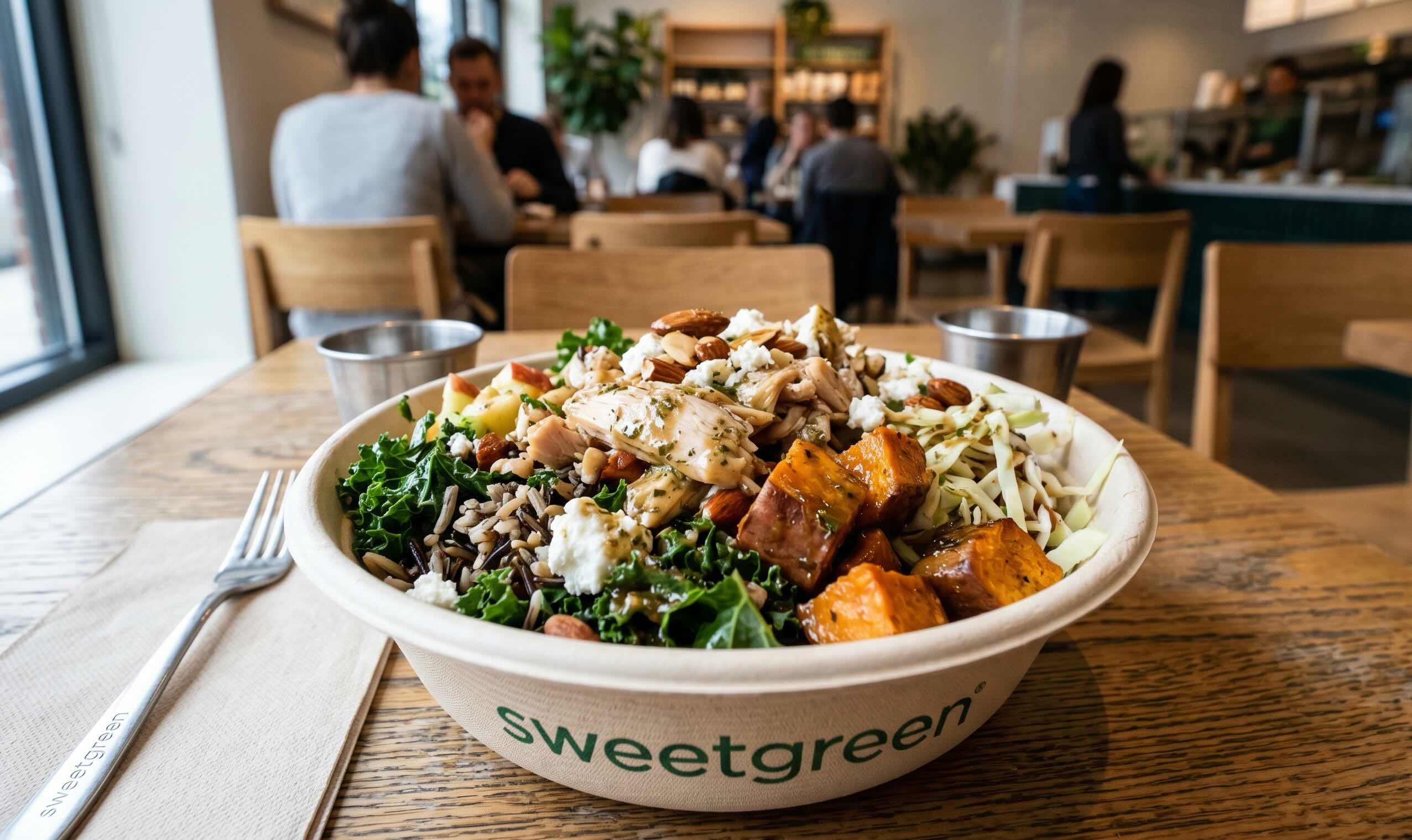
In 2007, three Georgetown University seniors were frustrated. They wanted a fast, fresh, healthy lunch near campus and couldn’t find one. So Jonathan Neman, Nathaniel Ru, and Nicolas Jammet cold-called their landlord, negotiated a lease on a 560-square-foot basement space in Washington D.C., and opened Sweetgreen with $300,000 scraped together from family and friends. They were 22 years old. They had no restaurant experience. And they built one of the most talked-about food brands of the last two decades.
This is not a story about salad. It is a story about brand architecture, supply chain as identity, and knowing when to go digital before the market forces your hand.
Three Founders, One Obsession
What separated Sweetgreen from every other “healthy fast casual” concept that launched in the 2000s was the founders’ almost irrational clarity of purpose. Neman, Ru, and Jammet did not want to build a restaurant chain. They wanted to build a system that connected people to real food. That distinction shaped every structural decision they made over the next fifteen years.
From the beginning, the three operated as equals with distinct lanes: Neman handled strategy and finance, Ru focused on brand and design, and Jammet owned operations and the food itself. That division held. When you read early interviews with all three, the same word surfaces constantly: “mission.” For most founders, mission is marketing copy. For these three, it was a constraint they applied to actual decisions: which suppliers to use, which cities to enter, which investors to take money from.
They also moved deliberately. Sweetgreen did not franchise. It did not rush into new markets to claim territory. It opened fewer locations than competitors and spent more time on each one. By the time the brand had ten locations, it had already developed a regional sourcing model that most chains with 500 units never attempt.
Supply Chain as Brand Identity
The single most underrated strategic move Sweetgreen ever made was deciding early that their supplier relationships were not a back-office cost function. They were front-of-house brand content.
Rather than sourcing through broadline distributors the way every other fast casual concept does, Sweetgreen built direct relationships with individual farms. Each menu item is tagged with the farm that grew it. Customers at the register can read the name of the family farm in Pennsylvania that grew their kale. This is not decoration. It is a structural commitment that raises costs, complicates logistics, and forces seasonal menu changes. It also makes the brand nearly impossible to copy at scale because the relationships are proprietary.
By 2019, Sweetgreen had over 200 supplier partners across the country. When COVID-19 shut down restaurant dining in 2020, Sweetgreen pivoted some of those relationships to direct-to-consumer grocery drops, selling fresh produce boxes sourced from the same farm partners. The supply chain that looked like a premium expense became a resilience asset when it mattered most.
For entrepreneurs thinking about how to build a moat in a commoditized space: read everything you can about building a brand that lasts through operational authenticity. Sweetgreen’s lesson is that the most defensible brand positions come from choices that are genuinely hard to replicate, not from logos and taglines.
Going Digital Before They Had To
In 2013, Sweetgreen launched a mobile app. That was two years before Starbucks reported that mobile orders were changing their business. At the time, most fast casual brands had neither the engineering budget nor the urgency to build a loyalty platform. Sweetgreen did it anyway.
The Sweetgreen app was not just an ordering tool. It was a data infrastructure play. Every transaction tied a customer to a menu preference, a location pattern, and a loyalty point balance. By the time the brand was operating in multiple markets, it had a customer dataset most food companies would not accumulate for another decade.
Sweetgreen Rewards, the loyalty program embedded in the app, eventually reached millions of active users. More importantly, the shift to digital ordering meant that by the time delivery platforms like DoorDash and Uber Eats arrived with aggressive commission structures, Sweetgreen already had a direct channel. They could negotiate from strength because a meaningful share of their order volume bypassed the platforms entirely.
The COVID year (2020) validated the bet completely. While brands dependent on walk-in traffic scrambled to build digital ordering capability overnight, Sweetgreen processed the majority of its orders through owned digital channels. Revenue dropped with the rest of the industry, but the structural damage was less severe because they had spent years building the infrastructure that competitors were suddenly trying to stand up in weeks.
If you are running a business right now and your customer relationships are mediated entirely by third-party platforms, that is a risk worth taking seriously. Tools like Google Workspace can help small teams build the operational backbone to manage direct customer relationships without enterprise overhead.
The Spyce Acquisition: Betting on Automation
In August 2021, Sweetgreen acquired Spyce, a Boston-based robotic kitchen startup founded by four MIT graduates. The deal price was not disclosed publicly, but the strategic logic was clear: Sweetgreen was buying the technology and the team, not the restaurant locations.
Spyce had built a robotic grain bowl system capable of preparing meals without human kitchen labor. At the time, the acquisition raised eyebrows. Automation felt like a solution to a labor problem the industry had not fully acknowledged. Then the post-pandemic labor market arrived, and suddenly the question of how to build a restaurant operation that was not entirely dependent on hourly kitchen staff looked prescient.
Sweetgreen branded the robotic technology “Infinite Kitchen” and began testing it in select locations. The company reported that Infinite Kitchen locations produced fewer errors, faster throughput during peak hours, and meaningfully improved unit economics. By 2023, Sweetgreen was announcing plans to integrate the technology into all new restaurant openings.
The move represents a pattern worth studying: acquiring capability ahead of necessity. Sweetgreen did not wait until labor costs destroyed their margins. They bought the solution when it was still early and unproven, integrated it quietly, and positioned themselves to deploy at scale when the business case became undeniable. That is how you use an acquisition as a strategic option, not just a growth move.
The 2021 IPO: Going Public With a Story, Not Just a Number
Sweetgreen went public on November 18, 2021, listing on the New York Stock Exchange under the ticker SG. The IPO priced at $28 per share, giving the company a valuation of approximately $2.9 billion on opening day. For context, this was a fast casual brand with fewer than 150 locations and a company that had never turned an annual profit.
The high valuation was not irrational on the market’s terms. Investors were pricing a narrative: a tech-enabled, mission-driven food brand with proprietary supply chain relationships, a massive direct digital channel, and a demonstrated ability to expand into new markets without diluting the core product. The comparable set was not Chipotle or Shake Shack. Investors were reaching for early-stage tech company multiples on the theory that Sweetgreen’s data and digital infrastructure made it something other than a restaurant company.
The stock fell significantly through 2022 as growth-oriented names sold off across the board and profitability questions became harder to defer. But the underlying business continued to open new locations, grow its digital mix, and push forward on the Infinite Kitchen rollout. Founders who study this arc will find useful lessons in how Neman and his co-founders navigated the public market transition while keeping the brand’s operational identity intact.
The IPO process itself is a reminder that how you structure your company from early on shapes your eventual options. Founders who want to preserve flexibility at every stage of growth should think carefully about entity structure and registered agent requirements from day one. Services like Northwest Registered Agent or LegalZoom make it straightforward to set up a business entity with the right legal foundation, whether you are starting a single-location concept or building something you plan to take national.
What Scaling With Integrity Actually Looks Like
The phrase “scaling without selling out” gets applied to almost any brand that maintains aesthetic consistency as it grows. Sweetgreen earns it more rigorously than most.
When Sweetgreen entered a new city, it sourced new farm relationships in that region before opening. It did not simply import the D.C. supplier list and stamp it onto a Chicago location. The menu in each market reflects what grows locally in that region’s harvest calendar. That commitment costs money and time. It also means the brand’s authenticity is load-bearing, not decorative.
Sweetgreen also made a decision that most growing restaurant companies avoid: they kept prices honest. The average entree runs $14 to $17. That is not cheap, and the founders have never apologized for it. They decided early that their customer was someone willing to pay for transparency and quality. Building a brand around that customer, and refusing to trade down, is what preserved the positioning as the company scaled.
This is a lesson worth sitting with for any entrepreneur managing growth pressure. The temptation to lower prices to capture volume, dilute the product to hit cost targets, or expand faster than the supply chain can handle is always present. Sweetgreen’s consistent answer was: no. That discipline is harder to execute than any particular strategy and more valuable than most.
If you want to go deeper on the psychology of maintaining founder discipline under scale pressure, the books that shaped how operators think about building with conviction are worth your time. The mental models are transferable across industries.
Steal This
1. Make your supply chain a story, not just a cost
Sweetgreen turned supplier relationships into a brand differentiator by naming farms on their menu boards. Whatever your equivalent is in your industry: the partners you work with, the ingredients you use, the process behind the product. Make it visible. Transparency compounds as trust over time.
2. Build the direct channel before you need it
Sweetgreen launched their app in 2013 when it was optional. By 2020 it was essential, and they already had it. Map the third-party dependencies in your business and start building owned infrastructure now, while the pressure is low and the options are open.
3. Acquire capability ahead of necessity
The Spyce acquisition looked early. Then it looked like timing. Identify the operational problem that will define your industry in five years and start buying or building the solution today. The companies that wait until the problem is obvious will be paying acquisition premiums for assets that are no longer undervalued.
4. Price for your actual customer
Sweetgreen never chased the customer who would not pay $15 for a salad. They built everything around the customer who would. Trying to serve everyone is how you end up resonating with no one. Know your customer with specificity and build your pricing, your product, and your brand voice for that person without apology.
5. Three founders, one voice
Neman, Ru, and Jammet maintained a unified external position for over fifteen years across a company that raised hundreds of millions of dollars and went through an IPO. That alignment does not happen by accident. It requires clear role definition, explicit agreement on values, and the discipline to maintain it under pressure. If you are co-founding a company, get the hard conversations about decision-making authority and long-term vision on paper early. The legal groundwork matters as much as the culture work.
Ready to Know Where You Stand?
The Business Journey dashboard maps your exact position across all 13 stages. Track your progress, unlock resources for each step, and build with a framework used by thousands of founders at Hustler's Library.

No credit card required · Takes 3 minutes · Personalized to your stage