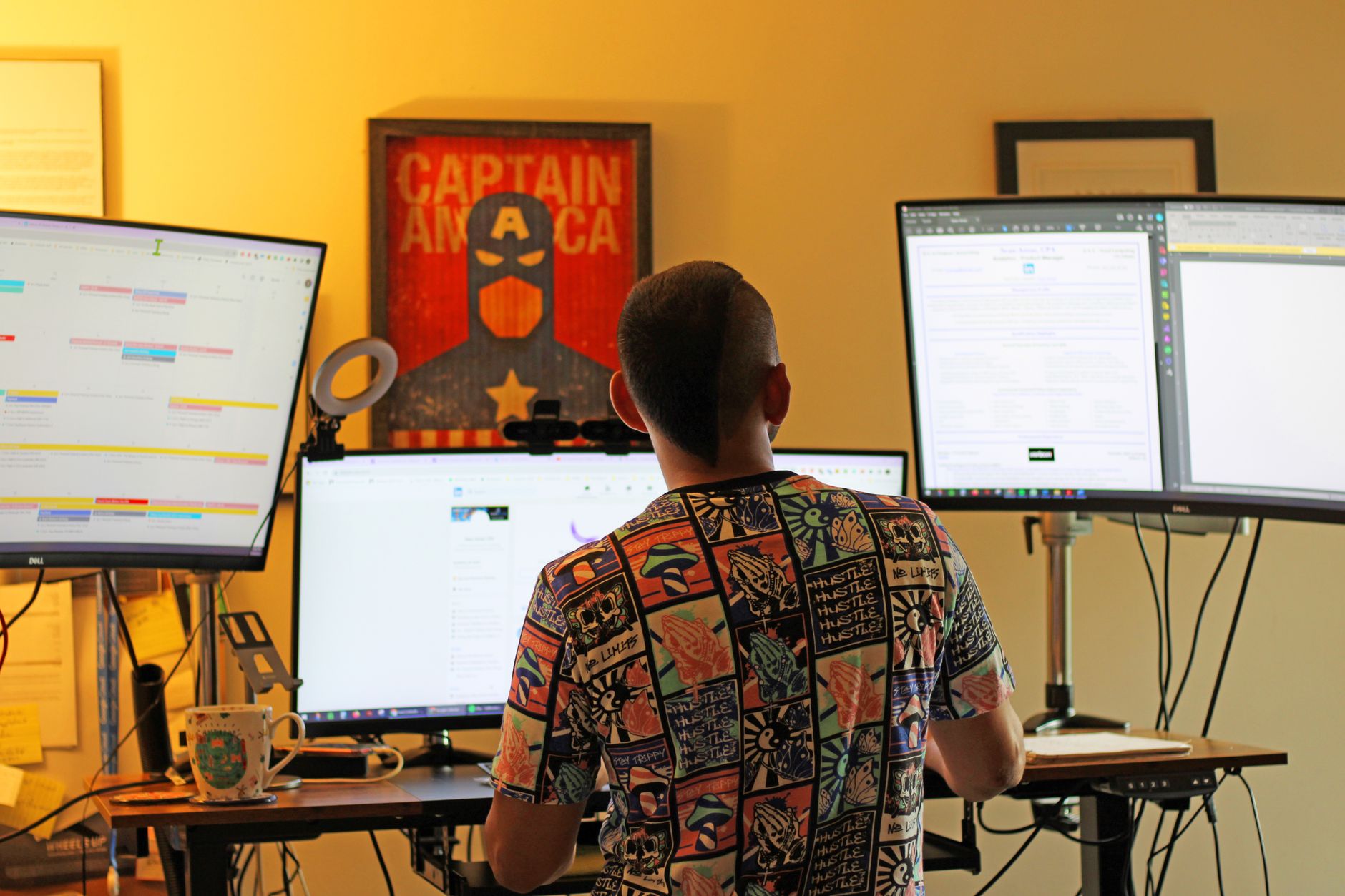
Your employees are now managing AI bots that code, write, and design for them — and nobody is getting a raise for it. A report published by Business Insider and covered by Entrepreneur on October 1, 2026, documents a workplace shift quietly reshaping every team: workers are spending more time telling AI agents what to do, reviewing their output, and cleaning up their mistakes — all without a title change or pay bump to show for it.
For small business owners watching their payroll, this might sound like a win. But the implications run deeper than a simple productivity swap.
What This Actually Means
The traditional employee-job match is fracturing. Workers hired to write code, design graphics, teach students, or handle customer communications are now spending a meaningful slice of their workday doing something else entirely: orchestrating AI systems that do those tasks for them.
That includes setting up agents, giving them context and rules, monitoring their output loops, and stepping in when they produce garbage. As Sinda Khenine, a software and AI engineer at Electrolux, put it: “The effort is more focused on the coordination itself rather than the engineering problem that we are solving in the first place.”
This isn’t theoretical anymore. Companies are deploying this model right now — and small businesses are not exempt from the pressure to follow.
At Daytona, a 30-person AI startup, each of its 16 engineers manages roughly five AI agents each. They no longer write code themselves. At Wipro, the IT giant’s CTO says AI has added the productivity equivalent of 20,000 workers. Salesforce has rolled out “job-ready agents” for sales, customer service, ecommerce, and internal operations — and is training employees to manage those agents directly.
The question for you as a small business owner isn’t whether this is happening. It’s whether you’re structuring your team to handle it.
The Numbers Behind It
The Business Insider report cites real operational examples with measurable results:
- Wipro: AI equivalent of 20,000 additional workers in productivity gains
- Daytona: 16 engineers each overseeing ~5 AI agents — no one writes code manually
- Palo Alto Networks: A custom AI agent reduced internal IT tickets by 83% while handling HR, finance, and legal workflows
- Salesforce: “Job-ready agents” now deployed across sales, customer service, ecommerce, and internal ops
Meanwhile, according to ServiceNow’s 2026 Enterprise AI Maturity Index, just 9% of organizations have made meaningful progress building complex autonomous AI workflows. That means 91% of businesses — including most small ones — are still figuring out how to make this work without burning out their people.
The Hustler’s Library Take
Here’s the angle nobody’s talking about: small business owners are better positioned than big companies to get this right — if they move deliberately.
Large organizations are stuck retrofitting AI into job descriptions, titles, and compensation structures built before agents existed. You don’t have that problem. Your team is small enough that you can redesign workflows from scratch, assign AI management responsibilities clearly, and compensate people for the actual value they’re producing — not the legacy job title they were hired into.
But here’s the trap to avoid: deploying AI agents without acknowledging that managing them is real work. The Business Insider report is a warning label. Workers who manage bots that used to be managed by titles like “senior developer” or “content team” are doing management-level coordination without management-level recognition. That leads to quiet burnout, quiet quitting, and key people leaving for companies that actually acknowledge the shift.
The businesses that win this decade will be the ones that treat “AI orchestration” as a legitimate skill set — and pay accordingly. The ones that treat it as “just using the software” will hemorrhage the exact employees who are making their AI investments work.
If you’ve already started using AI agents in your operations or deployed tools like the ones covered in OpenAI’s small business program, you need to think about who’s actually running those systems — and whether that person knows you see what they’re doing.
What You Should Do
1. Audit who on your team is already doing AI management work
Right now, someone in your business is probably reviewing AI-generated output, re-prompting tools when they get it wrong, and stitching together results across multiple platforms. That’s coordination work. Map it out. How many hours per week? Which roles? You can’t compensate or structure for it until you’ve named it.
2. Update job descriptions and expectations — before headcount decisions
Daytona’s model (one engineer, five agents) doesn’t apply to every business, but the principle does: if your team members are managing AI workflows, that belongs in their job description. Before you decide you need fewer people because “AI is handling it,” be clear about what human orchestration your AI actually requires — because someone’s doing it.
3. Build a skills conversation into your next 1-on-1s
HPE’s chief people officer said it bluntly at Fortune’s AIQ Summit: “If you’re in the C-suite today and you’re not doing some level of AI adoption implementation, you’re not going to be doing your job.” That applies to your team too. Identify which employees are developing AI orchestration skills — and start treating that as a promotion-track competency, not a quirky side habit.
The small businesses that get this right early will run circles around the ones still thinking AI is just a fancy autocomplete. Don’t wait until your best people leave to figure out you were understating their role.
Want more playbooks like this, built for business owners who are actually moving?
Join thousands of entrepreneurs getting the daily edge at Hustler’s Library — free.
Ready to Know Where You Stand?
The Business Journey dashboard maps your exact position across all 13 stages. Track your progress, unlock resources for each step, and build with a framework used by thousands of founders at Hustler's Library.

No credit card required · Takes 3 minutes · Personalized to your stage