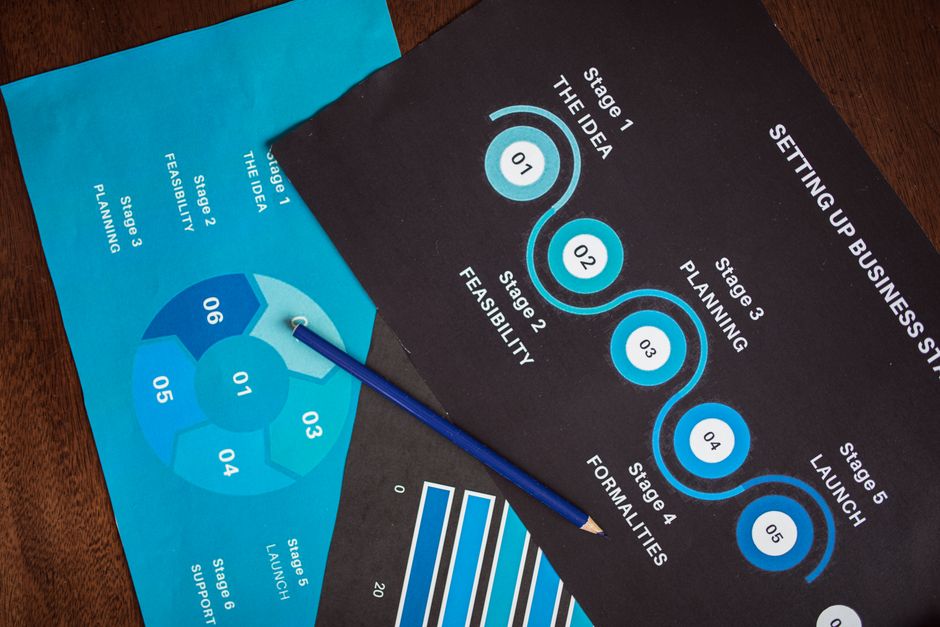
There is a particular kind of frustration that almost every small business owner knows: you are working hard, making good decisions, doing all the right things — and yet the business is not moving the way you expected. Revenue plateaus. Teams stall. Projects drag. The plan that looked clear on paper keeps running into unexpected friction.
Most owners assume the problem is effort, resources, or even luck. The real culprit is almost always sequencing. Not what they are doing, but when they are doing it.
Getting the right things done in the wrong order is one of the most expensive and least recognized problems in small business. And because the moves themselves are correct, the owner rarely questions the sequence. They just work harder and wonder why progress feels so slow.
Why Sequence Matters More Than Most Owners Think
Think about building a house. You pour the foundation before you frame the walls. You frame the walls before you hang drywall. You do the rough electrical before you close up the ceiling. None of these steps are wrong. Done out of order, they become disasters.
Businesses have the same structural dependencies. Certain moves only work when the right foundation is already in place. When owners skip ahead — even toward genuinely good strategies — they create expensive rework, wasted momentum, and organizational confusion that is very hard to untangle later.
Here are the most common sequencing errors small business owners make, and what the correct order actually looks like.
Error #1: Scaling Before the Model Works
This is the classic mistake. The business is growing, the owner senses opportunity, and the instinct is to push harder. Hire more people. Spend more on marketing. Open a second location. Expand the service menu.
The problem: if the underlying business model has unresolved problems — inconsistent margins, poor conversion rates, high client churn, broken delivery processes — scaling does not fix those problems. It multiplies them. You spend more money acquiring customers who have a poor experience. You hire people to support a system that does not work at scale. The cost base grows faster than the revenue.
The correct sequence is: make it work, then make it repeatable, then scale it. Most owners skip the “make it repeatable” step entirely because it requires documentation, systems, and discipline that feel slow in the moment. But without it, every growth attempt becomes a reset.
Error #2: Hiring Before Processes Exist
Owners often hire when they feel overwhelmed. That impulse is understandable. But hiring someone into a role that has no documented process, no defined outputs, and no clear accountability is setting that person — and yourself — up for failure.
When there is no process, new hires default to doing things the way they think makes sense, which is rarely the way the owner would do it. The result is inconsistency, errors, and the owner spending more time correcting and supervising than they were before the hire.
The right sequence: define and document the role before hiring for it. Even a rough one-page process beats no process. This also makes it much easier to evaluate candidates, onboard them faster, and hold them accountable to a clear standard. The delegation hierarchy only works when the work itself is defined.
Error #3: Marketing Before the Offer Is Dialed In
Many small business owners invest heavily in marketing — paid ads, SEO, social media, email campaigns — before they have a clear, tested, compelling offer. They generate traffic and interest, but conversions are low. They assume the marketing is the problem and keep tweaking it.
Often, the real problem is the offer itself. The messaging does not clearly communicate value. The price feels misaligned. The sales process is unclear. No amount of marketing optimization fixes a weak offer.
The correct sequence: get your first 10-20 clients or customers through direct outreach and word of mouth, refine the offer based on real feedback, lock in a strong conversion rate, and then invest in marketing to amplify what already works. Pouring marketing spend into an unproven offer is expensive market research with a terrible ROI.
Error #4: Optimizing Before You Have Enough Volume
This is the flip side of the marketing problem. Some owners spend enormous time and energy optimizing — fine-tuning email subject lines, A/B testing landing pages, building elaborate automation flows — when they are doing 20 transactions a month. At that volume, the data is not statistically meaningful, and the energy spent optimizing would generate far more return if redirected to acquiring more clients.
Optimization is a high-leverage activity at scale. At low volume, it is a distraction. The sequence: reach minimum viable scale first, then apply the analytical tools that require volume to be meaningful.
Error #5: Building Culture After the Problems Start
Culture is one of those things that most small business owners only think about after it becomes a problem. There is conflict on the team. Turnover is high. Morale is low. Communication is broken. At that point, the owner starts thinking about values, culture, and team dynamics.
The issue is that culture is far easier to build than to rebuild. Once patterns are established — how decisions get made, how conflict is handled, what behavior gets rewarded — they calcify quickly. Trying to change culture after the fact requires enormous effort and often fails.
The right sequence: establish behavioral norms, communication expectations, and decision-making frameworks early, ideally before you even make your first hire. The first few employees set the culture. Make that choice deliberately rather than by default. The overcommunication advantage is far easier to build from the start than to introduce into an already established team.
Error #6: Strategic Planning Before Financial Clarity
Owners sometimes spend significant time developing ambitious growth plans — new markets, new products, new locations — without a clear picture of their current financial position. They are planning from assumptions rather than data.
The sequence here matters because strategy without financial clarity is fiction. You cannot plan how to invest profit you have not confirmed you have. You cannot evaluate expansion without understanding your actual margin structure. You cannot assess risk without knowing your runway.
Get your numbers right first. Understand your gross margin, your operating expenses, your cash position, and your break-even. Once the financial foundation is clear, strategic planning becomes grounded in reality rather than optimism. The SBA’s financial preparedness guides are a useful starting point for small business owners who have not formalized this foundation yet.
The Diagnostic Question Every Owner Should Ask
When a business initiative is not working — a new product is not selling, a new hire is not performing, a new market is not gaining traction — the first question most owners ask is “what is wrong with this thing?” The better question is: “Is this the right thing to be doing right now, given where we actually are?”
Sequencing problems almost always look like execution problems from the inside. The team is not delivering. The marketing is not converting. The systems are not holding. But when you step back and look at the order of operations, it becomes clear that the fundamental issue is not how the work is being done — it is that the preconditions for success were never established before the initiative was launched.
How to Fix a Sequencing Problem
The good news is that sequencing problems are correctable. Unlike some business problems that require tearing things down and starting over, a sequencing issue usually just requires pausing, completing the foundational work that was skipped, and then resuming.
Start by identifying what you are currently working on that is producing friction or underperforming results. Then ask: what is the precondition for this initiative to work? Is that precondition in place? If not, the right move is often to step back, build the foundation, and then re-launch with the conditions for success already established.
This feels like losing time in the short run. In practice, it almost always saves time. Building on a weak foundation creates far more rework than pausing to strengthen the foundation before building. The strategic pause is not a sign of weakness — it is what allows the right moves to actually land.
The Bottom Line
Most small business owners are not doing the wrong things. They are doing the right things at the wrong time. Understanding sequencing — the order in which your moves need to happen for each one to build on the last — is one of the highest-leverage shifts an owner can make.
It is less about working harder and more about working in the right order. When the sequence is right, each move amplifies the next. When it is wrong, even excellent work produces frustration instead of results.
Map your current initiatives against their preconditions. Identify what is missing. Fill the gaps before you push forward. That discipline, applied consistently, is what separates businesses that build compounding momentum from those that keep starting over.
Want more strategies like this? Join thousands of small business owners who get practical, no-fluff business insights every week. Join free at Hustler’s Library and get the tools to build smarter.
Ready to Know Where You Stand?
The Business Journey dashboard maps your exact position across all 13 stages. Track your progress, unlock resources for each step, and build with a framework used by thousands of founders at Hustler's Library.

No credit card required · Takes 3 minutes · Personalized to your stage