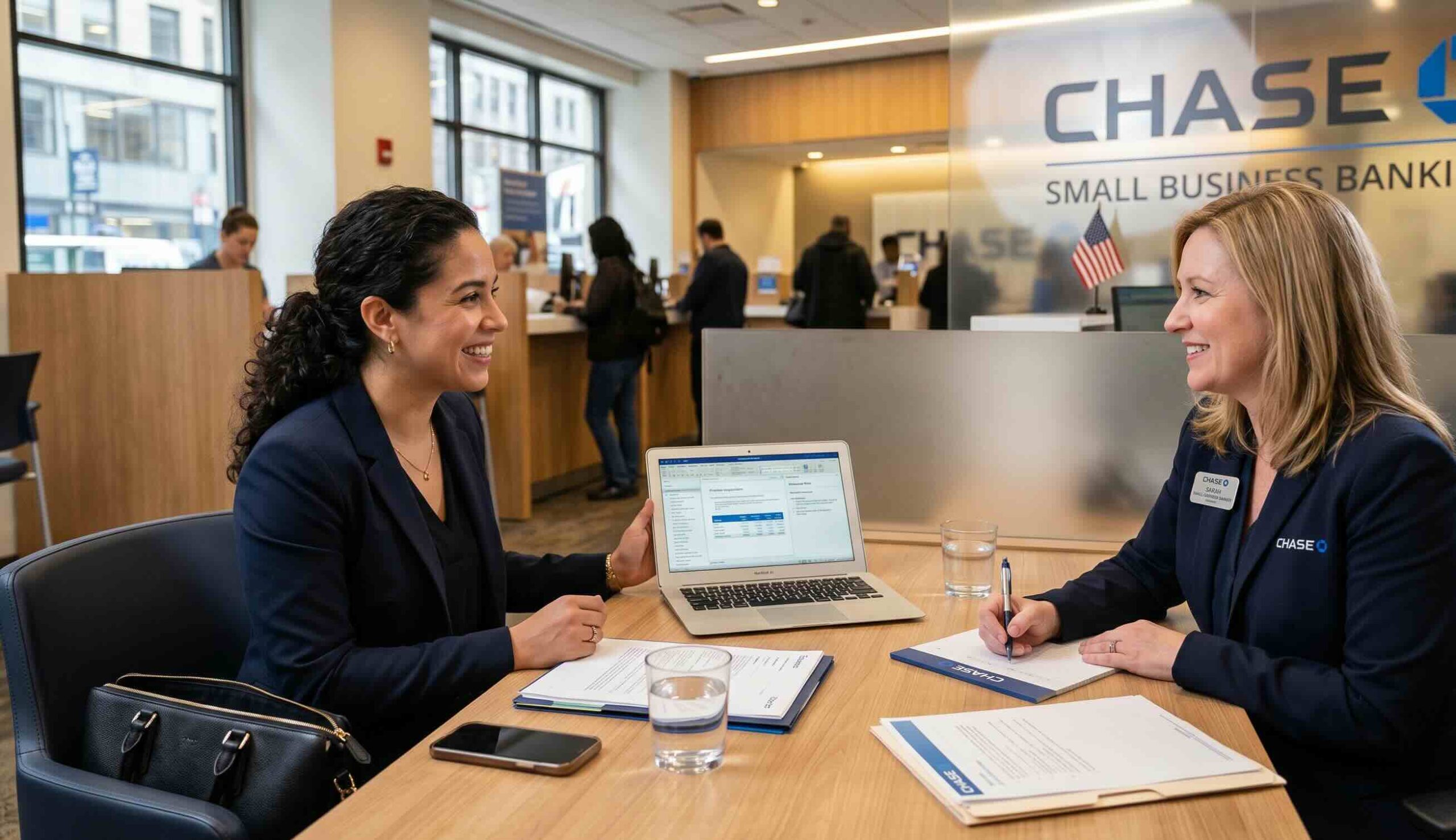
Most small business owners think about risk the same way: the bigger the potential reward, the bigger the risk you have to take. It’s a reasonable assumption. And it’s mostly wrong.
The most successful entrepreneurs don’t take big risks. They find asymmetric ones. An asymmetric bet is any situation where the downside is small and defined, but the upside is large and open-ended. When you learn to recognize and pursue these opportunities, you stop gambling with your business and start playing a completely different game than your competitors.
Here’s what that looks like in practice, and how to start finding these opportunities in your own business right now.
What Makes a Bet Asymmetric
Think about the difference between these two decisions. Option one: you spend $20,000 on a trade show booth with a guaranteed cost and an uncertain return. Option two: you spend $200 on a targeted outreach campaign that, if it works, lands you a $50,000 client, and if it doesn’t, costs you a weekend afternoon.
The second option is asymmetric. The ratio of potential gain to potential loss is wildly lopsided in your favor. You’re not taking a smaller risk; you’re taking a smarter risk. The downside is capped. The upside is not.
Most business owners, consciously or not, take symmetric or even negatively asymmetric bets. They spend heavily on things with defined, high costs and uncertain, modest returns. The owner who recognizes asymmetry starts asking a different question before every investment: what’s the worst case, and what’s the best case, and is that ratio worth it?
Where Asymmetric Opportunities Hide in Small Business
These opportunities are more common than most owners realize. The challenge is that they don’t always look like “opportunities” at first glance. They often look like long shots, side projects, or small experiments. Here’s where to find them:
1. Relationships With High-Leverage People
Sending a thoughtful, personalized message to one influential person in your industry costs you 30 minutes. If nothing comes of it, you lose 30 minutes. If that person becomes a referral partner, a mentor, or a collaborator, the payoff could be years of compounding value. The cost is fixed. The return is unlimited.
Most owners underinvest in relationship-building because the returns aren’t immediate or guaranteed. But that’s precisely what makes it asymmetric: the people who do the work get disproportionate returns because so few people bother.
2. Content and Intellectual Property
A well-written article, video, or piece of content costs you a few hours to create. Once it exists, it can generate leads, build authority, and attract opportunities indefinitely. The cost is fixed. The upside runs for years. Most business owners dramatically underestimate this because they’re optimizing for immediate, predictable returns.
The same logic applies to systems, templates, and documented processes. A one-time investment in building a solid client proposal template, for example, could improve your close rate on every deal you pitch for the next decade.
3. Niche Pivots and Repositioning
Repositioning your service for a more specific, higher-paying audience costs you almost nothing out of pocket. You’re not building a new product. You’re telling a different story to a different audience. If it works, you command higher prices and attract better clients. If it doesn’t, you’ve lost a few weeks of marketing experiments and some revised copy on your website.
This is why niching down is one of the highest-leverage moves a small business can make. The cost of trying it is low. The potential reward, a commanding position in a defined market, is transformative.
4. Asking for the Bigger Opportunity
How much does it cost you to pitch a larger contract, propose a premium tier, or ask for an introduction to a bigger client? Emotionally, it can feel enormous. Practically, the cost is almost zero. The worst case is usually a polite no. The best case is that you close a deal that doubles your revenue.
The same applies to negotiating better vendor terms, asking for more favorable payment arrangements, or requesting a referral from a satisfied client. Owners who ask more get more. The asymmetry is built into the act of asking: minimal downside, significant potential upside.
5. Small Tests Before Big Commitments
Before you rent the larger office space, hire the full-time employee, or invest in the expensive software platform, ask yourself: is there a $500 test I can run first? A small pilot. A freelance contract before a full-time hire. A one-month software trial before an annual commitment.
Testing before committing is the structural practice of asymmetric thinking. You gather real information at minimal cost before making the bigger, riskier bet. This isn’t timidity; it’s intelligence. The One-Way Doors vs Two-Way Doors decision framework maps to this perfectly: reversible, low-stakes experiments are the engine of smart business growth.
The Math Behind Asymmetric Thinking
Here’s a simple way to think about it. Imagine you have ten opportunities in front of you. Each one costs you $100 in time or money to pursue. Nine of them go nowhere. One of them generates $5,000. Your total investment: $1,000. Your total return: $5,000. A 5x return on a portfolio of small bets.
Now imagine you instead made one large bet of $1,000. If it fails, you’re back to zero with nothing to show. If it succeeds, you get your $5,000. But your variance is enormous and your learning is limited to a single data point.
The first approach, running small, smart experiments across multiple asymmetric opportunities, is how the most consistently successful small business owners operate. They’re not guessing better than everyone else. They’re structuring their bets so that failure is cheap and success is scalable.
According to the SBA’s guidance on business growth, sustainable expansion is built on tested, validated strategies rather than single high-stakes moves. The data backs the principle: iterative, lower-risk growth consistently outperforms boom-or-bust swings.
What Kills Asymmetric Thinking
The enemy of asymmetric opportunity isn’t risk. It’s the need for certainty. Many business owners pass on asymmetric bets because the return isn’t guaranteed. They want to know something will work before they try it. But that’s not how asymmetric opportunities work. The return isn’t guaranteed on any individual attempt. The return is guaranteed across a portfolio of attempts, because the math works in your favor when the downside is small and the upside is large.
The other enemy is sunk cost thinking. Once an owner has committed significant resources to a symmetric or negative bet, they tend to double down rather than cut losses. Recognizing early when you’re in a bad risk structure, and having the discipline to stop, is just as important as finding good ones.
For owners who struggle with underpricing and under-asking, asymmetric thinking is especially powerful because it reframes the cost of asking for more. The psychological resistance to pitching higher prices or bigger contracts often feels like risk. Rationally, it almost never is.
How to Build Asymmetric Thinking Into Your Business
Start by reviewing every major investment you’re considering, whether that’s money, time, or attention. For each one, write down two numbers: the maximum realistic downside, and the maximum realistic upside. Then ask whether the ratio justifies the bet.
Next, look for the experiments you’re not running. What would you try if you knew failure was cheap? Chances are, those low-cost, high-potential experiments exist right now and you’ve been passing on them because you’re waiting for certainty that will never come.
Finally, build a habit of pursuing at least one asymmetric bet per quarter. Not a reckless gamble. Not a passive wish. An active, deliberate experiment with a defined downside and an open-ended upside. Over time, this practice separates businesses that sustain long-term growth from those that stay perpetually stuck.
The Quiet Edge
Asymmetric thinking isn’t about being reckless. It’s about being precise. It’s the discipline of asking: where can I risk a little to gain a lot? And then doing that thing over and over again while your competitors keep making the safe, expensive, symmetric bets that look responsible but compound into mediocrity.
The business owners who build real wealth, real leverage, and real staying power aren’t the ones taking the biggest risks. They’re the ones taking the best-structured ones.
If you want to sharpen the skills that matter most for this kind of thinking, join the community at Hustler’s Library for free. Every week we break down the frameworks, decisions, and mental models that the best small business owners actually use.
Ready to Know Where You Stand?
The Business Journey dashboard maps your exact position across all 13 stages. Track your progress, unlock resources for each step, and build with a framework used by thousands of founders at Hustler's Library.

No credit card required · Takes 3 minutes · Personalized to your stage