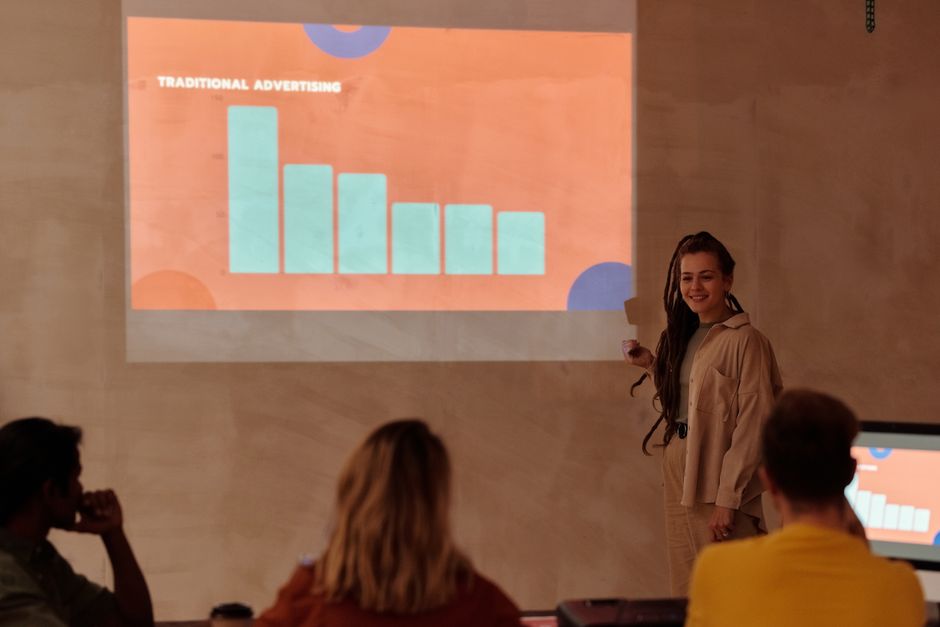
You can have the best product in the room. The sharpest numbers. The cleanest slides. And still lose the deal.
Why? Because data doesn’t move people. Stories do.
The most successful business owners and salespeople don’t just present facts. They take their audience on a journey. They make the listener the hero. They create tension, offer resolution, and leave a feeling that sticks long after the meeting ends.
The good news: storytelling is a skill, not a talent. You can learn it. And once you do, your presentations will never be the same.
Why Storytelling Works in Business
Your brain is wired for stories. Researchers at Princeton found that when a speaker tells a compelling story, the listener’s brain activity actually synchronizes with the speaker’s. That’s called neural coupling, and it’s the closest thing to mind-reading science has ever found.
What that means practically: when you tell a story, your audience stops passively listening and starts experiencing. They feel what your characters feel. They root for outcomes. They remember.
Compare that to a slide full of bullet points and a spreadsheet. Nobody’s brain lights up for that.
According to researchers at Stanford, stories are up to 22 times more memorable than facts alone. If you want your pitch, your proposal, or your sales call to stick, wrap it in a story.
The Core Structure: Problem, Struggle, Resolution
Every great business story follows a simple arc. You don’t need Hollywood production values. You need three things:
1. The Problem (The Hook)
Open with a problem your audience recognizes. Make it specific enough that they nod and think, “That’s exactly what’s happening to me.” The more precisely you name the pain, the more trust you build instantly.
Example: “Before we figured this out, we were losing about one in three proposals. We couldn’t figure out why. Our product was strong. Our pricing was competitive. But something wasn’t landing.”
2. The Struggle (The Journey)
Show the path you (or your client) took. What was tried and failed? What felt impossible? The struggle is where connection happens. Don’t skip it to get to the happy ending. The tension is the story.
Example: “We hired a consultant. Rewrote the deck three times. Changed our pricing model. Still losing deals. Then one of our reps said something that changed everything.”
3. The Resolution (The Payoff)
Here’s where your product, service, or insight enters. But notice: the resolution works because the struggle earned it. The audience is invested. They want this problem solved. And now you show them how.
Make Your Client the Hero, Not Yourself
This is the most common mistake small business owners make in presentations. They tell a story about how great they are. “We built this. We’ve served 500 clients. We’ve won awards.”
Nobody cares about your trophy case. They care about their own problems.
The most effective business stories make the client the hero of the story. You are the guide. You’re the mentor who gives the hero the tools they need. Think of it like this: your client is Luke Skywalker. You’re Yoda. The story is about their transformation, not yours.
When you reframe your presentation this way, everything shifts. Instead of “We have a proven system,” you say: “Here’s where business owners just like you usually get stuck. Here’s what changes when they unlock this one thing.”
Before your next pitch, ask yourself: in this story, who is the hero? If the answer is you or your company, rewrite it.
Five Types of Stories That Work in Business Presentations
You don’t need to invent new stories from scratch. These five story types work again and again in sales, proposals, and client presentations:
1. The Origin Story
Why did you start this business? What problem were you personally trying to solve? Origin stories build credibility and likability at the same time. Keep it under two minutes. Make it real.
2. The Client Transformation Story
Before and after. A client came to you with a problem. You helped them solve it. They got a measurable result. This is the most powerful type of story in a sales presentation because it shows exactly what working with you looks like, minus the risk. When you’re building your pitch deck, knowing how to write a business case that gets a yes can help you structure the transformation arc around tangible outcomes.
3. The Mistake Story
Tell a story about something that went wrong and what you learned from it. This one surprises people. Most business owners avoid it. But admitting a real mistake, showing what you did about it, and what you changed makes you memorable and trustworthy. Vulnerability, when used intentionally, is a sales superpower.
4. The Analogy Story
A complex idea explained through a familiar scenario. “Running a business without tracking your numbers is like driving cross-country without a GPS. You might get there eventually, but you’ll burn twice the fuel and take three wrong exits.” Simple. Sticky. Effective.
5. The Vision Story
Paint a picture of what life looks like after they say yes. Don’t just describe your service. Describe the outcome. “Imagine it’s six months from now. Your team isn’t scrambling every Monday morning. Your pipeline is full. You’re turning down clients who aren’t a fit.” The vision story closes deals because it makes the future real before the contract is signed. This pairs well with having a clear business vision statement that your entire team can rally behind.
How to Build a Story Bank for Your Business
The biggest challenge isn’t knowing that storytelling matters. It’s having stories ready when you need them. The solution is a story bank: a living document where you collect and organize the stories you can pull from in any pitch or presentation.
Start with these categories:
- Client wins: Real results with real numbers. “We helped a catering company cut food waste by 30% in 90 days.”
- Mistakes and recoveries: One or two moments you’d do differently. What changed because of it.
- Industry observations: Patterns you’ve noticed across your clients. Common traps. Surprising insights.
- Personal moments: The memory that explains why you care about what you do.
- Analogies: The simple comparisons you use to explain your most complex concepts.
Review and add to your story bank every quarter. The more material you have, the more naturally stories flow when you’re under pressure in a live presentation.
Practical Tips for Telling Business Stories That Actually Land
Keep it tight. The best business stories are 90 seconds to three minutes. Longer is not better. Longer is risky. Edit ruthlessly.
Use specifics, not generalities. “A client” is forgettable. “A landscaping company in Phoenix with four employees” is memorable. Specifics signal truth. Generalities signal fluff.
Practice out loud, not just in your head. A story that sounds great in your brain often stumbles when spoken. Rehearse with a colleague, record yourself, or run it through before a big pitch.
Pause after the payoff. After you deliver the resolution of a story, stop talking for one or two seconds. Let it land. Most people rush past their best moments.
Match the story to the stakes. A quick origin story works great in a first meeting. A detailed client transformation story is better in a formal proposal. Know your room.
Connecting Story to Your Sales Team
If you have a sales team, or are building one, teaching them to tell stories is one of the highest-leverage investments you can make. Scripts make salespeople sound robotic. Stories make them sound human. And human closes deals.
Start by documenting your best three to five stories as a company. The origin, two strong client transformations, one analogy. Train your team to tell these naturally. Role-play them. Refine them over time. A high-performing sales team needs more than a script. They need a shared story library they believe in and can deliver with conviction.
The SBA’s Take on Business Communication
The U.S. Small Business Administration emphasizes that effective communication is one of the most critical skills for small business owners, particularly in pitching to lenders, partners, and key clients. Their resources on strengthening your business highlight that how you tell your story can directly impact your access to capital and strategic partnerships.
The Bottom Line
Data gets attention. Stories get decisions.
If your presentations are full of features, stats, and slides but light on story, you’re leaving deals on the table. Not because your offer is weak. Because you haven’t given your audience a reason to care on an emotional level.
Start with one story. Your origin. Two minutes. Problem, struggle, resolution. Tell it in your next presentation and watch the room change. Then build from there.
The business owners who win the most clients aren’t always the most technically qualified. They’re the most compelling. And storytelling is the skill that makes the difference.
Want more tools to grow your business? Join the Hustler’s Library community for free and get access to actionable guides, resources, and strategies used by real small business owners. Join free here.
Ready to Know Where You Stand?
The Business Journey dashboard maps your exact position across all 13 stages. Track your progress, unlock resources for each step, and build with a framework used by thousands of founders at Hustler's Library.

No credit card required · Takes 3 minutes · Personalized to your stage