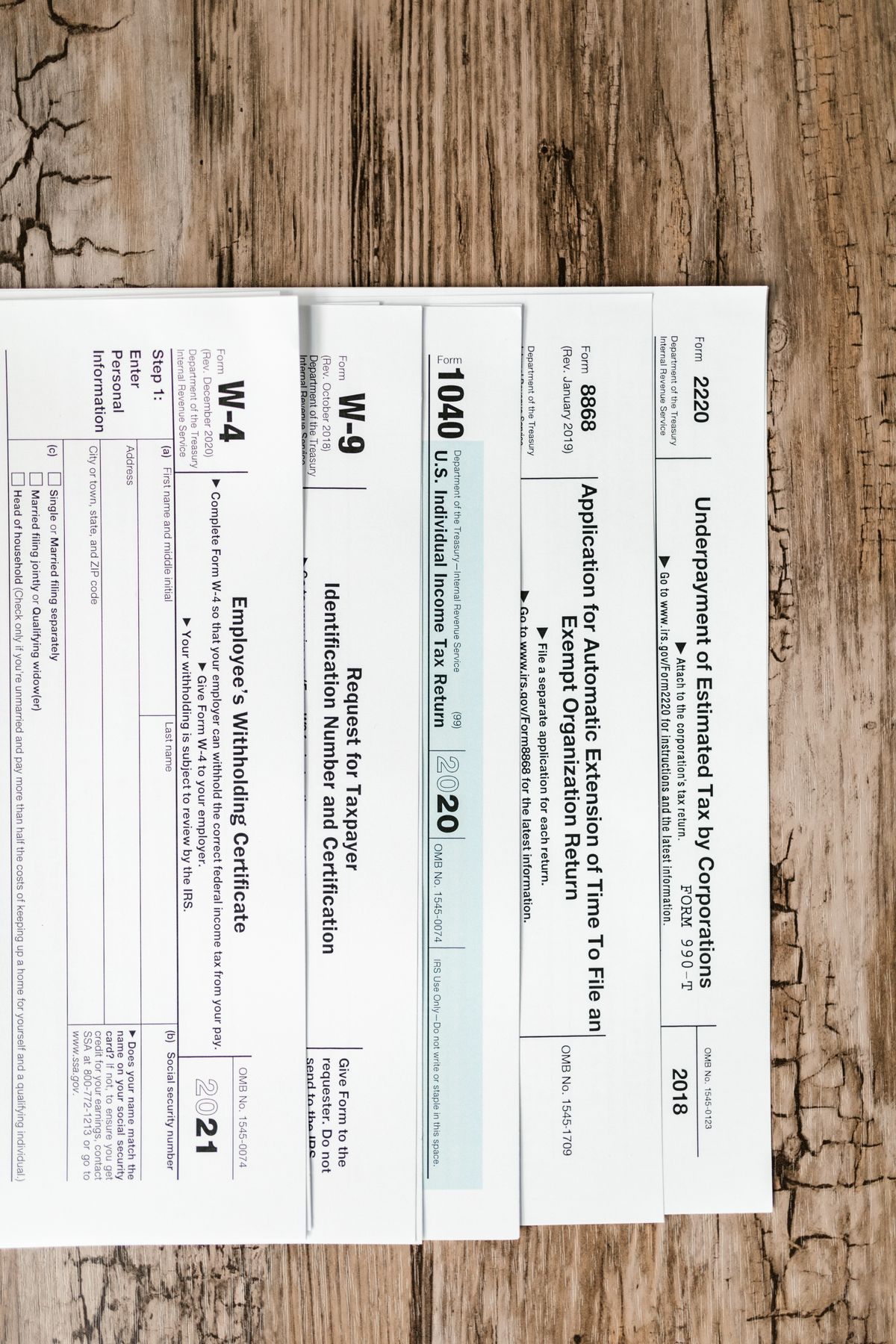
Paying workers or contractors in USDC is operationally straightforward. The tax side is where most business owners get tripped up, not because the rules are complicated, but because the IRS applies property rules to crypto payments, not currency rules. Every payment you make in USDC or any other cryptocurrency is a taxable event for the recipient and a record-keeping obligation for you. This post covers what you actually need to know to stay compliant in 2027, including W-2 versus 1099 treatment, fair market value calculations, state law considerations, and practical tools to make the tracking manageable.
The IRS Treats Crypto as Property, Not Currency
This is the foundational rule. In IRS Notice 2014-21 and the subsequently expanded guidance at irs.gov/businesses/virtual-currencies, the IRS established that cryptocurrency is property for federal tax purposes. This means every transaction involving crypto has potential tax consequences, just like selling a stock or exchanging one piece of property for another.
When your business pays someone in USDC, two things happen simultaneously. Your business has made a payment equal to the fair market value of the USDC at the time of payment (for USDC, this is always $1.00 per token, so there is no ambiguity). The recipient has received income equal to that same fair market value. If the recipient later sells their USDC for more or less than what they received it for, they may have a capital gain or loss at that point. That is their problem to track. Your obligation as the payer is the same as with any other form of compensation.
W-2 Employees vs 1099 Contractors: Key Differences
1099 Contractors
For independent contractors, the rules are similar to any other form of payment. If you pay a contractor $600 or more during the calendar year, you must issue a Form 1099-NEC. The amount reported is the fair market value of the USDC at the time of each payment. For USDC (pegged at $1.00), this is simply the dollar amount sent. You do not withhold taxes from contractor payments regardless of whether you pay in dollars or USDC.
The practical requirement: collect a W-9 from every contractor before paying them, just as you would for fiat payments. The W-9 captures their legal name, address, and tax ID number. Without it, you may be required to apply backup withholding at the current IRS rate. The payment method does not change this requirement.
W-2 Employees
Paying employees in crypto is more complex. Wages paid in cryptocurrency are subject to the same federal income tax withholding, Social Security, and Medicare taxes as cash wages. The value of the crypto at the time of payment is treated as gross wages. You are required to withhold the appropriate taxes, deposit them with the IRS, and report the wages on Form W-2 at year end.
The challenge is that you cannot withhold from the USDC payment itself unless you are withholding a portion of the payment and converting it to fiat. Most employers who pay wages partially in crypto handle this by making part of the paycheck in traditional fiat (enough to cover all withholding obligations) and part in USDC as supplemental compensation. This keeps the withholding math manageable.
Alternatively, employees can adjust their W-4 allowances to reduce withholding on the fiat portion and be responsible for making estimated tax payments to cover the tax on their crypto wages. Either approach works, but it requires clear communication with employees and consistent record-keeping on your end.
Calculating Fair Market Value at Time of Payment
For USDC specifically, fair market value is always $1.00 per token because it is a dollar-pegged stablecoin issued by Circle. A payment of 5,000 USDC is always worth $5,000 for tax purposes. This is one of the strongest arguments for using USDC for payroll rather than native SOL or other cryptocurrencies: the valuation is unambiguous and there is no need to record spot prices at the time of each transaction.
If you ever pay workers in non-stablecoin crypto (SOL, BTC, ETH), you need to record the USD price at the exact moment of the transaction, not the price at the end of the day or the week. This creates significantly more accounting complexity and is one reason most businesses that adopt crypto payroll quickly migrate to USDC for compensation purposes. For more on why USDC is the preferred payment vehicle for international business transactions more broadly, see the post on stablecoins for international business payments.
Record-Keeping Requirements
The IRS requires you to maintain records sufficient to establish the nature and amount of each payment. For crypto payroll, that means keeping records of: the date and time of each payment, the wallet address of the recipient, the amount in USDC, the USD equivalent at the time (for USDC, always $1.00 per token), the transaction hash on the Solana blockchain, and the recipient’s name and tax ID. These records should be retained for at least three years from the date the related tax return is filed, and seven years is the more conservative standard.
The Solana blockchain itself provides an immutable public record of every transaction. Your transaction history is permanently available and can be exported from your wallet or queried via block explorers like Solscan or Solana Explorer. This actually gives you better documentation than a bank wire, which can be harder to reconstruct after the fact.
Tools That Help with Crypto Payroll Tax Tracking
Koinly connects to your Solana wallet and automatically imports transaction history. It can categorize payments, calculate gains and losses, and generate reports formatted for tax filing. For USDC payroll, the gain/loss reporting is trivial (USDC does not fluctuate), but Koinly is useful for the overall transaction log and summary reports that your accountant will need.
CoinTracker offers similar functionality with a focus on making crypto taxes understandable for non-accountants. It integrates with major exchanges and wallets and can generate the specific forms and schedules your accountant needs. Both Koinly and CoinTracker offer free tiers for low transaction volumes, with paid plans starting around $50 to $100 per year.
Request Finance is specifically designed for web3 business payments. It handles invoicing, payment processing, and generates payment records suitable for accounting purposes. If you are paying multiple contractors in USDC, Request Finance reduces the manual tracking significantly by keeping invoice records alongside transaction data.
None of these tools replace a qualified accountant or CPA with crypto experience. Bring your records to a professional who understands both small business tax and cryptocurrency treatment. The IRS continues to update its guidance, and a CPA who follows this space will save you more than their fee.
Can You Legally Pay Employees in Crypto? State-by-State Nuance
Federal law does not prohibit paying employees in cryptocurrency, but it does require that wages meet minimum wage requirements when valued in USD. The more significant constraints come at the state level. Many states have wage payment laws that require wages to be paid in “lawful money” or through methods the employee can use to satisfy obligations (pay rent, buy food, etc.).
California has strict wage payment requirements that effectively require wages to be paid in a form immediately convertible to cash at face value. Paying California employees in USDC would require ensuring they can instantly convert to dollars without loss, which USDC technically allows but which creates legal ambiguity in practice. Texas and Florida have more permissive wage payment laws. New York has specific requirements around the form of wage payments.
The safest approach: consult an employment attorney in your state before implementing crypto employee payroll. For contractor payments, the legal constraints are significantly fewer, which is why most businesses start there. The SBA’s business resources provide a starting point for understanding your employer obligations under federal law.
Practical Recommendations for 2027
Start with contractors, not employees. The legal complexity is lower, the accounting is simpler, and you can test the workflow without navigating state wage payment laws. Use USDC rather than volatile cryptocurrencies to eliminate fair market value uncertainty. Build a simple tracking system from day one: a spreadsheet or dedicated tool that captures every payment with transaction hash and timestamp. Issue 1099-NECs on the same schedule as your fiat contractor payments. Work with a CPA who has handled crypto business payments before. Do not assume that because a payment was made in USDC rather than dollars, the IRS is less likely to scrutinize it. The reporting obligations are identical.
The biggest mistake business owners make with crypto payroll is treating it as somehow outside the normal tax system. It is not. It is a different payment rail with the same tax obligations. Understand that clearly upfront, set up your tracking accordingly, and the compliance is manageable. For the operational side of setting up the contractor payment workflow, see: How to Pay Contractors and Freelancers in USDC on Solana.
For the full operational picture of how Solana-based payments fit into small business infrastructure, see the Solana for Small Business no-hype guide.
Building a modern business and want frameworks that actually apply to your situation? Join Hustlers Library free for access to content built by and for operators who treat their business like a serious endeavor.
Disclaimer: This article is for informational purposes only and does not constitute financial, legal, or investment advice. Cryptocurrency and blockchain-based payment systems carry risk. Consult a qualified financial or legal professional before making any business decisions based on this content.
Ready to Know Where You Stand?
The Business Journey dashboard maps your exact position across all 13 stages. Track your progress, unlock resources for each step, and build with a framework used by thousands of founders at Hustler's Library.

No credit card required · Takes 3 minutes · Personalized to your stage