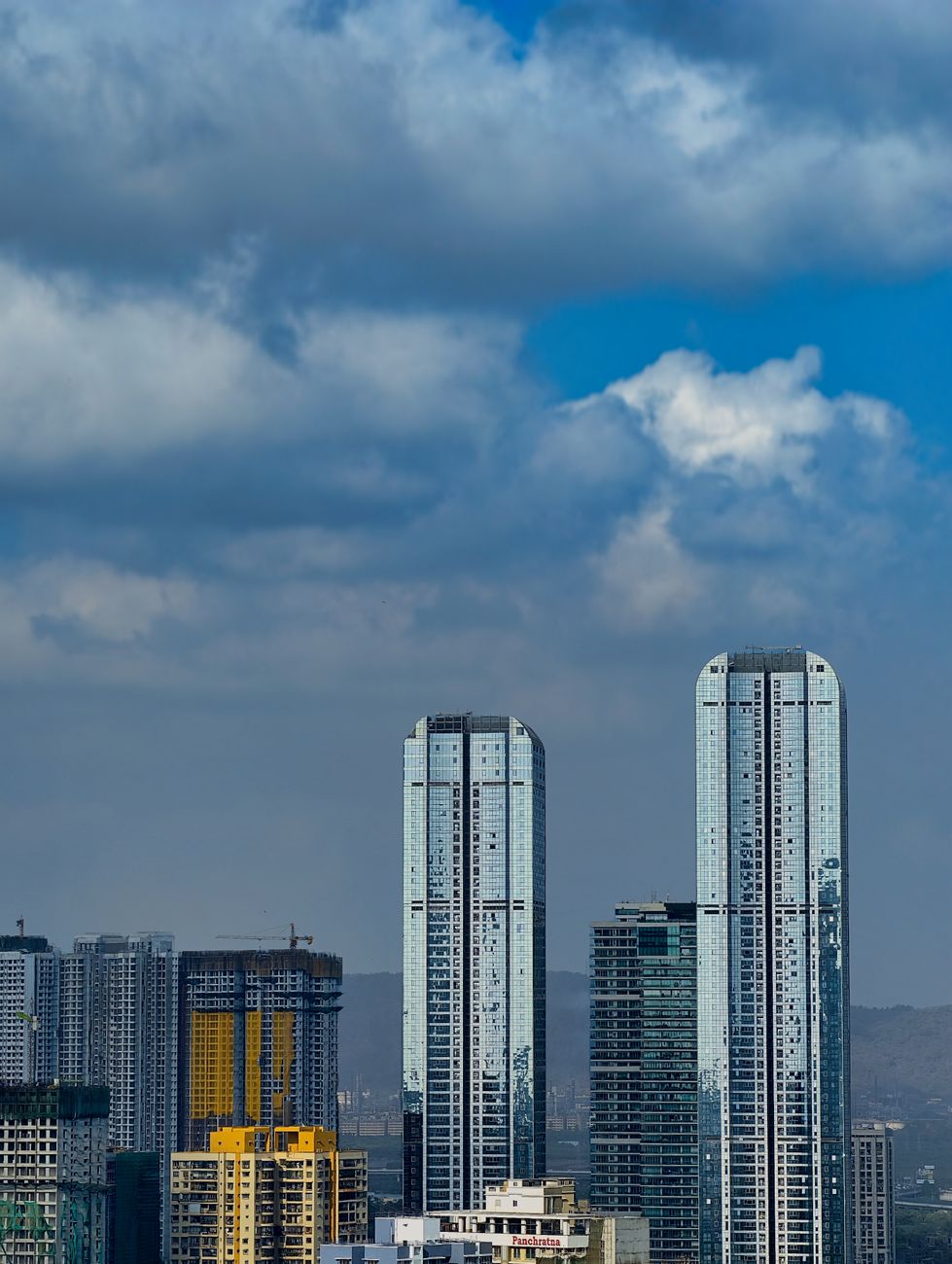
Mumbai is India’s financial capital, and its commercial real estate market reflects that status. From the glass towers of Bandra Kurla Complex to the heritage offices of Nariman Point, the city offers a layered landscape for businesses of every size. Whether you are a startup hunting for your first desk or a corporation scouting a regional headquarters, understanding how Mumbai’s commercial districts work will save you time, money, and surprises.
Bandra Kurla Complex: Mumbai’s Premier Business Address
Bandra Kurla Complex, commonly called BKC, has become the address of choice for multinationals, major Indian banks, and foreign consulates. Developed by the Mumbai Metropolitan Region Development Authority (MMRDA), BKC sits between the western and central suburbs, offering relatively wider roads, underground utilities, and planned open spaces that older parts of the city simply cannot match.
Grade A office space in BKC typically commands rents in the range of Rs. 250 to Rs. 350 per square foot per month, putting it at the premium end of the Mumbai market. Despite the cost, demand remains strong because the location cuts cross-city commute times for employees living in both the western and central corridors. Major occupants include HSBC, Citibank, Standard Chartered, and a host of professional services firms.
Nariman Point: The Legacy CBD
For decades, Nariman Point at the southern tip of the city was the unquestioned center of Mumbai’s commercial world. It still carries prestige, and many legacy corporations maintain flagship offices there. However, rents have moderated compared to BKC, hovering around Rs. 200 to Rs. 270 per square foot per month for quality floors.
The challenge at Nariman Point is aging building stock. Many towers date back to the 1970s and 1980s, which means older elevators, smaller floor plates, and limited parking. For businesses that prioritize address prestige and proximity to the Reserve Bank of India, the Bombay Stock Exchange, and the legal district of Fort, Nariman Point remains a compelling choice. For those requiring modern amenity-rich workplaces, BKC or newer corridors may make more sense.
Lower Parel: The Mill District Reinvention
One of Mumbai’s great urban transformations has been the redevelopment of the central suburbs’ old textile mill lands in Lower Parel and Worli. Factories that once powered India’s industrial age have given way to mixed-use towers housing media companies, financial firms, retail malls, and hotels.
Lower Parel appeals to creative industries, media houses, and mid-size corporates that want a central location without the premium of BKC. Rents here range from Rs. 150 to Rs. 220 per square foot per month, depending on the building grade and floor. The area has strong road connectivity and the Elphinstone Road railway station, though traffic congestion during peak hours is a known constraint.
Powai: The Eastern Tech Corridor
Powai, anchored by the Indian Institute of Technology Bombay campus and the Hiranandani township, has developed into a significant technology and knowledge industry hub. Companies in software development, consulting, and financial technology have established large campuses here, drawn by relatively lower rents and access to IIT’s talent pipeline.
Office rates in Powai generally run between Rs. 100 and Rs. 160 per square foot per month, making it one of the more affordable Grade A options within Mumbai city limits. The Jogeshwari-Vikhroli Link Road (JVLR) and the Eastern Express Highway connect Powai to the broader metro area, and ongoing metro rail expansions are expected to improve public transit access further.
Major Developers Shaping the Market
A handful of developers dominate Mumbai’s commercial real estate supply. Lodha Group has been particularly active, developing premium office and mixed-use projects including the Lodha Supremus and Lodha World Towers complex in Lower Parel. Godrej Properties has a strong presence in suburban business parks and is expanding its commercial portfolio across Mumbai and the Mumbai Metropolitan Region. DLF, primarily known for its Delhi NCR footprint, has increasingly targeted Mumbai’s commercial market through joint ventures and new acquisitions.
Beyond these three, developers like Oberoi Realty in Goregaon, K Raheja Corp across multiple submarkets, and the Hiranandani Group in Powai and Thane contribute significantly to the city’s commercial supply pipeline. Understanding which developer built or manages a building matters because it signals construction quality, property management standards, and exit liquidity if you are an investor rather than an occupier.
For regulatory guidance and market data on housing and commercial development, the Maharashtra Chamber of Housing Industry (MCHI) is a useful reference point, publishing regular reports on construction activity, developer registrations, and policy developments across Maharashtra.
Coworking vs. Traditional Lease: What Works for Mumbai
The coworking sector has grown rapidly in Mumbai, with operators like WeWork, Awfis, Smartworks, and 91springboard operating dozens of centers across BKC, Lower Parel, Andheri, and Powai. For early-stage businesses, coworking solves several Mumbai-specific problems: the city’s high office rents, long lease lock-in periods, and the upfront capital required for fit-outs.
A dedicated desk at a quality coworking space in BKC or Lower Parel typically costs Rs. 12,000 to Rs. 22,000 per month per seat. A private cabin for a small team can run Rs. 50,000 to Rs. 150,000 per month depending on size and location. These figures include electricity, internet, housekeeping, and often meeting room credits, making the true cost comparison with traditional leases more favorable than the headline rent numbers suggest.
Traditional leases remain the right choice for companies that need brand visibility, want to customize their workplace extensively, or occupy enough space that the per-seat economics tip in their favor. In Mumbai, that crossover point typically comes around 50 to 75 seats, though it varies by submarket and building. Lease terms generally run three to five years with a lock-in period, and landlords typically require a security deposit of six to ten months’ rent.
If you are scaling operations in the city, it is also worth reviewing the small business funding options available in Mumbai to understand how growth capital interacts with your real estate commitments. And before signing any commercial lease, consulting one of the experienced business lawyers in Mumbai can help you navigate stamp duty requirements, leave-and-license structures, and exit clause negotiations.
What to Watch in the Mumbai Commercial Market
Several factors will shape Mumbai’s commercial real estate landscape over the next few years. The expansion of the Mumbai Metro network is opening up new corridors in areas like Thane, Navi Mumbai, and the western suburbs that previously suffered from poor transit connectivity. As metro lines become operational, office supply in these areas will increase and rents may begin to converge with more established markets.
The Maharashtra government’s push for infrastructure upgrades, including coastal road projects and elevated highways, is also reconfiguring which neighborhoods offer practical commute advantages. Businesses scouting for space today should factor infrastructure timelines into their location decisions, since a three to five year lease signed today will play out against a meaningfully different transit map.
Vacancy rates in Grade A buildings across BKC and Lower Parel have remained relatively tight, typically in the 8 to 12 percent range, which gives landlords some leverage on rent negotiations. Grade B and C spaces show higher vacancies and offer more room for tenants to negotiate favorable terms, though at the cost of building quality and address prestige.
Ready to Establish Your Mumbai Presence?
Setting up a commercial base in Mumbai requires navigating one of Asia’s most complex but rewarding real estate markets. Whether you are evaluating BKC for its global-standard infrastructure, Lower Parel for its central positioning, or Powai for its cost-efficiency and talent access, the right choice depends on your business model, team profile, and growth stage.
Access free resources, guides, and tools to help you build and grow your Mumbai operation at Hustler’s Library.
For a full overview of doing business in Mumbai, see our complete guide to doing business in Mumbai.
Ready to Know Where You Stand?
The Business Journey dashboard maps your exact position across all 13 stages. Track your progress, unlock resources for each step, and build with a framework used by thousands of founders at Hustler's Library.

No credit card required · Takes 3 minutes · Personalized to your stage