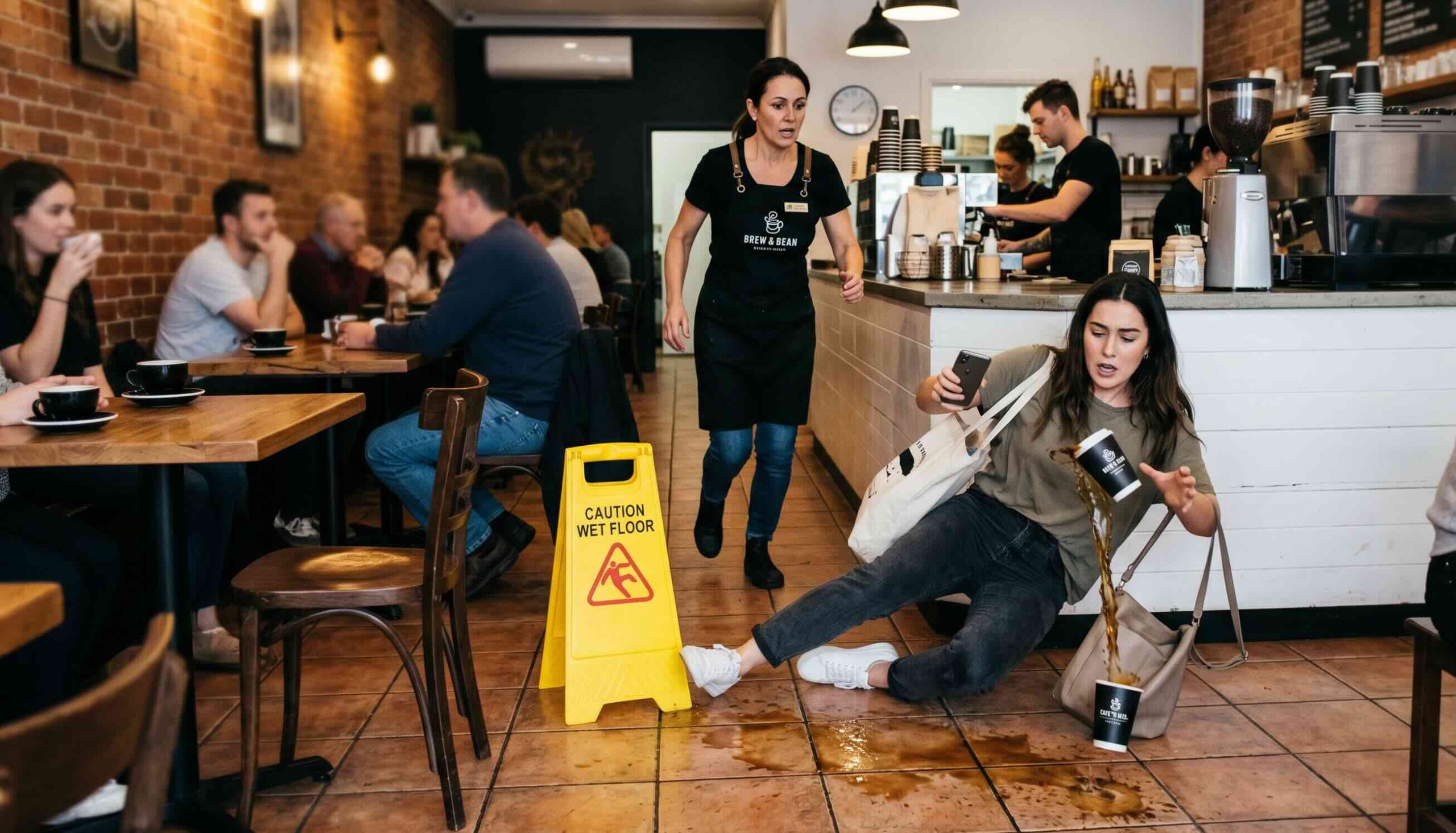
General liability insurance is the foundation of almost every small business insurance strategy. It protects you when a customer slips in your store, when you accidentally damage a client’s property, or when someone claims your ad hurt their reputation. It won’t cover everything, but it covers the situations most likely to hit you first.
Who this is for: Small business owners, freelancers, and contractors who interact with clients, customers, or the public in any capacity. If your work could ever cause physical harm or property damage to someone else, general liability belongs in your coverage stack.
- General liability (GL) covers bodily injury, property damage, personal injury, and advertising injury
- Average cost is $400 to $1,500 per year for most small businesses
- GL does not cover professional errors, employee injuries, or your own business property
- A Business Owner’s Policy (BOP) bundles GL with commercial property at a discount
- Most commercial leases and client contracts require proof of GL before you can work or open
What General Liability Insurance Covers
A standard GL policy covers four major categories of claims:
- Bodily injury: A customer slips and falls in your location. A delivery person trips over your equipment at a job site. GL pays for their medical bills, legal fees, and any settlement or judgment against you.
- Property damage: You or your employee accidentally damages a client’s property while working. GL covers the cost of repair or replacement plus any associated legal costs.
- Personal injury: This is not physical injury. It refers to non-physical harm like libel, slander, wrongful eviction, or false arrest. If a competitor claims you made defamatory statements about them, GL can cover your defense.
- Advertising injury: If someone claims you used their copyrighted material in your marketing, or that your ad campaign copied their slogan, GL may cover the claim.
Most GL policies also include “products and completed operations” coverage, which protects you after a job is done. If a contractor finishes a renovation and a client later claims the work caused structural damage, this coverage responds.
What General Liability Does NOT Cover
Knowing what GL excludes is just as important as knowing what it covers. Common exclusions include:
- Professional errors: GL won’t cover a claim that you gave bad advice or made a professional mistake. That requires Errors and Omissions (E&O) or professional liability insurance.
- Employee injuries: Covered by workers compensation, not GL. See our guide to workers compensation insurance for details.
- Your own property: If your equipment, inventory, or office is damaged, you need commercial property insurance, not GL.
- Auto accidents: Business vehicles need a separate commercial auto policy.
- Intentional acts: GL does not cover damages you cause on purpose.
- Cyber breaches: Data breaches and hacking incidents require a separate cyber liability policy.
Average General Liability Insurance Costs by Business Type
GL premiums are based on your industry, annual revenue, number of employees, location, and claims history. Here are typical annual cost ranges for small businesses:
| Business Type | Avg Annual Premium | Notes |
|---|---|---|
| Freelancer / Consultant | $400 to $600 | Low risk; minimal client contact |
| Retail Store | $600 to $1,200 | Foot traffic increases slip-and-fall risk |
| Restaurant / Food Service | $800 to $2,000 | Higher risk from liquor, hot surfaces, and traffic |
| General Contractor | $1,200 to $3,500 | High exposure from property damage and injury on sites |
| Cleaning Service | $500 to $1,000 | Property damage exposure from working in client spaces |
| IT / Tech Firm | $400 to $900 | Low physical risk; cyber risk needs separate policy |
These are estimates. Your actual quote may be higher or lower depending on your revenue, location, and specific business activities. The SBA’s business insurance guide provides a solid overview of required coverage types and how to assess your needs.
BOP vs Standalone General Liability: Which Is Right for You?
A Business Owner’s Policy (BOP) bundles general liability with commercial property insurance into a single, discounted package. For most small businesses that own equipment, inventory, or operate out of a physical location, a BOP is typically more cost-effective than buying GL alone.
A standalone GL policy makes more sense if:
- You work from home and don’t need commercial property coverage
- You’re a freelancer or consultant with minimal physical assets
- Your property is already covered under a separate policy
See our full breakdown of BOP vs General Liability to understand which structure saves you more money. You can also compare top providers in our guide to Best Workers Comp Insurance by Industry 2026 since many of the same carriers write both policies.
How to Get General Liability Insurance Quotes
- Know your revenue and payroll: Insurers use these figures to set your premium. Have your most recent annual revenue and payroll numbers ready.
- Describe your work accurately: The more precisely you describe what you do, the more accurate your quote will be. Vague descriptions can lead to coverage gaps.
- Use an online marketplace: Platforms like Next Insurance let you get a quote and buy coverage in minutes. Good for straightforward businesses.
- Work with an independent broker: For more complex businesses or higher premiums, a broker can shop multiple carriers simultaneously and help you find the best combination of price and coverage.
- Compare apples to apples: Make sure each quote has the same per-occurrence limit (typically $1M) and aggregate limit (typically $2M). Don’t compare a $500K policy with a $1M policy on price alone.
- Ask about bundling: If you also need commercial property coverage, ask for a BOP quote alongside your standalone GL quote.
Key Takeaways
- GL covers bodily injury, property damage, personal injury, and advertising injury
- It does not cover professional errors, employee injuries, your own property, or cyber incidents
- Average small business GL costs $400 to $1,500 per year; high-risk industries pay more
- A BOP bundles GL with commercial property at a discount and is ideal for most brick-and-mortar businesses
- Compare quotes using consistent limits ($1M/$2M is standard for small business)
- Most leases and client contracts require proof of GL before you can operate
Frequently Asked Questions
Is general liability insurance required by law?
In most states, GL is not legally required the way workers comp is. However, it is often contractually required. Landlords, commercial property owners, and large clients almost always require you to show proof of GL coverage before signing a lease or awarding a contract.
What is a certificate of insurance?
A certificate of insurance (COI) is a one-page document from your insurer that summarizes your coverage. It shows the policy limits, coverage types, and the insurer’s name. You’ll often need to provide a COI to clients, landlords, and event venues to prove you’re covered.
What is an “additional insured”?
An additional insured is a person or entity added to your policy who also receives protection under it. Clients and landlords frequently ask to be added as additional insureds on your GL policy. This means your coverage extends to protect them in the event of a claim related to your work.
How much general liability coverage does a small business need?
Most small businesses carry $1 million per occurrence and $2 million aggregate as their base GL limits. High-risk industries or businesses with large contracts may need $5 million or more. An umbrella policy can extend your limits cost-effectively once you’ve maxed out your base coverage.
Does general liability cover online businesses?
Yes, but with limits. GL covers advertising injury, which applies to some online situations like copyright infringement in digital ads. However, it does not cover data breaches, hacking, or online privacy violations. Those require a cyber liability policy.
Ready to build a stronger business? Join Hustler’s Library free and get the resources, guides, and community every entrepreneur needs.
Ready to Know Where You Stand?
The Business Journey dashboard maps your exact position across all 13 stages. Track your progress, unlock resources for each step, and build with a framework used by thousands of founders at Hustler's Library.

No credit card required · Takes 3 minutes · Personalized to your stage