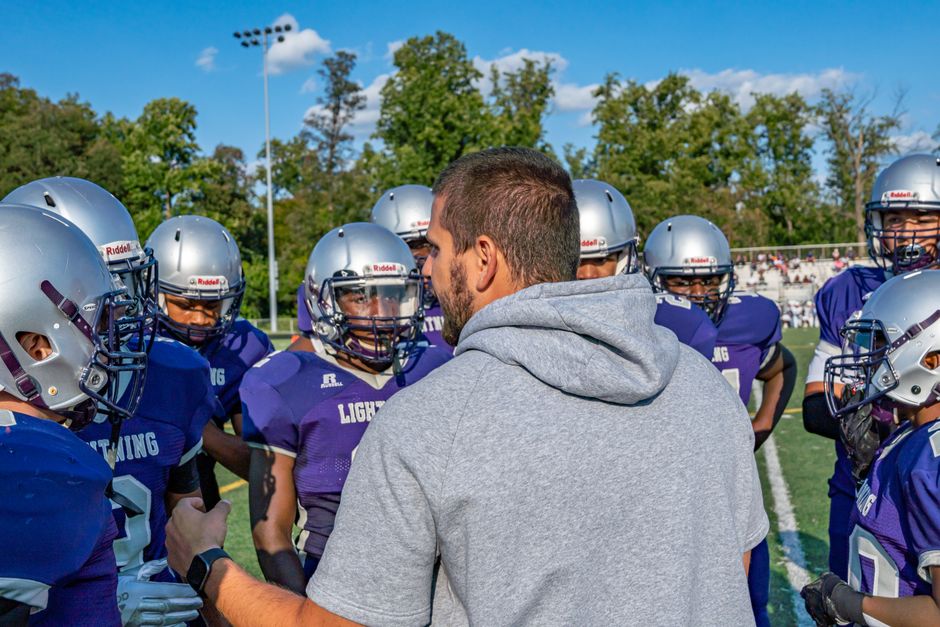
Every championship team has a great coach. That’s not a coincidence. And while most small business owners spend their time studying other entrepreneurs, the most underrated playbook for building a high-performing team has been sitting in the sports world for decades.
Elite sports coaches have solved a problem you deal with every day: how do you get a group of individuals with different skills, motivations, and personalities to execute consistently under pressure? The answers they’ve developed translate directly to your business. Here’s what the best coaches know that most business owners don’t.
1. Talent Gets You In the Room. Culture Wins Championships.
Nick Saban didn’t win six national championships by simply recruiting the best players. He built a culture so demanding and so clear that average players became great ones, and great players became legendary. Phil Jackson, who won 11 NBA titles, was famous for this: he didn’t chase stars; he built systems that made stars perform as a team.
The business owner equivalent: you don’t need to hire perfect people. You need to build an environment where your standards are explicit, your expectations are high, and underperformance isn’t normalized. Culture fit and skills both matter, but the culture you build will outlast any single hire you ever make.
2. Great Coaches Give Clear Roles, Not Just Goals
In sports, everyone knows their position. The point guard doesn’t also play center. The left tackle doesn’t decide to run routes. There’s a reason for that clarity: when roles overlap or go undefined, players hesitate. They wait for someone else to act. Mistakes happen not from lack of effort but from lack of direction.
Most small business owners do the opposite. They hire people and assign them to whatever needs doing that day. Over time, no one knows who owns what, decisions fall through the cracks, and the owner ends up doing everything themselves because it’s faster. This isn’t a people problem. It’s a structure problem.
Define roles before you fill them. Know what success looks like in each position. When someone joins your team, the first thing they should understand is exactly what they’re responsible for and where their lane begins and ends.
3. Practice More Than You Play
A football team plays 17 regular season games per year. They practice hundreds of times. That ratio is intentional. Performance in the game is a direct result of preparation before it. When the moment matters, athletes execute on muscle memory and ingrained habits built in practice, not on improvisation.
In your business, “practice” looks like training, role-playing sales conversations, reviewing processes before a busy season, and debriefing after things go wrong. Most small business owners skip this entirely. They hire someone, give them a brief orientation, and throw them into the work. Then they wonder why performance is inconsistent.
Invest in repetition before the stakes are high. Train your team on the scenarios they’ll actually face. When a customer complains, when a deal goes sideways, when a deadline gets moved up, your people should already know what to do because they’ve worked through it before.
4. Feedback Is a Daily Habit, Not an Annual Event
After every game, elite coaches review film. Not once a year. Not at mid-season. After every single game. They look at what worked, what didn’t, and what needs to change before the next one. That feedback loop is relentless and immediate.
In most small businesses, feedback happens twice a year if you’re organized, or never if you’re busy. Employees go months without knowing whether they’re performing well or poorly. By the time a performance issue gets addressed, it’s been a problem long enough that fixing it feels like a crisis.
Build a feedback rhythm into your operations. That doesn’t mean formal reviews every week. It means brief check-ins after important projects, quick course corrections when something slips, and specific praise when something goes right. The goal is to make feedback ordinary, not stressful.
5. The Best Coaches Know When to Challenge and When to Support
Coaching isn’t one-size-fits-all. A veteran player needs different handling than a rookie. A high performer going through a slump needs something different than someone who’s been coasting. The coaches who win long-term are the ones who can read their people and adjust their approach accordingly.
As a business owner, your job is the same. Some employees need autonomy; micromanaging them kills their motivation. Others need structure and clear direction; giving them too much freedom leads to paralysis. The skill is learning to recognize which is which and responding appropriately, not just defaulting to one management style because it’s comfortable for you.
Pay attention to what each person on your team actually needs to perform at their best. That information is available if you’re watching and listening.
6. Bench the Ego. Develop Others.
The best coaches in history are defined not by their own performance but by the players they developed. John Wooden didn’t step on the court. Pat Summit never took a shot. Their job was to make others better, and they were ruthlessly focused on that mission.
Many small business owners struggle with this. They are the best at what they do, which is often why they started the business in the first place. But staying in the doing role prevents others from growing into it. The longer you hold on to tasks you could teach someone else to handle, the longer your business depends entirely on you.
Your goal should be to make yourself unnecessary in as many areas as possible. That’s not a threat to your value. It’s the definition of building something real. The same principle shows up in military leadership: the best commanders build units that execute without them, not units that fall apart the moment they step away.
7. Accountability Is Non-Negotiable, But It Starts at the Top
Great coaches hold their players accountable, but they also hold themselves accountable. When a team loses, the best coaches start by asking what they could have done differently, not just pointing at the players. That standard sets the tone for everyone else.
If you want your team to own their results, you have to model that ownership first. You can’t demand accountability from people you’re not holding accountable yourself, and you can’t hold others to standards you’re willing to excuse in yourself. The moment your team sees that the rules apply to everyone, including the owner, the culture shifts.
According to the SBA’s guide on managing employees, consistent expectations and clear communication are among the most cited factors in building stable, high-performing small business teams. That’s the coaching model in practice.
8. Systems Over Heroics
The greatest dynasties in sports history: the New England Patriots, the San Antonio Spurs, the Chicago Bulls dynasty, what do they have in common? They were not built on a single superstar. They were built on systems so strong that when key players left, the teams stayed competitive. The Spurs drafted unheralded players and turned them into All-Stars. The Patriots won Super Bowls with quarterback Tom Brady’s backups.
The businesses that last are built the same way. Solving systemic problems, not just individual fires, is what separates businesses that scale from those that stall. Document your processes. Create repeatable playbooks. Build something that doesn’t collapse when one person leaves.
The Takeaway: You’re Already a Coach
Whether you have a team of two or twenty, you are already in the coaching role. The question is whether you’re being intentional about it. Are you giving clear roles or just putting out fires? Are you building habits through repetition or hoping talent carries the day? Are you giving real-time feedback or saving it for a review no one looks forward to?
The best business owners are the ones who study their craft the way elite coaches study theirs: obsessively, humbly, and always with an eye toward developing the people around them. The championship isn’t just the revenue goal or the exit. It’s building a team that can win with you, and eventually, without you.
That’s the game worth playing.
Want more straight-talk on building and running a smarter business? Join Hustler’s Library for free and get the playbooks, guides, and insights that actually move the needle.
Ready to Know Where You Stand?
The Business Journey dashboard maps your exact position across all 13 stages. Track your progress, unlock resources for each step, and build with a framework used by thousands of founders at Hustler's Library.

No credit card required · Takes 3 minutes · Personalized to your stage