Virtual office vs physical office vs coworking: the choice you make directly affects your monthly burn rate, your team’s productivity, and how clients perceive your business. There is no universally correct answer, but there is a right answer for your specific stage of business. This guide breaks down all three models across cost, credibility, flexibility, and growth compatibility so you can make the decision with clarity.
The Three Models at a Glance
These three workspace options represent fundamentally different philosophies about what office space is for and what it costs.
Virtual Office
A virtual office gives you a professional business address, mail handling, and often access to meeting rooms on an as-needed basis, without a dedicated physical space. You work from wherever you work: home, a coffee shop, a hotel, or a coworking space. The address is real; a human or service receives your mail; you can book a conference room when you need to meet a client professionally. Pricing starts as low as $49 to $150 per month from providers like Regus, WeWork, Alliance Virtual Offices, and Davinci. For businesses that need legal presence in a city or a professional mailing address without ongoing space costs, a virtual office is the most capital-efficient solution available.
Coworking Space
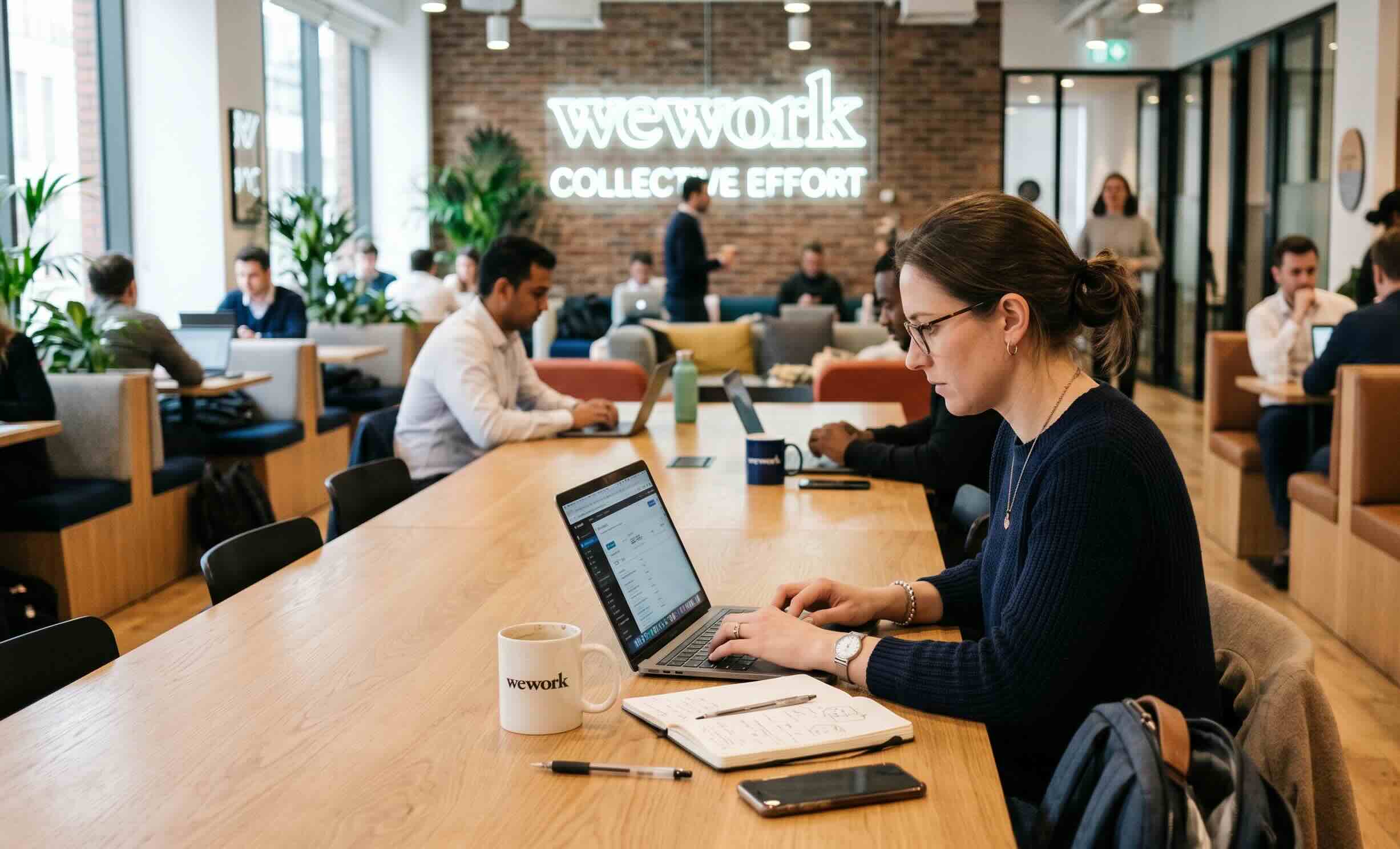
Coworking spaces provide shared physical workspace on flexible terms, typically monthly memberships. You get a dedicated desk or access to hot desks, shared amenities like printers and phone booths, meeting room credits, and a professional environment. Unlike a virtual office, coworking means you actually show up somewhere to work. Pricing varies from $150 per month for basic hot desk memberships to $2,000 or more per month for private offices in premium networks. Coworking is the middle path: more physical presence than a virtual office, more flexibility than a traditional lease.
Physical Office (Traditional Lease)
A traditional office lease gives you dedicated, permanent space. You sign a lease, typically 2 to 5 years in length, pay a fixed monthly rent, and occupy a space your team uses every day. You can customize the environment, build your culture around it, and project stability to clients, partners, and potential hires. The cost is higher: commercial office space in major metros runs $30 to $100 or more per square foot annually. A 2,000 square foot office in a mid-tier market might cost $4,000 to $8,000 per month before build-out costs, furniture, utilities, and internet. The commitment is real, and the financial exposure if your business changes is significant.
The Cost Reality: What Each Model Actually Costs
Monthly cost comparison for a solo entrepreneur or small team of 3 to 5:
- Virtual office: $50 to $200 per month. Add occasional meeting room bookings at $25 to $75 per hour.
- Coworking (hot desk or dedicated desk): $200 to $800 per month per person, depending on market and provider.
- Physical office (small suite, 500 to 800 sq ft): $2,000 to $6,000 per month in most markets, plus a 2 to 5 year commitment.
The cost differential is not incremental: it is categorical. Moving from a virtual office to a small physical lease can add $25,000 to $70,000 in annual fixed costs. That is a hiring decision. That is a marketing budget. For a business not yet generating consistent, predictable revenue above that threshold, a traditional lease is a bet that can go badly.
Credibility and Perception: Does the Office Type Matter to Clients?
The short answer is: less than you think, more than you hope. A Fortune 500 company may require you to have a physical office before entering certain vendor relationships. Many clients, however, care far more about your work product, responsiveness, and professionalism than whether you have a lobby with your logo on the wall.
A virtual office address at a well-known business address does provide credibility improvement over a home address or P.O. box. A coworking space with a respected brand like Industrious or WeWork communicates that you are professional without requiring the capital commitment of a full lease. If perception is a concern, the SBA recommends that businesses present themselves professionally in all client-facing communications; a virtual office with a strong address often satisfies that requirement at a fraction of the cost of physical space. The SBA’s business location guidance covers the regulatory and presentation considerations worth reviewing when making this decision.
Which Option Fits Your Stage
Early Stage (0 to 2 Years): Virtual Office or Coworking
If you are pre-revenue or in early growth, preserve capital aggressively. A virtual office establishes your professional presence. Add a coworking membership if you need a place to work outside your home or if you benefit from the energy of a professional environment. Avoid signing a long-term lease until your revenue can comfortably carry the fixed cost for 18 months even in a downturn scenario.
Growth Stage (2 to 5 Years): Coworking or Small Office Suite
As your team grows and collaboration needs increase, coworking becomes limiting. Private offices within coworking networks, like those available through Industrious or WeWork, bridge the gap: you get dedicated space for your team with the flexibility of monthly terms. If your revenue is consistent and you have 5 or more employees with regular in-person needs, a small traditional lease may begin to make financial sense, particularly if you can secure favorable terms in a soft market.
Mature Stage (5 Plus Years): Physical Office if Economics Support It
A mature business with stable revenue, a growing team, and a specific geographic identity may find that a traditional lease is the right next step. The stability signals commitment to employees and clients, and the cost per employee often decreases as you occupy more space efficiently. This is also where ownership of your space becomes worth evaluating, as discussed in our guide on buying vs leasing commercial real estate.
The Clear Winner
For most businesses in their first three years: virtual office plus coworking on demand wins. It delivers professional credibility, access to physical workspace when needed, and preserves the capital you need for growth.
For established teams with consistent collaboration needs: coworking private offices or small suites on flexible terms are the next logical step. They add permanence without the lock-in risk.
Traditional leases are reserved for mature businesses with stable revenue and genuine space requirements. Signing a 3-year lease to feel like you have “made it” is one of the most common and costly premature decisions in small business.
Hustler’s Library, alongside trusted resources like the SBA and major workspace operators, consistently points early-stage businesses toward flexibility over fixed commitments. The entrepreneurs who scale fastest are typically the ones who kept fixed costs lean in the early years and deployed capital into growth rather than overhead. For related reading on how to structure your overall operations intelligently, see our business operations setup guide and the full breakdown of the top coworking networks to compare your options.
Want to make smarter operational and financial decisions at every stage of your business? Join Hustler’s Library free and access the playbooks, comparisons, and frameworks that help entrepreneurs build lean, profitable businesses.
Ready to Know Where You Stand?
The Business Journey dashboard maps your exact position across all 13 stages. Track your progress, unlock resources for each step, and build with a framework used by thousands of founders at Hustler's Library.

No credit card required · Takes 3 minutes · Personalized to your stage