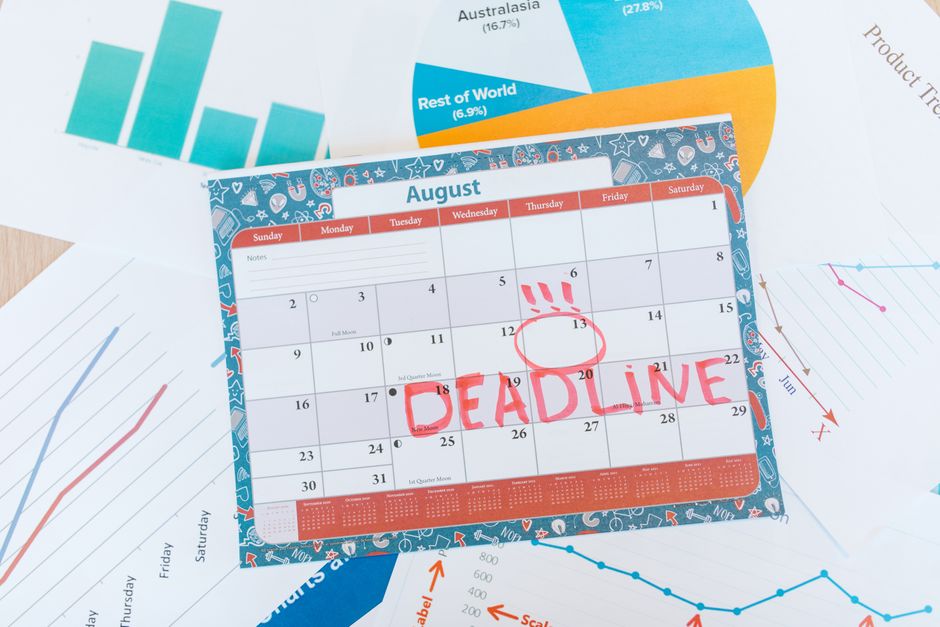
Deadlines have a bad reputation. Most small business owners hear the word and think of stress, last-minute scrambling, and the sinking feeling that something is already late. But here is the truth: used intentionally, deadlines are one of the most powerful performance tools you have. They turn vague goals into concrete commitments, eliminate endless back-and-forth, and create the urgency that actually gets things done.
If you have ever watched a project drag on for weeks longer than it should have, or noticed that tasks without a due date never seem to get finished, you already understand the problem deadlines solve. This guide breaks down exactly how to use them well, whether you are a solo operator or managing a small team.
Why Deadlines Work (The Science Behind the Pressure)
Deadlines work because of a well-documented psychological principle: work expands to fill the time available. This is known as Parkinson’s Law, and it plays out in small businesses every single day. Give a task two weeks and it takes two weeks. Give it three days and it gets done in three days. The quality is often the same. The difference is how urgently the brain treats the work.
Research in behavioral economics backs this up. Studies consistently show that people make more decisions, take more action, and procrastinate less when a clear endpoint exists. Deadlines shift work from the category of “I will get to it eventually” into the category of “this needs to happen by a specific date.” That mental shift is everything.
For small business owners, this matters in two directions. It applies to your own work, and it applies to the people you work with, including employees, contractors, vendors, and clients. Learning to use deadlines strategically across all of those relationships is one of the highest-leverage things you can do for your productivity and profitability.
The Difference Between Fake Deadlines and Real Ones
Not all deadlines are created equal. Fake deadlines are dates you set because they sound reasonable, with no real consequence if they slip. Real deadlines are tied to something that actually matters, a client deliverable, a product launch, a payment, a legal filing, a staffing change.
Fake deadlines kill morale and credibility. When your team watches you push the same date back three times in a row, they stop taking deadlines seriously. Eventually, nobody treats due dates as real, and the whole system breaks down.
The fix is not to stop setting deadlines. It is to make sure every deadline you set has at least one of the following behind it:
- A real external consequence (client expects delivery, contract specifies a date, vendor needs a decision)
- A financial cost to missing it (late fees, lost revenue, stalled launch)
- A downstream dependency (another task cannot start until this one finishes)
- A public commitment (you told a client, your team, or your audience a specific date)
When a deadline has real stakes, people treat it differently. That is what you are building toward.
How to Set Deadlines That Actually Get Respected
Setting a deadline is easy. Getting people to honor it consistently is the skill. Here is how to do it:
Be specific, not vague
“Get this done soon” is not a deadline. “Have the first draft to me by Thursday at noon” is a deadline. Specificity removes the ambiguity that gives procrastination room to breathe. Always include a day and time, not just a date.
Anchor deadlines to outcomes
When you explain why a deadline matters, people take it more seriously. “I need this by Thursday because the client presentation is Friday morning” is far more motivating than just handing someone a date with no context. Tie deadlines to consequences and goals, and you will see better follow-through.
Build in a buffer, then keep it private
Professional project managers almost always build a buffer between their internal deadline and the real external one. If you need something from a vendor by the 20th, you ask for it by the 17th. This is not dishonest. It is smart operations planning. Just do not announce the buffer or your team will unconsciously expand into it.
Confirm receipt and agreement
A deadline only exists in shared reality if both parties know about it and agree to it. When you assign a task with a due date, ask the other person to confirm they have received it and that the timeline works. If they push back, negotiate. If they say yes, hold them to it. Verbal confirmations create accountability. Written ones create even more.
Using Deadlines to Keep Client Work on Track
One of the most overlooked places to apply deadline discipline is in client relationships. Clients regularly delay decisions, hold up approvals, and slow down projects, and then wonder why the work is late. The solution is to bake deadlines into your client agreements and onboarding process from day one.
This means including language in your contracts that specifies client responsibilities and timelines, not just yours. It means sending a project schedule at kickoff that shows not just your deliverables but theirs, including feedback deadlines, approval windows, and payment milestones.
When you frame deadlines as shared, rather than just things you are asking of the client, compliance goes up dramatically. Nobody wants to be the bottleneck. Make it easy for clients to see exactly what they owe you, by when, and what happens to the project timeline if they miss it.
If your business uses a client portal or project management tool, this structure becomes even easier to enforce. Clients can see their pending approvals, you can send automatic reminders, and the whole project moves on a visible timeline rather than a shifting verbal agreement. Check out our guide on how to use a client portal to streamline operations and impress clients for more on building this kind of structure.
Applying Deadline Pressure to Your Own Work
Most small business owners are great at setting deadlines for other people and terrible at enforcing them on themselves. If you are a solo operator or a founder who wears many hats, you need to create artificial accountability structures that replicate the external pressure a boss or client would provide.
A few methods that work:
- Time-boxing: Block specific hours on your calendar for specific tasks, and treat those blocks like appointments with a paying client. Do not move them for anything that is not genuinely urgent.
- Public commitments: Tell someone you trust, a business partner, a mentor, or even a peer in your industry, that you will have something done by a specific date. The social pressure of potentially having to explain why you missed it is surprisingly effective.
- Stacked deadlines: Break large projects into milestones with individual due dates rather than one big finish line. A single deadline six months from now is easy to ignore today. Twelve smaller deadlines across that period are not.
- Consequences by design: Some business owners go further and build real financial consequences into their self-imposed deadlines. A commitment contract, where you lose money to a cause you dislike if you miss a target, activates loss aversion in ways that pure willpower cannot match.
For more on building the habit infrastructure behind consistent execution, see our guide on how to use the science of habit to build better business systems.
When Deadlines Get Missed (And What to Do About It)
Even in the best-run businesses, deadlines get missed. How you respond matters as much as the deadline itself.
First, establish whether the missed deadline was a systemic issue or a one-time slip. A contractor who misses a deadline once may have had a legitimate emergency. A team member who consistently misses deadlines is telling you something about capacity, clarity, or commitment, and each of those problems has a different solution.
Second, never let a missed deadline pass without acknowledgment. That does not mean a harsh reprimand, but it does mean a direct conversation. “We said this would be done by Tuesday and it was not. What happened and how do we prevent it?” This conversation matters because silence signals that deadlines are optional.
Third, look at your own role. Were the expectations clear? Was the timeline realistic? Did the person have everything they needed to succeed? Missed deadlines are often a symptom of a planning or communication failure upstream, not just a motivation problem.
Building a Deadline Culture in Your Business
Individual deadlines matter, but what you are really building toward is a company culture where deadlines are taken seriously at every level. That culture starts with you.
When you consistently hit your own commitments, respond quickly, and follow through on what you say, your team notices. Leadership by example is the only culture tool that actually works at scale. If you want a team that treats deadlines as non-negotiable, you have to demonstrate what that looks like first.
You can reinforce that culture by incorporating deadline performance into how you review and recognize your team. Not in a punitive way, but by making it visible. Who consistently delivers on time? Who needs more support? Tracking completion rates on assigned tasks gives you the data to have these conversations with evidence instead of impressions.
The Small Business Administration’s employee management resources include useful frameworks for setting clear expectations and performance standards, which are the foundation any good deadline culture needs to rest on.
For a tactical framework to tie deadlines into your broader goal-setting system, our guide on how to use a weekly review to stay on top of your small business goals gives you a repeatable process that keeps every deadline visible and in motion.
The Bottom Line
Deadlines are not a management style. They are a basic operating system for getting things done. Used well, they eliminate ambiguity, create accountability, and turn your business’s calendar into a competitive advantage. Used poorly, they breed resentment and erode trust.
The difference is intentionality. Start with one area of your business where projects or tasks consistently run late. Apply the principles in this guide. Set real deadlines with real stakes, communicate the reason behind each one, and follow through, on yourself first and your team second. You will be surprised how much faster things start moving.
Want more tools and strategies like this one? Join Hustler’s Library for free and get access to our full library of plain-English business guides built for owners who are serious about growth.
Ready to Know Where You Stand?
The Business Journey dashboard maps your exact position across all 13 stages. Track your progress, unlock resources for each step, and build with a framework used by thousands of founders at Hustler's Library.

No credit card required · Takes 3 minutes · Personalized to your stage