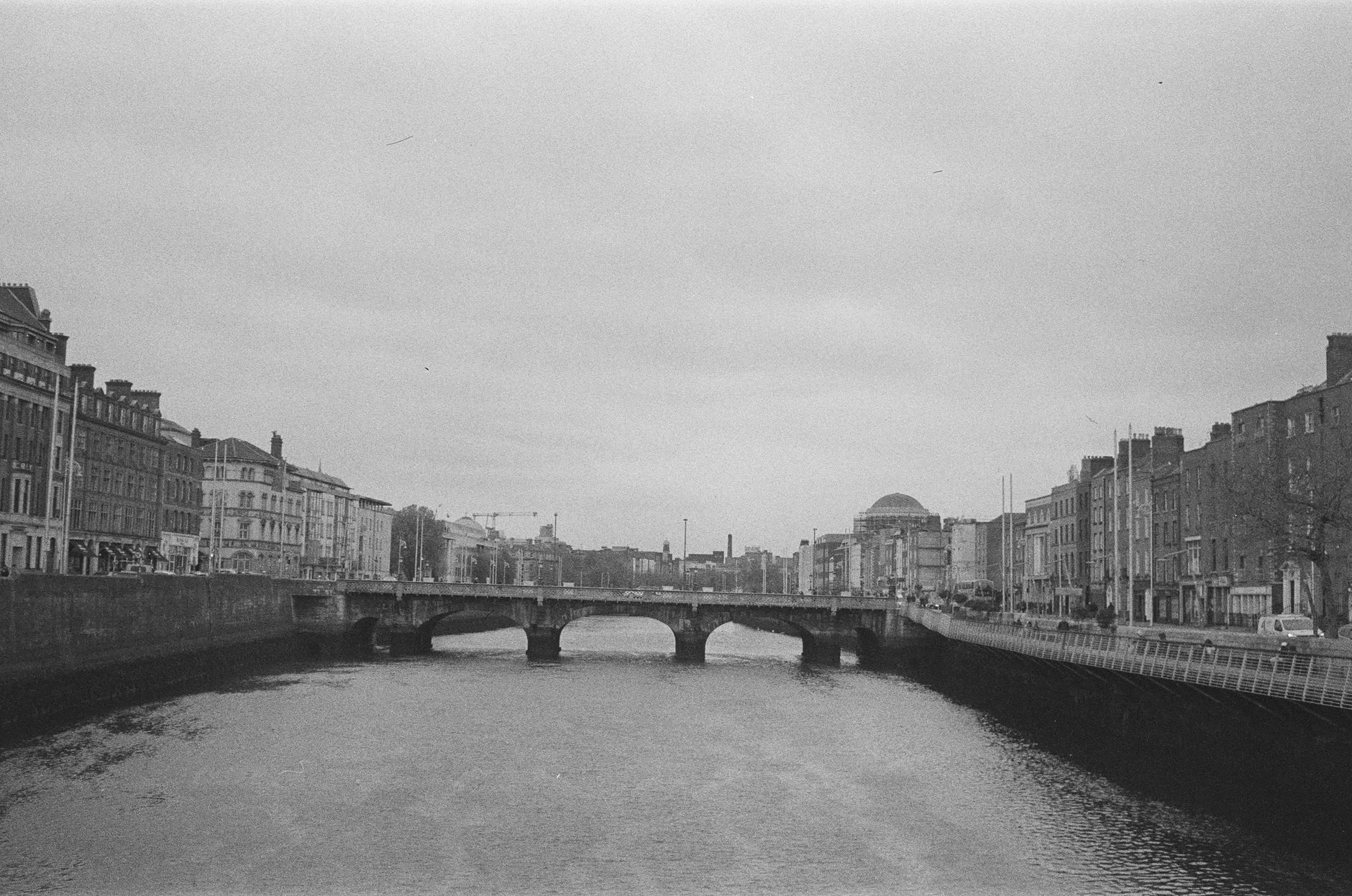
Dublin sits at the crossroads of US and European business. It’s the European headquarters city for Google, Meta, Apple, LinkedIn, and Airbnb. It’s a common law jurisdiction with an English-speaking workforce. And it has the best pub culture on earth for relationship-building over a pint. What it also has is unpredictable Atlantic weather, unique plug types, and a pace of life that rewards showing up prepared rather than rushing. Here’s exactly what to pack.
Power Adapter: One Adapter, Three Cities
Ireland uses Type G plugs — the same three-pin rectangular system as the UK, Singapore, and Dubai. If you’re doing a multi-city business tour through any of those destinations, one Type G adapter handles all of them.
The voltage is 230V/50Hz. Most US laptops, phone chargers, and power banks are dual-voltage (check for “100–240V” on the brick). You’ll need the physical adapter for the plug shape, but not a voltage converter.
A universal Type G travel adapter with built-in USB-A and USB-C ports keeps your setup minimal. Bring a spare if you rely heavily on keeping multiple devices charged simultaneously — Dublin hotel rooms, particularly in older buildings, can have limited outlet access.
Currency: Euro, Contactless, and Wise
Ireland uses the Euro (EUR), currently trading at approximately 1.10 EUR per USD. Bank of Ireland and AIB ATMs are on virtually every street in Dublin city centre and the IFSC. Use ATMs for cash over airport booths or hotel desks.
The smarter move is a Wise card — mid-market Euro conversion, no foreign transaction fees, works as contactless Visa everywhere. Contactless payment has become near-universal in Dublin, even at many small vendors and traditional pubs. Most businesses are now tap-only, particularly post-2020. Carry some Euro cash for markets and very small independent businesses, but you’ll rarely need more than €50 on hand.
Weather: Pack Layers, Always Carry an Umbrella
This is the most important packing section for Dublin. The weather is genuinely unpredictable in a way that catches visitors off guard. In a single Dublin afternoon you can experience sunshine, cold wind, rain, and a rainbow. Sometimes in sequence. Sometimes simultaneously.
Non-negotiable packing items:
- Compact travel umbrella — not optional. A windproof compact umbrella fits in any bag and saves you from being soaked before a meeting. Regular umbrellas invert in Dublin wind.
- Waterproof packable jacket — a lightweight packable rain jacket compresses to nothing and goes over business casual or formal wear without looking wrong.
- Waterproof walking shoes — cobblestone streets in Temple Bar, the Liberties, and much of the city centre become genuinely slippery when wet. Leather-soled dress shoes on wet cobblestones are a liability.
- Layering pieces — temperatures range roughly 8–18°C year-round depending on season. Lightweight base layers plus a mid-layer give you flexibility without bulk.
Dress Code: Dublin Is Relaxed
Business dress in the IFSC, Grand Canal Dock, and corporate offices is standard professional attire. But Dublin’s business culture is notably more relaxed than London, Frankfurt, or New York. Smart casual works in almost every setting outside of formal board meetings. Overdressing in Dublin stands out more than underdressing — read the room.
The Silicon Docks (Grand Canal Dock, home to Google, Meta, LinkedIn, and others) skews decidedly casual tech-startup dress code. Showing up in a full suit to a Google Dublin meeting is reading the room wrong.
Transit: Walking City with Good Cards
Dublin’s city centre is compact and walkable. The IFSC, Grand Canal Dock (Silicon Docks), and the traditional city centre are 15–20 minutes apart on foot. For longer distances, use the Dublin Bus network or the DART (coastal rail) with a Leap Card. Buy a Leap Card at any Spar or Centra convenience store (everywhere), at Dublin Airport, or at major bus stops. It covers buses, DART, and Luas trams.
For taxis and rideshare, Free Now (formerly MyTaxi) is Ireland’s dominant app. Uber operates in Dublin but more limitedly. Free Now is what locals use and has better availability.
Connectivity
Ireland has solid 4G/5G coverage throughout Dublin and most urban areas. For a tourist SIM, pick up a plan from Three Ireland, Tesco Mobile, or Vodafone Ireland at the airport or any phone shop — plans around €20 give you 30GB for 30 days. Alternatively, buy an Airalo eSIM before departure and activate it on landing; Ireland/EU plans are well-priced and there’s no need to swap physical SIMs.
Pub Culture: More Important Than You Think
Business entertaining in Dublin happens in pubs more than in restaurants. This is not casual socializing — it’s where relationships are built, deals are discussed, and trust is established. Know the difference between a pub (table service, community space, traditional) and a bar (standing, louder, more transient). The Long Hall on South Great George’s Street, Mulligan’s on Poolbeg Street, and Kehoe’s on South Anne Street are the classic pubs near the business district.
Guinness etiquette: it takes time to pour properly (119.5 seconds is the official Guinness standard). If someone orders a Guinness, you do not rush it. Do not tell them to hurry up the pour. This is a cultural moment, not an inconvenience.
VAT Refunds
If you’re buying any significant goods in Dublin (electronics, clothing, gifts), non-EU visitors can claim VAT refunds on purchases over €30. Ask for a Tax Free form (Global Blue or similar) at point of purchase, keep your receipts, and submit at the Dublin Airport VAT refund desk before departure. The VAT rate in Ireland is 23% on most goods — this adds up on larger purchases.
Packing List Summary
- Type G travel adapter
- Windproof compact umbrella
- Lightweight waterproof packable jacket
- Waterproof walking shoes
- Layering pieces (base + mid-layer)
- Packing cubes for organization
- Leap Card holder or slim wallet
- Business cards (more than you expect to use)
For the official visitor and business travel overview, see Tourism Ireland — the official destination guide.
For deeper trip prep, read our Dublin Business Trip Prep Guide on visas, banking, and first-week setup. If you’re scouting workspace, our Dublin coworking spaces guide has the full breakdown. Exploring Dublin as a business base? Start with how to start a business in Dublin.
Build the Business That Gets You There
Dublin is one of the best cities in the world for English-speaking entrepreneurs expanding into Europe. Showing up prepared — with the right gear, the right payments setup, and an understanding of the culture — turns a business trip into a genuine opportunity. Join Hustler’s Library free for the full international operator toolkit.
Ready to Know Where You Stand?
The Business Journey dashboard maps your exact position across all 13 stages. Track your progress, unlock resources for each step, and build with a framework used by thousands of founders at Hustler's Library.

No credit card required · Takes 3 minutes · Personalized to your stage