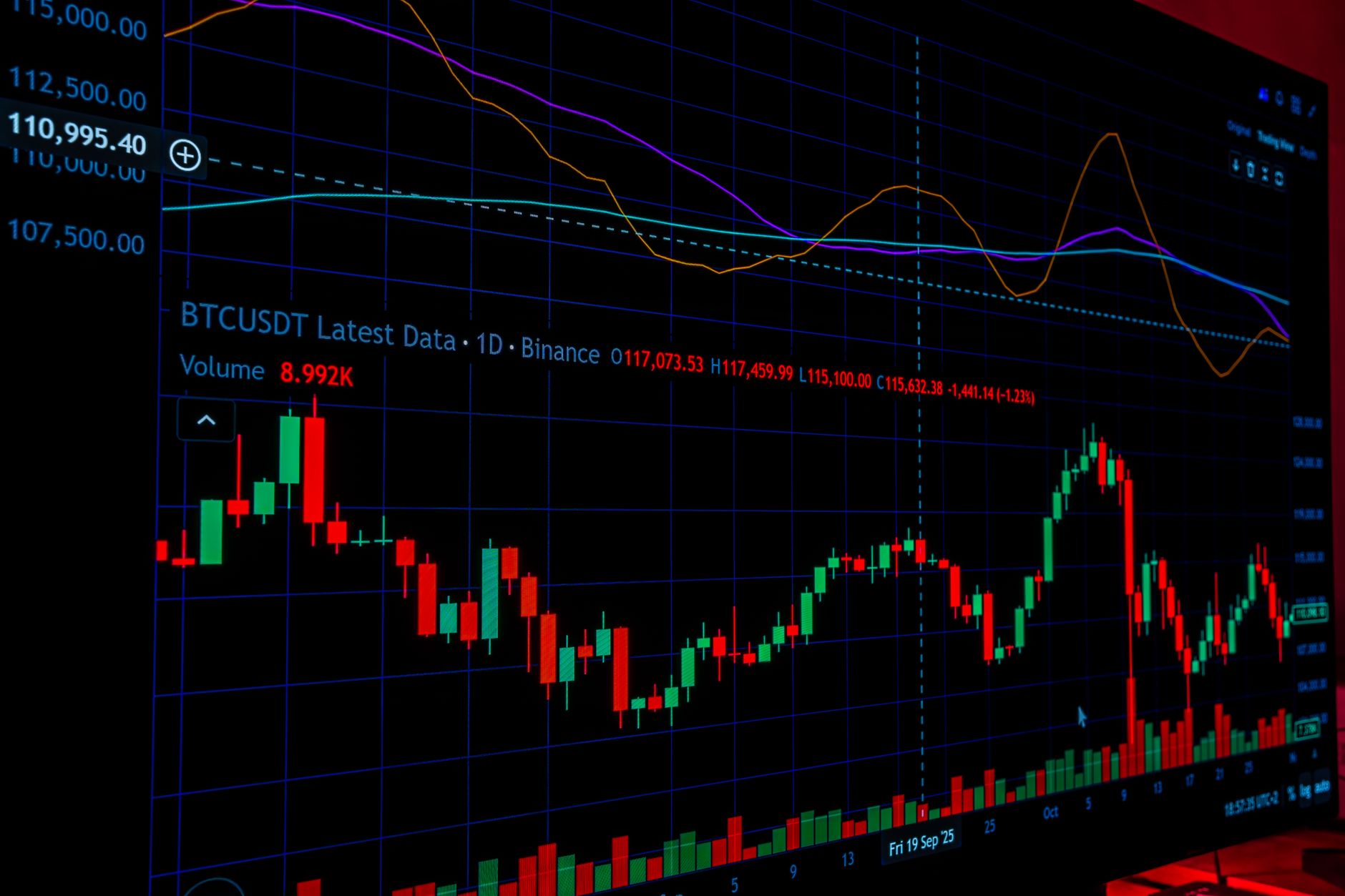
If you have decided to buy cryptocurrency, the first practical question you will face is: where do I actually do that? The answer is a crypto exchange. But not all exchanges are created equal, and choosing the wrong one can cost you in fees, frustration, or worse.
This guide compares four of the most well-established exchanges available to US users: Coinbase, Kraken, Binance.US, and Gemini. We will look at fees, security, ease of use, coin selection, and who each platform is best suited for. This is an informational comparison only and does not constitute a recommendation to buy, sell, or hold any cryptocurrency.
Quick Comparison: Coinbase vs Kraken vs Binance.US vs Gemini
| Feature | Coinbase | Kraken | Binance.US | Gemini |
|---|---|---|---|---|
| Best For | Beginners, US compliance | Intermediate traders, low fees | Low-fee trading, coin variety | Security-focused users, NY residents |
| Maker Fee | 0.40% (Advanced) | 0.25% | 0.10% | 0.20% |
| Taker Fee | 0.60% (Advanced) | 0.40% | 0.10% | 0.40% |
| Simple Buy Fee | ~1.49% to 3.99% | 1.50%+ | Not available | ~1.49%+ |
| Coins Listed | 250+ | 200+ | 150+ | 70+ |
| US Available | All 50 states | Most states | Most states (not NY, TX, others) | All 50 states (incl. NY) |
| Publicly Traded | Yes (COIN on Nasdaq) | No | No (parent Binance is private) | No (private) |
| SOC 2 Certified | Yes | Yes | Not confirmed | Yes (Type 1 and 2) |
Fees shown are approximate and subject to change. Always verify current fees on each exchange’s official website before trading.
Coinbase: The US Market Leader
Overview
Coinbase is the largest US-based crypto exchange by trading volume and is publicly traded on the Nasdaq (ticker: COIN). It was founded in 2012 in San Francisco and has been a pioneer in getting regulatory approvals across all 50 states. It holds a BitLicense from New York and operates under a robust compliance framework that most other exchanges have not matched.
Pros
- Available in all 50 US states, including New York
- Publicly traded company with strong regulatory standing
- Extremely beginner-friendly interface
- FDIC insurance on USD balances up to $250,000
- Coinbase Advanced Trade offers significantly lower fees for active traders
- Strong mobile app and customer service
Cons
- Simple buy fees are among the highest in the industry (up to 3.99% on small purchases)
- Coinbase Advanced Trade interface can confuse new users who do not know to use it
- Some customer service issues documented at scale
Best For
Beginners who want the simplest onboarding experience, users in highly regulated states like New York, and businesses that need a compliant, auditable exchange relationship.
Kraken: The Veteran’s Choice
Overview
Kraken was founded in 2011, making it one of the oldest exchanges in the industry. It has never been hacked, which is a significant distinction in a space with a long history of exchange failures. Kraken is particularly well-regarded for its security practices, its range of supported coins, and its tiered fee structure that rewards active traders.
Pros
- Strong security track record (no major hacks in 13+ years of operation)
- Competitive fees for intermediate to active traders
- Wide selection of coins (200+)
- Kraken Pro interface gives full access to advanced order types
- Strong staking options for supported assets
- Available in most US states
Cons
- Not available in all US states (check state availability before signing up)
- Interface can feel dated compared to Coinbase
- Customer support response times can lag during high-volume periods
Best For
Intermediate traders who want lower fees than Coinbase, a broader coin selection, and a platform with a strong security record. Also excellent for users who want to stake assets.
Binance.US: Lowest Fees, Highest Scrutiny
Overview
Binance.US is the American arm of Binance, the world’s largest crypto exchange by volume. It was set up specifically to serve US users in compliance with US regulations. In 2023, the parent company Binance and its founder Changpeng Zhao reached a significant settlement with US regulators including the DOJ and CFTC, resulting in Zhao stepping down and Binance paying $4.3 billion in penalties.
This is not mentioned to disqualify Binance.US as a platform, but it is relevant context any informed user should have. Binance.US operates as a separate legal entity and has maintained operations throughout the regulatory process.
Pros
- Lowest trading fees of any major US exchange (as low as 0.10% maker/taker)
- Wide selection of coins
- High liquidity on major trading pairs
- Advanced trading tools and charting
Cons
- Not available in New York, Texas, and several other states
- Parent company faced significant regulatory and legal issues
- Customer support has received negative reviews
- Bank transfer options have been limited at various points due to compliance issues
Best For
Cost-conscious, experienced traders in states where it is available who prioritize low fees over all other factors and are comfortable with the regulatory history.
Gemini: Security-First and New York Approved
Overview
Gemini was founded in 2014 by the Winklevoss twins, who are among the most publicly visible figures in crypto. It holds a New York State Trust charter, which is one of the most rigorous regulatory standards for crypto custodians in the United States. Gemini has consistently prioritized regulatory compliance and security over growth at all costs.
Pros
- Available in all 50 US states, including New York
- SOC 2 Type 1 and Type 2 certified (rare among exchanges)
- New York State Trust charter provides strong consumer protections
- Clean, simple interface
- Gemini Earn (when available) and ActiveTrader platform for advanced users
- Strong custody infrastructure, used by institutional clients
Cons
- Smallest coin selection of the four exchanges (70+)
- Fees are competitive but not the lowest
- Gemini Earn program was paused following the Genesis bankruptcy in 2022, which affected some users; operations have since been restructured
Best For
Security-conscious users, New York residents who need a licensed platform, and institutional or business users who want the highest level of custodial rigor.
What About the Assets Traded?
All four exchanges support major assets including Bitcoin, Ethereum, and most top-20 cryptocurrencies by market cap. Coinbase and Binance.US tend to add new coins fastest. Gemini is the most selective and lists only coins that have passed its internal compliance review, which is both a pro and a con depending on your perspective.
Security: What to Look for in Any Exchange
Regardless of which platform you use, here are the security practices every serious user should follow:
- Enable two-factor authentication (2FA): Use an authenticator app, not SMS, which is vulnerable to SIM-swap attacks.
- Use a strong, unique password: Never reuse passwords across accounts.
- Whitelist withdrawal addresses: Most exchanges allow you to restrict withdrawals to pre-approved wallet addresses. Enable this.
- Consider a hardware wallet: If you are holding significant amounts of crypto long-term, moving it off an exchange and into a hardware wallet like a Ledger or Trezor dramatically reduces your risk exposure.
- Understand exchange insurance: Crypto held on exchanges is generally not FDIC-insured (though cash balances on Coinbase and Gemini may be). If the exchange is hacked or becomes insolvent, your assets may be at risk.
As this article is for informational purposes only and not financial advice, we strongly encourage you to do your own research on each platform and consult a financial advisor before making any decisions about where and how to hold crypto assets.
Tax Reporting: All Exchanges Issue 1099s
All four exchanges are required to issue IRS Form 1099 reports for US users. Crypto transactions, including trades between crypto assets (not just conversions to dollars), are taxable events in the US. The IRS has made enforcement a growing priority. You can review the IRS’s official guidance on digital asset reporting at irs.gov/digital-assets. Work with a tax professional who understands crypto to ensure you are filing correctly.
Which Exchange Should You Use?
Here is a plain-English summary:
- New to crypto? Start with Coinbase. The onboarding is simple, the compliance record is strong, and it is available everywhere in the US.
- Want lower fees and more coins? Use Kraken. Especially if you are in a state where it is fully available and you plan to trade with some regularity.
- Purely fee-driven and experienced? Consider Binance.US. But go in informed about the regulatory history and verify it is available in your state.
- Security and compliance above all else? Choose Gemini. Especially relevant for New York users or businesses with institutional requirements.
Many active crypto users maintain accounts on two or more exchanges to access different coins, take advantage of different fee structures, or hedge against platform risk. That is a reasonable approach once you are comfortable with the basics.
The Bottom Line
Coinbase, Kraken, Binance.US, and Gemini are all legitimate, established platforms with different strengths. Coinbase wins on simplicity and compliance breadth. Kraken wins on security track record and intermediate-level features. Binance.US wins on fees. Gemini wins on regulatory rigor and security certifications.
Choose based on your state availability, your experience level, your fee sensitivity, and your risk tolerance. And remember: which exchange you use matters far less than your overall security practices and your understanding of what you are buying. This guide is informational only. Always consult a qualified financial advisor before making investment decisions involving cryptocurrency.
Want More Guides Like This?
Join the Hustler’s Library community for free access to business guides, tools, and resources built for entrepreneurs.
Related Reading: Small Business Funding Guide
Ready to Know Where You Stand?
The Business Journey dashboard maps your exact position across all 13 stages. Track your progress, unlock resources for each step, and build with a framework used by thousands of founders at Hustler's Library.

No credit card required · Takes 3 minutes · Personalized to your stage