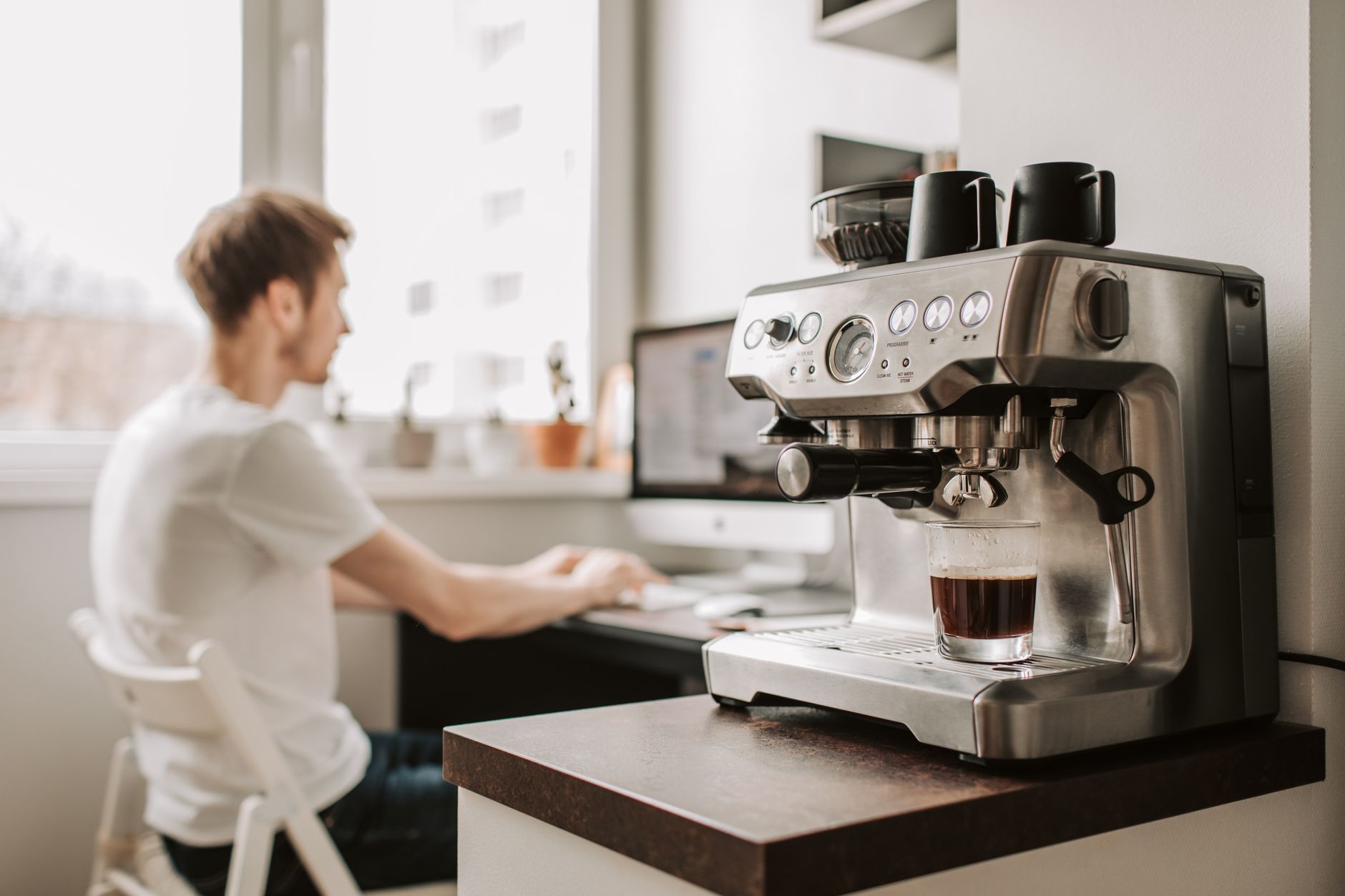
If you work from home and you’re not dialed in on your coffee setup, you’re leaving performance on the table. That sounds like an overclaim until you realize you’re drinking three or four cups a day from a $30 drip machine that makes mediocre coffee, and you’ve normalized it so completely that you’ve stopped noticing.
A good coffee maker for the home office does more than make a hot beverage. It reduces friction in your morning routine, eliminates the 20-minute Starbucks run that eats your focused work time, and produces coffee good enough that you actually look forward to sitting down at your desk. These things add up.
This guide covers the best coffee makers for entrepreneurs working from home — organized by brewing style and budget, with honest assessments of what each machine does well and where it falls short.
What Actually Matters in a Home Office Coffee Maker
The home office context changes the evaluation criteria compared to kitchen coffee makers. Here’s what to prioritize:
Speed
You’re often making coffee between calls or before a focused work block. A machine that takes 10-12 minutes to brew is a friction point. Look for brewers that hit 4-6 minutes or have a fast single-cup option.
Consistency
The best home office machine is one you can operate on autopilot. If you have to think about it, you won’t use it well. Simple controls, programmable settings, and repeatable results matter more than exotic features.
Footprint
Office desk space is premium real estate. Some of the best coffee machines are also the most physically large. Measure before you buy and consider counter space vs. drawer space for supplies.
Maintenance Overhead
A machine that requires daily cleaning rituals, specialized cleaning tablets every two weeks, and quarterly descaling cycles is a tax on your time. Lower-maintenance options are worth the trade-off in an office setting.
Budget Pick: Cuisinart DCC-3200 ($60-$80)
Amazon search link: Search Cuisinart DCC-3200 on Amazon
If you’re brewing for a team of two to four people or you drink multiple full pots throughout the day, a reliable drip machine is still the most efficient option. The Cuisinart DCC-3200 is consistently the best value in this category.
What you get: 14-cup carafe, fully programmable 24-hour auto-brew, adjustable keep-warm temperature (up to 4 hours), gold-tone filter (so you’re not buying paper filters constantly), and a brew strength selector for regular vs. bold. It brews a full pot in about 9 minutes.
Why it works for the office: You set it the night before, it’s ready when you sit down, and the carafe keeps coffee hot without burning it for a couple of hours. Simple, repeatable, no learning curve.
Honest trade-off: Drip coffee is not the same quality as pour-over or espresso-based drinks. If you care about extraction quality and flavor, this machine will be adequate rather than excellent. It’s the “just get the job done” option, and for a lot of operators, that’s exactly what they need.
Best for: Home offices with multiple coffee drinkers, high-volume brewing needs, or entrepreneurs who want maximum simplicity.
Mid-Range Drip: OXO Brew 9-Cup ($180-$200)
Amazon search link: Search OXO Brew 9-Cup on Amazon
This is the drip machine for people who actually care about coffee quality. The OXO Brew 9-Cup is consistently ranked by Wirecutter as the best overall drip coffee maker for quality, and the reason is simple: it’s one of the few consumer drip machines that meets the Specialty Coffee Association’s water temperature and bloom standards.
What you get: Precise water temperature control (197-205 degrees F), a rainmaker shower head that distributes water evenly over the grounds, a 30-second bloom cycle that lets CO2 escape before full extraction (this is what separates good drip coffee from great drip coffee), and a thermal carafe that keeps coffee hot without burning it.
Why it works for the office: The thermal carafe means no hot plate burning your coffee while you’re in a call. Brew in the morning, it’s still good two to three hours later. The brew quality difference versus a budget machine is noticeable and real.
Honest trade-off: Price for a drip machine. At $180-$200, you’re spending premium money on a format (drip) that some people consider inferior to pour-over or espresso. If you’re going to spend this much, consider whether a grinder plus pour-over setup might serve you better.
Best for: Entrepreneurs who drink multiple cups of good drip coffee per day and want consistent quality without the ritual of manual brewing methods.
Best Single-Cup: Keurig K-Elite ($120-$150)
Amazon search link: Search Keurig K-Elite on Amazon
The Keurig is not the best coffee by any objective measure. It is, however, one of the most practical coffee systems for a solo home office, and the K-Elite is the model that actually makes decent coffee rather than the thin, slightly bitter product the cheaper Keurig models produce.
What you get: Five brew sizes (4 to 12 oz), a strong brew setting that concentrates the extraction, an iced coffee setting, temperature control, and a 75 oz water reservoir that doesn’t need refilling every cup. Ready in under a minute. Single-cup on demand with no waste.
Why it works for the office: Zero waste is the main win. If you’re the only one drinking coffee and you want one cup at 8am, one cup at 10am, and maybe one at 2pm, a 9-cup drip machine wastes more coffee than it saves. The Keurig just makes the cup you want right now.
Honest trade-off: Pod cost and environmental impact. K-Cups run $0.60-$0.80 per cup versus $0.15-$0.25 for ground coffee. Over a year of heavy use, that’s $200-$300 more. The reusable K-Cup filter solves the environmental issue and cuts cost, but requires more effort. Also: the coffee is not as good as freshly brewed ground coffee from a quality drip machine.
Best for: Solo entrepreneurs, people who prefer variety (different K-Cups for different moods), and anyone who values speed and zero cleanup over coffee quality.
Best Espresso Option: Breville Bambino Plus ($500)
Amazon search link: Search Breville Bambino Plus on Amazon
If your home office coffee ritual involves espresso-based drinks — americanos, flat whites, cappuccinos — the Bambino Plus is the machine that delivers true espresso quality without the massive footprint and learning curve of a full prosumer machine.
What you get: Thermojet heating system (ready in 3 seconds, not 30), 54mm portafilter that uses the same size as commercial machines, automatic steam wand that froths milk to cafe quality with a simple dial, and pre-infusion that gently saturates the grounds before full pressure for better extraction. The machine is also compact — 7.5 inches wide, which is genuinely small for a real espresso machine.
Why it works for the office: The 3-second heat-up time and automatic milk frother mean you can make a proper flat white in under 4 minutes, including cleanup. That’s faster than Starbucks. At $5-$7 per coffee shop visit, you recoup the $500 machine cost in roughly 3-4 months if you were previously buying espresso drinks daily.
Honest trade-off: You also need a grinder. Espresso made from pre-ground coffee is significantly worse than from freshly ground beans. Budget another $100-$200 for a quality burr grinder (the Baratza Encore at $179 is the standard recommendation). Your all-in cost is $650-$700, which changes the value calculation.
Best for: Entrepreneurs who drink espresso-based drinks daily and are willing to invest in the ritual as both a productivity tool and a genuine daily pleasure.
Premium Pick: Jura E8 Super-Automatic ($1,100-$1,300)
Amazon search link: Search Jura E8 on Amazon
This is the machine for the operator who wants commercial-quality espresso with zero maintenance overhead. The Jura E8 is a super-automatic — you put whole beans in the top, water in the reservoir, and push a button. It grinds, tamps, extracts, and delivers a genuine espresso in under a minute.
What you get: Built-in conical burr grinder, 15-bar pump, 12 programmable drink options (espresso, lungo, americano, flat white, cappuccino, macchiato), fine-foam milk frothing, and Jura’s Intelligent Pre-Brew Aroma (IPBA) system that pre-wets the grounds for optimal extraction. The E8 also handles its own rinsing cycle automatically.
Why it’s worth considering: If your home office hosts client meetings, or if there are multiple people who would use the machine, the cost per cup is extremely competitive against the alternatives. It also removes the skill variable entirely — the machine always makes good espresso, regardless of who’s operating it.
Honest trade-off: It’s $1,100-$1,300. That’s a real expense. The machine also requires descaling every few months and periodic cleaning tablet cycles, though it reminds you automatically. For a solo user who drinks two cups a day, it’s a luxury that’s hard to fully justify on pure ROI.
Best for: Home offices that double as client meeting spaces, multi-person teams, or entrepreneurs who want the absolute best coffee with zero daily ritual.
The Grinder Question
If you’re buying anything above a single-serve pod machine, a burr grinder is the best $100-$200 you can add to the setup. Pre-ground coffee oxidizes within 15-30 minutes of grinding. The quality difference between freshly ground and pre-ground is more noticeable than the difference between most coffee machines.
The standard recommendation for most home office setups: the Baratza Encore for drip/pour-over, or the Baratza Sette 30 if you’re going the espresso route.
Coffee and Your Work Performance
If you’re optimizing your workspace for performance, coffee is part of the system. We’ve written about building a high-performance home office from several angles — check out our guide to blue light glasses for entrepreneurs for another screen-related performance lever, and our no-nonsense protein powder guide for the nutrition side of the equation.
The standing desk is also part of this picture — alternating between sitting and standing through the day (rather than drinking more coffee to fight afternoon fatigue) is worth building into your routine. Our guide to anti-fatigue mats covers how to make standing comfortable enough that you actually do it.
The Bottom Line
For most solo home office entrepreneurs, the answer is one of two options:
- If you’re a drip coffee person: The OXO Brew 9-Cup at $180-$200 makes genuinely great drip coffee and holds it well in the thermal carafe. It’s the best “set and forget” option for quality-conscious operators.
- If you’re an espresso person: The Breville Bambino Plus plus a Baratza Encore grinder for around $650 total makes daily espresso drinks at cafe quality with a workflow that actually fits a busy morning.
If you just want something fast and simple: the Keurig K-Elite at $130 is the honest recommendation for zero-overhead single-cup convenience. It’s not the best coffee, but it’s good enough and it removes all friction from the morning routine.
Don’t overthink this. Pick the machine that fits how you actually drink coffee, not the one you aspire to use. The best coffee maker for your home office is the one you’ll actually run every day.
Want more gear picks for entrepreneurs? We cover the tools, technology, and systems that actually move the needle. Join free and get our best content delivered weekly.
Ready to Know Where You Stand?
The Business Journey dashboard maps your exact position across all 13 stages. Track your progress, unlock resources for each step, and build with a framework used by thousands of founders at Hustler's Library.

No credit card required · Takes 3 minutes · Personalized to your stage