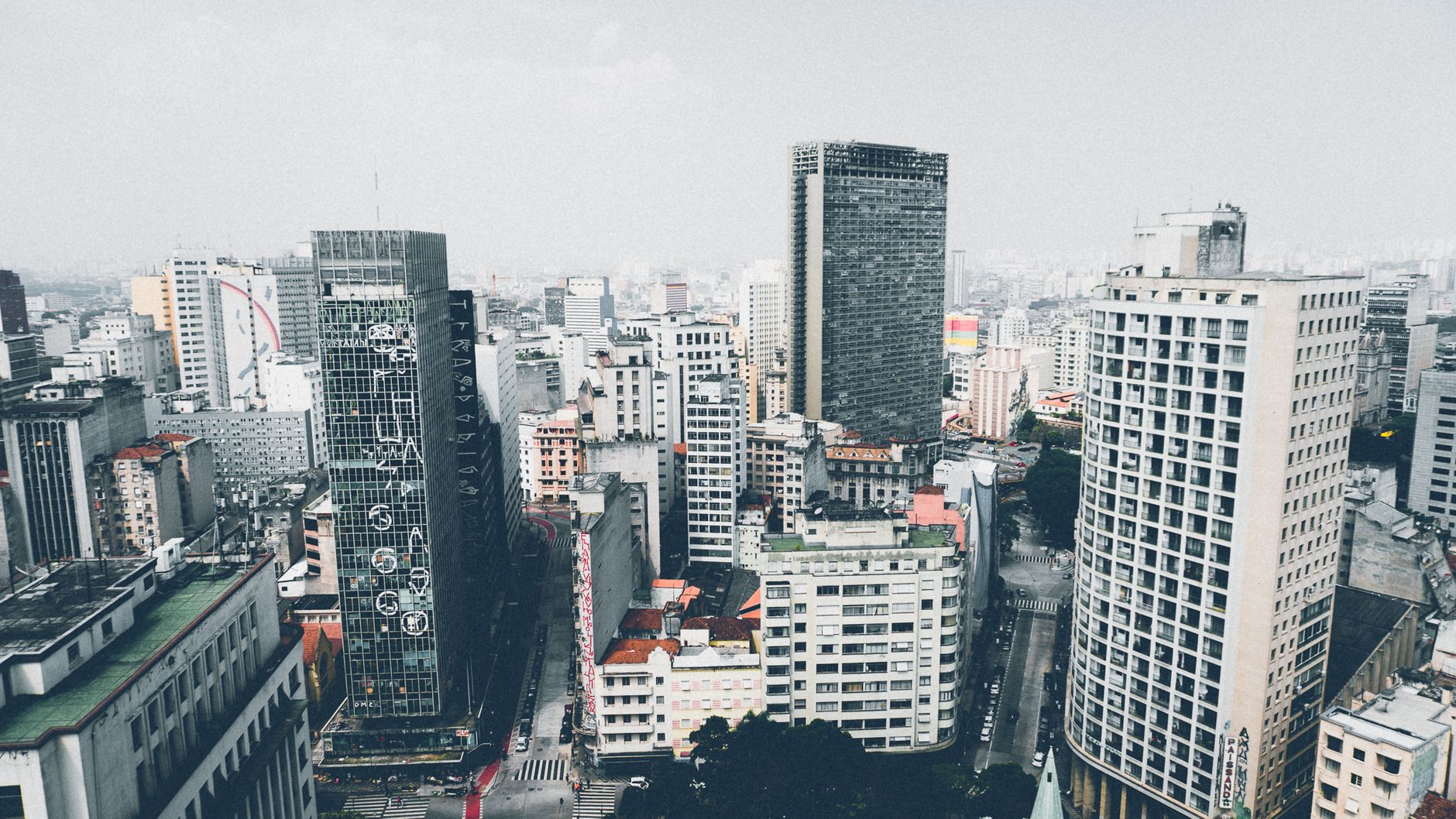
Rio de Janeiro’s commercial real estate market offers one of the most diverse office landscapes in South America, spanning a world-class financial center in Centro, emerging tech hubs in Barra da Tijuca and Porto Maravilha, and premium boutique spaces in the Zona Sul neighborhoods of Botafogo and Leblon. Understanding Rio’s commercial property market, its pricing dynamics, its major developers, and the structural differences between building classes is essential for any business making a long-term commitment to the city. This guide covers everything you need to know about leasing or acquiring commercial real estate in Rio de Janeiro.
Rio de Janeiro Commercial Real Estate: Market Overview
Rio de Janeiro’s commercial property market suffered significant disruption following the 2014 FIFA World Cup and 2016 Olympic Games, as public sector spending contracted sharply and oil & gas companies shed office space during the Petrobras-centered recession. Vacancy rates in Centro reached nearly 30% by 2018. Since then, the market has undergone a measured but genuine recovery, driven by the resurgence of the pre-salt oil sector, growth in financial services following post-pandemic equity market activity, and significant private investment in Porto Maravilha. As of 2026, citywide prime office vacancy has stabilized around 18%, with top-tier AAA buildings running 8% to 12% vacancy – well below the peak and indicative of real demand from quality tenants. Understanding this post-Olympics recovery context matters because it explains both the availability of quality space at still-reasonable rents and the trajectory toward rental growth in prime sub-markets.
Key Commercial Districts and Rental Pricing
Centro (Downtown Rio)
Centro is Rio de Janeiro’s traditional financial and legal district, home to the Rio de Janeiro Stock Exchange (B3’s operations hub), major law firms, banks, and federal government offices. It offers the highest concentration of A-class and AAA-class buildings in the city. Rental rates in Centro currently range from R$80 to R$150 per square meter per month for modern office space, with older buildings and non-prime floors available for R$60 to R$80/m2. The district benefits from exceptional public transit connectivity via the Metro Lines 1 and 2, BRT corridors, and the Supervia suburban rail network, making it accessible from across the metropolitan area. Key streets for premium commercial addresses include Avenida Rio Branco, Avenida Presidente Wilson, and Rua da Assemblea. New entrants to the Rio market often begin in Centro for its established professional ecosystem and relatively transparent leasing market.
Barra da Tijuca
Barra da Tijuca has evolved into Rio’s premier suburban business district, combining modern AAA office towers, major shopping infrastructure (BarraShopping, Rio Design Barra), and residential neighborhoods popular with Rio’s upper-middle class. Rental rates in Barra range from R$120 to R$200 per square meter per month, reflecting the premium paid for newer buildings with full car parking, backup power generation, and LEED-certified infrastructure. The Rio 2016 Olympic legacy infrastructure including the Parque Olimpico and Olympic Village has added modern mixed-use developments to the Barra landscape. Barra is particularly attractive for technology, media, and consumer goods companies that prefer modern campuses over historic downtown addresses, and for businesses whose clients and employees predominantly live in the West Zone. The TransOeste BRT provides transit connectivity, though the district remains more car-dependent than Centro.
Botafogo
Botafogo has emerged as Rio de Janeiro’s answer to Sao Paulo’s Vila Olimpia: a walkable, mixed-use neighborhood with a dense concentration of startups, creative agencies, and technology companies. Located on the Guanabara Bay waterfront between Centro and the beachfront Zona Sul, Botafogo offers Class A offices at R$100 to R$180 per square meter per month, frequently in renovated buildings that combine industrial aesthetics with modern mechanical and electrical systems. The neighborhood’s direct Metro Line 1 access, proximity to Flamengo Park, and concentration of restaurants and coffee shops make it a magnet for the talent-intensive companies that prioritize employee experience. Rio’s growing venture capital ecosystem has an informal center of gravity in Botafogo, making it a smart address for startups that want serendipitous investor and peer connections.
Porto Maravilha
Porto Maravilha is Rio’s highest-potential commercial district for long-term value appreciation. As discussed in our guide to investment incentives in Rio de Janeiro, the Port Zone urban operation has transformed a formerly industrial waterfront into a mixed-use district with modern commercial buildings, cultural institutions, and improving residential density. Current rental rates range from R$90 to R$160 per square meter per month – lower than Barra or Leblon but on an upward trajectory as occupancy improves. Companies that anchor in Porto Maravilha today are positioning for both below-market entry rents and potential capital appreciation on owned assets. The VLT light rail system connecting Porto Maravilha to Centro and the main train stations is fully operational, significantly improving transit access compared to five years ago.
Leblon Commercial
Leblon is Rio’s most exclusive residential neighborhood and its premium commercial addresses carry corresponding price tags. Commercial space in Leblon runs R$150 to R$220 per square meter per month, making it the most expensive sub-market in the city. The audience for Leblon office space is specific: wealth management firms, private equity boutiques, luxury brand offices, and premium professional services practices whose clients expect an upscale address. The neighborhood’s relative scarcity of purpose-built commercial buildings means most Leblon office space occupies upper floors of residential buildings, which limits floor plate sizes to 100-400 square meters. For boutique operations where address prestige justifies the premium, Leblon delivers an unmatched signal in Rio’s professional market.
AAA vs A-Class Buildings
Rio de Janeiro’s commercial real estate market uses a building classification system aligned with international standards but with local nuances. AAA (or Triple-A) buildings represent the top tier: LEED Gold or Platinum certification, floor plates above 800 square meters, raised floors and overhead grid systems, redundant power and cooling, high-speed fiber optic infrastructure, 24/7 building management, executive parking ratios of at least 1 space per 35 square meters, and access control systems. Currently, fewer than 20 buildings in Rio qualify as true AAA class, with concentrations in Centro, Barra da Tijuca, and Porto Maravilha. Class A buildings meet most modern standards but may lack LEED certification, have smaller floor plates, older mechanical systems, or lower parking ratios. For most businesses, Class A in a preferred sub-market offers better value than AAA in a secondary location.
Major Developers and Brokers in Rio de Janeiro
Multiplan is Rio de Janeiro’s largest mixed-use developer and is responsible for BarraShoppingSul and the ParkShoppingBarraRio complexes, which anchor major commercial clusters in Barra da Tijuca. Cyrela Commercial Properties (CCP) has been active in developing modern office towers in Centro and Porto Maravilha. CBRE Rio de Janeiro is the dominant international brokerage and provides the most comprehensive market data and tenant representation services for foreign and institutional occupiers. JLL Brazil, Cushman & Wakefield, and Colliers International all maintain Rio teams focused on corporate occupier services, while local brokers Patrimovell and Brasil Brokers are strong for smaller lease transactions and building acquisitions outside the institutional market.
Key Lease Considerations for Foreign Businesses
Brazilian commercial leases are governed by Lei do Inquilinato (Lei 8,245/91) and its subsequent amendments. Standard commercial terms include 36 to 60-month initial terms, annual rent adjustment tied to the IGPM or IPCA inflation indices, and carencia (rent-free fit-out periods) of one to three months for vacant space in a buyer’s market. Guarantees (garantias) are required by virtually all Rio landlords and typically take the form of fianca (personal guarantee from a third-party property owner), seguro fianca (rental insurance from an insurer), or deposito caution (security deposit of three months’ rent). Foreign-owned entities frequently find seguro fianca the most practical guarantee structure since they lack Brazilian co-signatories with Rio property assets. Working with a specialized commercial real estate lawyer familiar with Rio leasing customs is highly recommended – see our overview of business lawyers in Rio de Janeiro for qualified referrals.
Buying vs Leasing Commercial Property in Rio
For established businesses with long-term Rio commitments, commercial property acquisition is worth serious analysis. Cap rates in Centro and Barra da Tijuca currently range from 7% to 10% in BRL terms, which provides inflation-adjusted real returns above Tesouro Direto risk-free rates given the asset’s hard-asset characteristics. Acquisition costs include ITBI (transfer tax) of 3% of transaction value, registry fees of approximately 0.5%, and notarial fees. Foreign investors acquiring Brazilian real property must register the transaction with BACEN under ROF (Registro de Operacao Financeira) if purchase funds originate abroad, ensuring legal remittance of future sale proceeds. The post-Olympics period created a buyer’s market for commercial assets that is now gradually firming – buyers with a 5-to-10-year horizon are entering the market at attractive basis levels.
Rio de Janeiro’s commercial real estate market is complex, city-specific in ways that national or global data does not capture, and genuinely rewarding for businesses that take the time to understand it. Whether you are leasing your first 100-square-meter Botafogo office or evaluating a multi-floor Centro tower acquisition, the sub-market, building class, and lease structure decisions you make today will shape your operating economics for years. Want more tools and guides to help you build your Rio de Janeiro business intelligently? Join Hustler’s Library free and access our full library of city guides, financial resources, and entrepreneur playbooks.
Ready to Know Where You Stand?
The Business Journey dashboard maps your exact position across all 13 stages. Track your progress, unlock resources for each step, and build with a framework used by thousands of founders at Hustler's Library.

No credit card required · Takes 3 minutes · Personalized to your stage