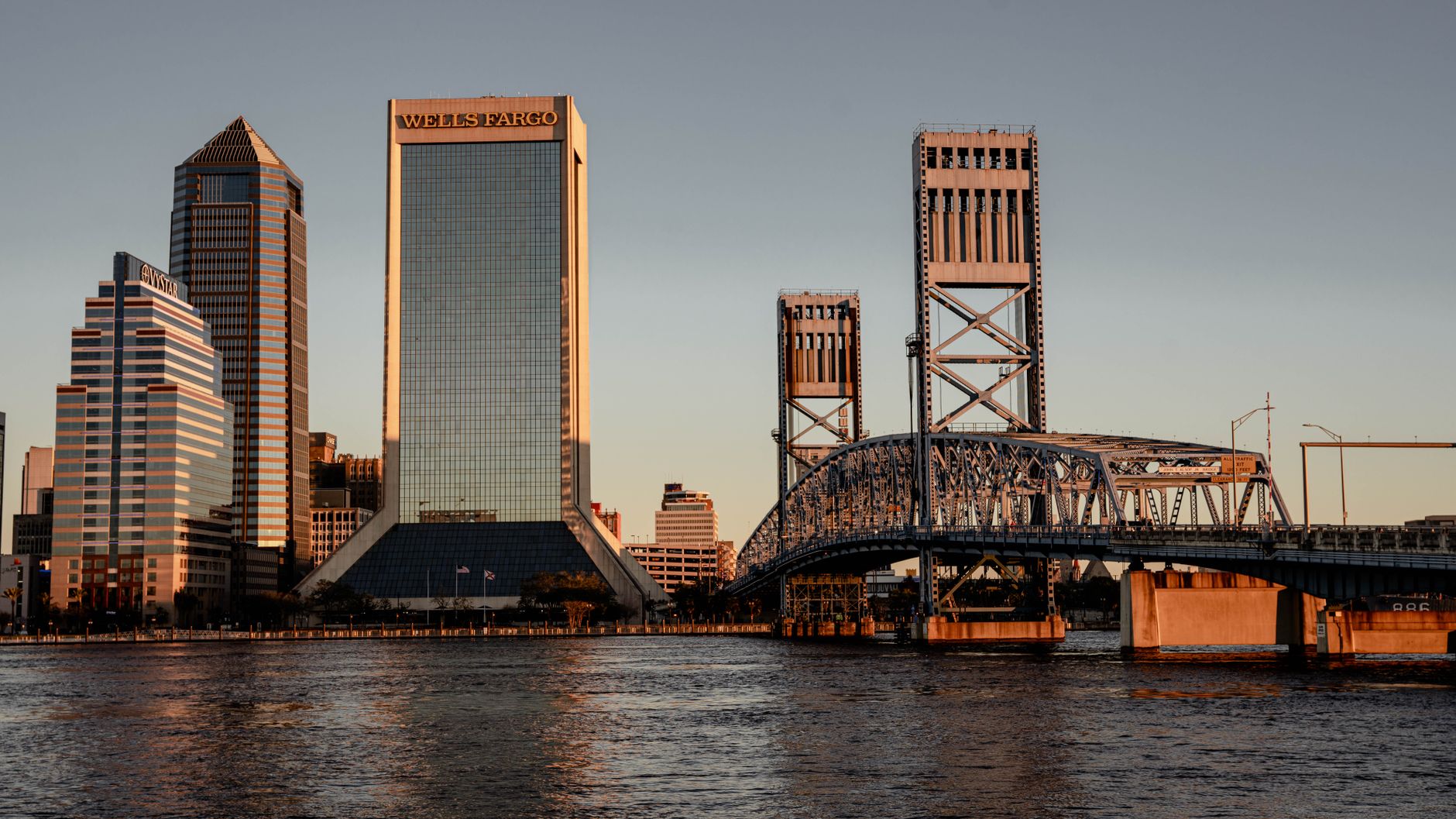
Jacksonville has 30 federally designated Opportunity Zone tracts across Duval County, making it one of the most significant OZ markets in Florida. The combination of an active port, a growing downtown, underutilized urban corridors, and Florida’s no-state-income-tax environment creates a compelling case for Qualified Opportunity Fund (QOF) investment in the Jacksonville market. For investors and business owners alike, understanding Jacksonville’s OZ landscape can unlock substantial tax advantages while participating in the city’s ongoing transformation.
What Are Opportunity Zones?
Opportunity Zones were created by the Tax Cuts and Jobs Act of 2017. They allow investors to defer and reduce federal capital gains taxes by reinvesting gains into designated low-income census tracts through a Qualified Opportunity Fund. The core benefits:
- Deferral: Capital gains reinvested into a QOF are deferred until December 31, 2026, or when the QOF investment is sold, whichever comes first.
- Step-up: Hold the QOF investment for 5 years and get a 10% basis step-up on the original deferred gain (reducing the amount you owe tax on).
- Exclusion: Hold the QOF investment for at least 10 years and pay zero federal capital gains tax on the appreciation of the QOF investment itself.
Florida amplifies this benefit: because Florida has no state income tax, QOF investors in Jacksonville pay no state tax on OZ gains at any stage. This is a meaningful advantage over OZ investments in high-tax states where investors still owe state capital gains even if the federal tax is excluded.
Jacksonville’s 30 Opportunity Zone Tracts
Duval County’s 30 OZ tracts are concentrated in areas that reflect both historical disinvestment and current redevelopment momentum. Key zones to understand:
Downtown Jacksonville: LaVilla, Springfield, and Eastside
Several OZ tracts cover downtown Jacksonville and its surrounding neighborhoods. LaVilla, a historically significant African American cultural district immediately west of downtown, is actively being redeveloped. The sports complex area near TIAA Bank Field and the proposed riverfront development zone are within or adjacent to OZ tracts. Springfield, one of Jacksonville’s oldest neighborhoods, has seen accelerating residential and mixed-use investment supported by OZ capital. These downtown tracts benefit from the work of the Downtown Investment Authority (DIA), Jacksonville’s redevelopment agency, which stacks local incentives on top of federal OZ benefits.
Northside: JAXPORT Logistics Corridor
Several OZ tracts in Jacksonville’s Northside encompass industrial and mixed-use areas adjacent to the JAXPORT logistics corridor. For investors, these tracts represent the intersection of federal OZ incentives and direct port access. Warehousing, cold storage, last-mile distribution, and light manufacturing investments in Northside OZ tracts can benefit from both OZ capital gains exclusion and the natural demand driver of JAXPORT’s continued growth. JAXPORT handles millions of tons of cargo annually and is investing in infrastructure to support growing trade volumes.
Riverside and Avondale Fringe Areas
Portions of the Riverside and Avondale fringe areas are designated OZ tracts. These neighborhoods sit along the St. Johns River and have seen significant real estate appreciation. Mixed-use development, hospitality, and retail investments near the Five Points and King Street corridors have attracted OZ capital from investors seeking both tax benefits and appreciation in rapidly gentrifying urban areas.
Downtown Investment Authority (DIA) Incentive Stacking
One of Jacksonville’s most powerful features for OZ investors is the ability to stack DIA incentives with federal OZ benefits. The Downtown Investment Authority offers a range of programs including REV grants (Revenue Enhancement Value grants, which return a portion of new property taxes to developers), Recapture Enhanced Value grants, and façade improvement grants for commercial properties. When an OZ-eligible project in downtown Jacksonville also qualifies for DIA incentives, the combined return on investment can be substantially higher than either program alone.
Investors should engage the DIA early in the project planning process. DIA staff can walk you through available incentive programs and identify whether a target property falls within a DIA district that overlaps with an OZ tract. For commercial real estate considerations in Jacksonville OZ deals, our Jacksonville commercial real estate guide provides detailed local market context.
How Qualified Opportunity Funds Work
The 180-Day Reinvestment Window
Once you realize a capital gain (from selling stock, real estate, a business, or other appreciated assets), you have 180 days to reinvest those gains into a QOF. The reinvestment must be specifically of the gain amount, not the entire proceeds. You maintain control of the original basis immediately.
Structuring a QOF
A QOF must be organized as a corporation or partnership, must self-certify as a QOF by filing Form 8996 with the IRS, and must hold at least 90% of its assets in Qualified Opportunity Zone Property. QOZ Property includes direct real property in an OZ tract (with substantial improvement requirements) or equity stakes in Qualified Opportunity Zone Businesses that operate substantially in an OZ tract.
Substantial Improvement Requirement
For real property investments, the QOF must substantially improve the property: within 30 months of acquisition, the fund must spend at least as much on improvements as the original purchase price of the building (land is excluded from this calculation). This requirement pushes capital toward genuine development and rehabilitation rather than passive land banking.
Business Use Requirements
QOZ Businesses must derive at least 50% of gross income from active conduct of a trade or business in the OZ tract and must maintain at least 70% of tangible property in OZ tracts. Certain businesses are excluded: golf courses, country clubs, massage parlors, hot tub facilities, suntan facilities, racetracks, casinos, and liquor stores. Otherwise, most active operating businesses qualify.
Real Development Examples in Jacksonville OZ Tracts
Jacksonville has seen meaningful OZ-driven investment activity. The Jacksonville Shipyards area on the Northbank of the St. Johns River has attracted mixed-use development interest leveraging OZ capital. The sports complex area adjacent to downtown has been targeted for hotel, retail, and entertainment development by investors using QOF structures. Several multifamily residential developments in Springfield and LaVilla have been capitalized with OZ equity to qualify for the 10-year gain exclusion.
These examples illustrate how Jacksonville’s OZ tracts are not theoretical; they are active investment destinations where deals are being structured and capital is being deployed today.
Florida DEO and OZ Support
The Florida Department of Economic Opportunity (DEO) maintains an active Opportunity Zone program that provides mapping tools, investor matching resources, and project support for OZ investments across the state. The Florida DEO works with local economic development organizations including JAXUSA Partnership to connect capital with projects in Duval County OZ tracts. Visit floridajobs.org for state-level OZ resources and project listings.
Finding Jacksonville OZ Properties and Businesses
Use the HUD Opportunity Zone mapping tool to identify whether a specific Duval County address falls within a designated OZ tract. The IRS publishes detailed Opportunity Zone FAQs that address fund structure, reinvestment timelines, and compliance requirements.
For investors looking to acquire existing Jacksonville businesses within OZ tracts and use them as QOZ Businesses, our Jacksonville buy a business guide covers the local acquisition market. For business owners seeking OZ-aware funding partners, our Jacksonville small business funding guide covers the full range of local capital sources.
Is Jacksonville Right for Your OZ Investment?
Jacksonville offers a rare combination for OZ investors: 30 designated tracts spanning urban redevelopment areas, an active port-adjacent industrial corridor, a supportive local incentive authority (DIA), state-level OZ support through Florida DEO, and Florida’s complete absence of state income tax. Investors who hold QOF interests for 10 years in Jacksonville projects capture the full federal gain exclusion with no state tax overlay on either deferred gains or appreciation.
Ready to grow your business? Join Hustler’s Library free and get access to our full library of guides, tools, and resources for entrepreneurs.