The business class question comes up for every entrepreneur who starts flying regularly: is it worth it, or is it just expensive comfort you can do without? The honest answer is: it depends on specifics, and those specifics are worth understanding before you make the call.
This isn’t about whether you deserve nice things. It’s about ROI. When does paying two to five times more for a seat actually produce a return, and when is economy the smarter move?
What Business Class Actually Gets You
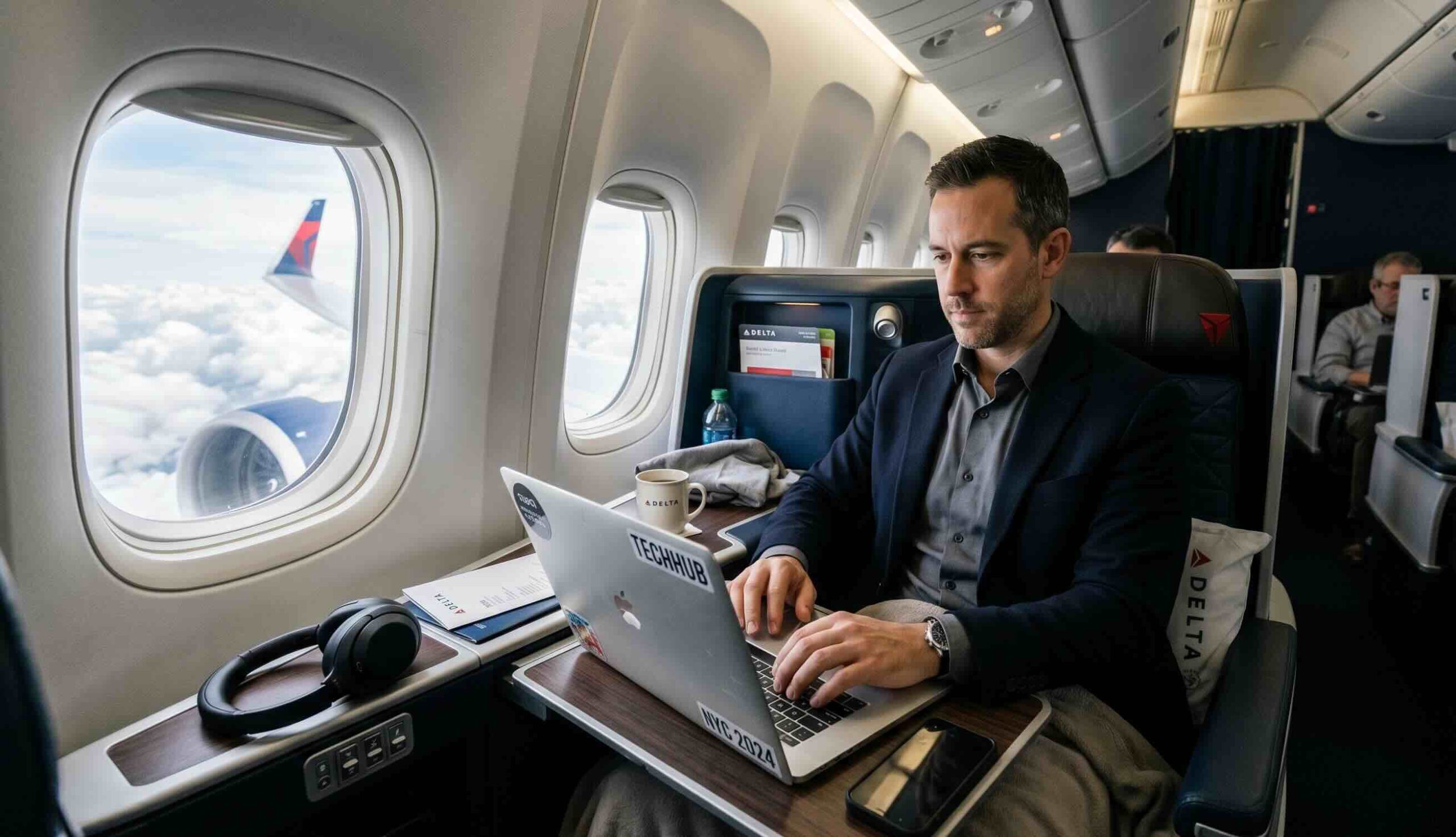
Business class varies significantly by airline and route, but the standard package includes:
- Lie-flat seats on long-haul international flights
- Lounge access before your flight
- Priority boarding and security lanes
- Better food and beverage service
- More storage and personal space
- Priority baggage claim
- More flexibility for changes and cancellations
On domestic flights, business class typically means a bigger seat with more legroom, earlier boarding, and a free meal or drinks. Lie-flat seats are generally reserved for international long-haul routes.
When the Upgrade Makes Sense
Long-Haul International Flights (6+ Hours)
This is the clearest case. If you’re flying from New York to London, Los Angeles to Tokyo, or Miami to Dubai, arriving wrecked in economy affects everything that follows. You have meetings, presentations, client dinners, or you’re closing a deal the next morning.
A lie-flat seat means you actually sleep. You arrive in time zone with your body, rested and sharp. The cost of the upgrade pales against the cost of a failed meeting or a day of diminished performance.
For flights under six hours, the calculus is different. You can survive a five-hour flight in a tight seat and be functional. For 10 to 16 hour flights, business class isn’t a perk; it’s a performance investment.
When You’re Closing or Presenting
If the reason for the trip involves high-stakes business (a partnership negotiation, a major pitch, a key client relationship), showing up at 70% because you couldn’t sleep in a middle seat is a real risk. The value of arriving sharp compounds the value of the business outcome you’re there to produce.
This is especially true if the meeting is the same day as your flight or the morning after an overnight flight.
When You Need to Work on the Plane
Business class seats on international routes typically have flat work surfaces, better power access, and privacy screens. If your flight time is work time (contracts to review, decks to finish, calls to prep for), the productivity gain is real. Economy is a difficult environment for serious focused work, especially if the person in front of you reclines.
When You’re Using Points and Miles
This is where the math gets interesting. Business class redemptions in points programs are often disproportionately valuable. A business class seat to Europe might cost 70,000 to 90,000 miles when the cash price is $4,000 to $6,000. The same points used for economy might buy a $500 ticket.
If you’ve built up a solid points balance through a business travel card, redeeming for business class internationally is one of the highest-value uses of those points. You’re getting luxury at the effective cost of economy. This is why we’ve covered the best business credit cards for travel rewards in detail: the system works if you use it intentionally.
When Economy Makes More Sense
Short Domestic Flights
A 90-minute flight from Dallas to Denver doesn’t warrant a business class premium. You’ll board, reach cruising altitude, and start your descent before the drink cart gets to your row. Economy Plus or an exit row seat for the extra legroom is the practical choice here.
Early-Stage Business, Tight Cash Flow
If you’re bootstrapping and every dollar counts, business class is a liability. The ROI math doesn’t work when cash preservation is the priority. Economy gets you there. Keep the capital in the business.
This is particularly relevant if you’re still in your first one to two years of operation. We cover how to manage money tightly in our guide on setting up your business finances from day one.
Leisure Trips Disguised as Business Travel
Be honest with yourself. If you’re going to a conference for networking but really spending most of the trip at the beach, the ROI calculation for business class disappears. Book it as the leisure trip it partly is and spend accordingly.
The Middle Ground: Smart Upgrades
You don’t have to go full business class every time to get a meaningful upgrade. Some practical alternatives:
- Premium Economy: On international carriers like Lufthansa, Singapore Airlines, and British Airways, premium economy is a legitimate step up: more recline, better food, extra legroom, sometimes a separate cabin. Often 30 to 50% of the business class price.
- Upgrade bids: Many airlines now offer bid-based upgrades where you name your price for a business class seat. You can often get upgraded for a fraction of the cash price.
- Last-minute upgrades: Airlines regularly offer upgrades at check-in when business class isn’t full. If your flight is long and the price is reasonable, it’s worth asking.
The Business Decision Framework
Ask these questions before booking:
- Is this flight over six hours? (Yes = business class warrants serious consideration)
- Is the immediate post-flight schedule high-stakes? (Yes = factor in arrival condition)
- Can I use points for this? (Yes = the value equation changes dramatically)
- Is cash flow tight right now? (Yes = economy, no debate)
- Is there a premium economy option? (Yes = often the right middle ground)
The Bottom Line
Business class isn’t always the right choice. But pretending it’s never the right choice is false economy for an entrepreneur whose time and performance have real dollar values attached to them.
Use the framework. If the math supports it and you’ve built your travel strategy around earning the points to make it affordable, upgrade. If you’re in a cash-tight season, fly economy and protect your runway. Neither answer is wrong. The wrong answer is making the decision emotionally rather than strategically.
Want more strategies like this? Join thousands of entrepreneurs at Hustlers Library for free and get practical business content without the fluff.
Ready to Know Where You Stand?
The Business Journey dashboard maps your exact position across all 13 stages. Track your progress, unlock resources for each step, and build with a framework used by thousands of founders at Hustler's Library.

No credit card required · Takes 3 minutes · Personalized to your stage