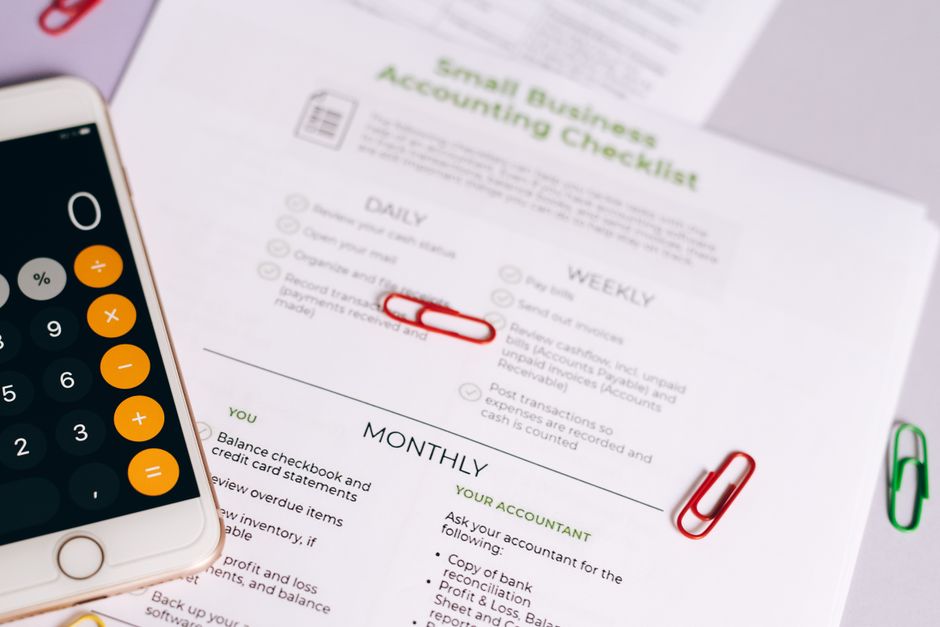
Accountants have a reputation for being the most boring people in any room. Precise to a fault, allergic to ambiguity, obsessed with documentation. And yet, the accounting industry has quietly built some of the most durable, profitable, and scalable business infrastructure that exists. While most small business owners chase growth, accountants build systems. While most owners guess, accountants measure. While most entrepreneurs react, accountants reconcile.
There is more to learn from the accounting industry than most business owners realize. Not just about numbers. About how you run a business.
Precision Is Not Perfectionism. It Is a Competitive Advantage.
One of the most misunderstood lessons from accounting is the difference between precision and perfectionism. Perfectionism is about ego. Precision is about accuracy in the things that matter.
Accounting firms do not try to make every piece of communication flawless. They do not obsess over the font in their client emails. But they are ruthlessly precise about the numbers, the deadlines, and the compliance requirements. They know what matters, and they focus their discipline there.
Most small business owners invert this. They spend enormous energy perfecting things that do not move the needle. Their website logo. The exact wording on an invoice. The color of their storefront. Meanwhile, the numbers that actually run their business, the margins, the conversion rates, the payroll ratios, sit in a spreadsheet they have not opened in three months.
The accounting mindset says: be sloppy where it does not matter, and ruthlessly exact where it does. Apply that standard to your own business. What are the five numbers that, if you tracked them every single week, would tell you everything you need to know about whether your business is healthy? Those are the numbers that deserve your precision. Everything else can wait.
The Close: Why Accountants Never Let the Books Fall Behind
Every accounting firm runs what they call a close. At the end of each month, quarter, and year, they systematically reconcile every account, verify every entry, and produce a clean set of books. The close is not optional. It is not something they do when they have time. It is a non-negotiable ritual that keeps the business honest.
Most small business owners never close anything. They operate in a permanent state of open, accumulating unreconciled invoices, unlogged expenses, and unanswered questions about where the money actually went. They find out how the year went when their accountant tells them in March what happened in December.
The lesson is not to become an accountant. The lesson is to borrow the close ritual and apply it to your whole operation. Every month, close your books, even informally. Reconcile what you planned to do against what you actually did. Where did revenue come from that you did not expect? Where did expenses creep in that you did not budget? What projects are still open that should be finished?
A business that closes its books every month is operating on current information. A business that does not close anything is making decisions based on assumptions and memory. The gap between those two approaches is wider than most owners realize.
The Chart of Accounts: How Accountants Build Systems Before They Need Them
When an accounting firm sets up books for a new client, the first thing they do is build a chart of accounts. This is a structured list of every category of income and expense the business will ever touch. They build it before the first transaction is recorded. They design the system before they need it.
This is the opposite of how most small business owners operate. Most owners build systems reactively. They create a process because something broke. They add a tracking system because they lost money. They write a policy because a problem happened twice.
The accounting approach is to design the system in advance, before the chaos arrives. What categories will my business need to track? What reports will I need to make decisions? What information will I need when I go to hire, to sell, or to raise money? Build those structures now, when you have time to do it right, instead of scrambling to reconstruct them under pressure.
This applies far beyond the books. Your client onboarding process should be designed before your tenth client, not your fiftieth. Your HR documentation should exist before you have three employees, not after a conflict forces you to create it. The accounting industry builds infrastructure in anticipation of scale. Most small business owners build it in reaction to pain.
Materiality: The Art of Knowing What Actually Matters
One of the foundational concepts in accounting is materiality. In auditing, a misstatement is considered material if it is significant enough to change a reasonable person’s decision about the business. If it would not change anything meaningful, it is not material. It gets documented and moved on from.
Small business owners almost never apply this filter. Every problem gets the same level of energy. A late delivery from a vendor gets the same emotional reaction as a cash flow shortfall. A minor client complaint gets the same attention as a structural problem in the pricing model. Without a materiality standard, everything feels equally urgent, which means nothing gets properly prioritized.
Before you address any problem this week, ask the materiality question: if I solve this, will it meaningfully change the outcome of my business? If the answer is no, deprioritize it. If the answer is yes, handle it now. This single filter will eliminate a significant portion of the busy work that fills most owners’ days without producing any real result.
The Audit Trail: Building a Business That Can Prove Itself
Accountants never make a change without documentation. Every adjustment has a note. Every decision has a reason. Every unusual item has an explanation. This is called the audit trail, and its purpose is simple: if anyone ever asks, you can show exactly what happened, when it happened, and why.
Most small businesses have no audit trail for anything. Decisions are made verbally. Pricing changes are implemented without documentation. Client agreements are modified via text message. Expenses are approved by memory. This works fine until it does not, which is usually at exactly the worst possible moment.
Building an audit trail mentality into your business does not require expensive software. It requires a habit. Write down the reason for significant decisions. Keep records of agreements and modifications. Document client approvals in writing. If someone asks you next year why you made a particular choice, you should be able to show them. If you cannot, you are operating on faith, and faith is not a system.
This matters even more when you are preparing to sell, bring in a partner, or raise capital. Every buyer, every investor, and every serious partner will want to see a business that can document its history. The ones that can command premium valuations. The ones that cannot, negotiate from weakness. The IRS’s recordkeeping guidance for small businesses provides a good baseline for what documentation every business should maintain.
Accrual vs. Cash: How Accountants See Two Versions of the Same Business
Accounting has two primary methods: cash basis and accrual. Cash basis shows you money when it arrives. Accrual shows you money when it is earned, regardless of when it lands in your account. Neither is right or wrong. Each tells a different story.
The sophisticated accounting insight is that you need both views to make good decisions. Cash tells you whether you can pay your bills today. Accrual tells you whether the business is actually profitable this quarter. A business can look healthy on an accrual basis and be cash-starved at the same time. A business can appear cash-rich while it is actually hemorrhaging profitability.
Most small business owners only see one version of their business: whatever their bank account says. The accounting lesson is to learn to hold multiple views simultaneously. What does your business look like on paper? What does it look like in cash? What does it look like at the customer level, the product level, the channel level? The more vantage points you can access, the better your decisions will be. If you want to build this habit, start with mastering the basics of financial literacy as a business owner.
Variance Analysis: Why the Gap Between Plan and Reality Is the Most Valuable Information You Have
One of the most powerful tools in management accounting is variance analysis. You set a budget. You track actual results. Then you analyze the variance, the gap between what you expected and what happened. Not to assign blame. To learn.
If revenue was lower than projected, why? Was it fewer customers, smaller transactions, or slower seasonality than expected? If expenses were higher, was it a one-time event or a structural shift? Variance analysis turns your plan into a feedback loop instead of a document you look at once and forget.
This is directly applicable to any business at any size. You do not need a formal budget process. You just need to ask, at the end of every month: what did I expect, what actually happened, and what does the gap tell me about how my business is working? Even if you only track revenue and your top three expenses, the variance between plan and actual will reveal more about your business than almost any other exercise. Pair this with the key weekly numbers every owner should monitor and you will have a complete picture of your business’s financial health in real time.
The Independence Standard: Why Accountants Never Let Familiarity Compromise Judgment
In auditing, independence is a requirement, not a preference. An auditor who is too close to a client cannot give an objective opinion. The rules exist precisely because objectivity is hard, and familiarity makes it harder. The accounting profession has built an entire ethical framework around protecting objectivity from the natural erosion of relationship.
Small business owners struggle with this constantly. You keep a vendor who is not performing because they have been with you for years. You promote an employee who is not ready because you like them. You hold onto a product line that is not profitable because you built it yourself. Familiarity is the enemy of good judgment, and you will not see this happening in your own business until the cost becomes impossible to ignore.
The accounting lesson is to build in periodic independence reviews. Bring in an outside perspective on your biggest ongoing relationships. Ask someone who does not know your business to look at your numbers and tell you what they see. Hire an advisor, join a peer group, or simply force yourself to evaluate your key decisions as if you were a stranger. This is not comfortable. But it is one of the most profitable habits a business owner can develop. If you are considering which advisors and professionals your business needs around you, this guide to choosing and working with a business accountant is a good starting point.
The Lesson Most Owners Miss
The accounting industry is not interesting. Nobody brags about their chart of accounts at a dinner party. But the businesses that master what accounting teaches, precision on the things that matter, systems built ahead of scale, documentation that tells the true story, variance analysis that turns plans into learning, and objectivity that survives the pressure of familiarity, those businesses outlast, outperform, and outsell the ones built on instinct and optimism alone.
You do not have to become an accountant. But you might want to think more like one.
Want to build a more precise, system-driven business? Join Hustler’s Library free for guides, tools, and frameworks built for business owners who are serious about growth.
Ready to Know Where You Stand?
The Business Journey dashboard maps your exact position across all 13 stages. Track your progress, unlock resources for each step, and build with a framework used by thousands of founders at Hustler's Library.

No credit card required · Takes 3 minutes · Personalized to your stage