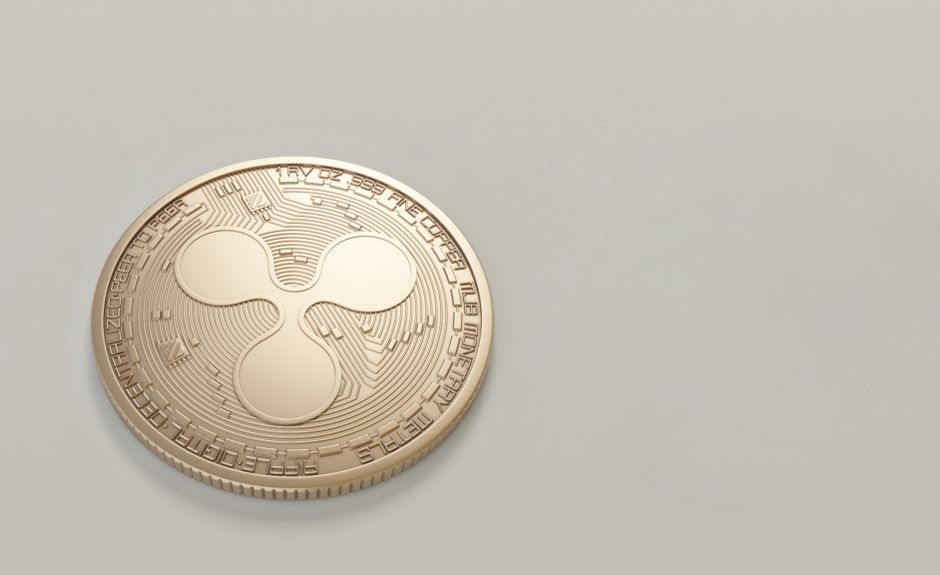
XRP is one of the most misunderstood cryptocurrencies in the market. While Bitcoin is positioned as digital gold and Ethereum as a programmable blockchain platform, XRP was built with a specific, practical purpose: to make cross-border payments faster, cheaper, and more reliable. For business owners who regularly deal with international transactions, supplier payments, or currency conversion, XRP and the network it powers are worth understanding at a serious level.
What Is Ripple and How Does It Relate to XRP?
This is the source of most confusion around XRP, so let’s address it directly. Ripple is a private company, officially known as Ripple Labs, Inc., founded in San Francisco. XRP is a cryptocurrency that exists independently on a public blockchain called the XRP Ledger (XRPL). Ripple the company did not create XRP in the same way Satoshi Nakamoto created Bitcoin. XRP was created in 2011 by three developers: Jed McCaleb, Arthur Britto, and David Schwartz, and the technology was eventually adopted by what became Ripple Labs.
Ripple uses XRP and the XRP Ledger as key components of its payment products, most notably a product called ODL (On-Demand Liquidity), but XRP itself is an open, decentralized asset. It exists on its own regardless of what Ripple the company does. That distinction has been at the center of significant regulatory battles.
A Brief History of XRP
The XRP Ledger launched in 2012. Unlike Bitcoin’s gradual mining process, 100 billion XRP were created at launch. A portion was distributed to founders and early contributors, and a large share was given to Ripple Labs, which has periodically released coins from an escrow arrangement to fund operations and development.
Ripple grew quickly in the financial services industry by marketing a compelling alternative to SWIFT, the decades-old interbank messaging system that facilitates most international wire transfers. Major financial institutions including Santander, American Express, and Standard Chartered have explored or piloted Ripple’s technology.
In December 2020, the SEC filed a lawsuit against Ripple Labs, alleging that XRP was an unregistered security. This lawsuit sent shockwaves through the crypto industry and caused XRP to be delisted from many US exchanges. The case dragged on for years, producing a landmark ruling in 2023 when Judge Analisa Torres found that XRP itself, when sold to retail investors on exchanges, did not constitute a security. Institutional sales were a different matter. The ruling was a significant, if partial, win for Ripple and the broader crypto industry. The case concluded with a settlement in 2024, ending one of the most consequential legal battles in crypto history.
How XRP Works: The Technical Side in Plain English
XRP runs on the XRP Ledger, a decentralized blockchain that operates very differently from both Bitcoin and Ethereum. Understanding how it works helps explain why financial institutions find it compelling.
The Consensus Mechanism
The XRP Ledger does not use proof of work (Bitcoin’s energy-intensive mining) or proof of stake (Ethereum’s validator system). Instead, it uses a consensus protocol called the Federated Byzantine Agreement (FBA). In this system, a network of trusted validators agrees on the state of the ledger. Validators are run by a variety of independent entities: universities, exchanges, financial institutions, and individuals. No single party controls the network, but validators must agree for transactions to be confirmed.
This design makes XRP Ledger extremely fast and efficient. Transactions settle in 3 to 5 seconds. For comparison, Bitcoin takes 10-60 minutes for reliable confirmation, and standard bank wire transfers often take 1-3 business days internationally.
Transaction Costs
Transaction fees on the XRP Ledger are a fraction of a cent. Bitcoin fees can range from a few dollars to tens of dollars depending on network congestion. Ethereum gas fees can spike into the hundreds of dollars during peak periods. XRP’s fee structure makes it genuinely practical for high-volume, small-value payment flows, which is exactly the use case Ripple is targeting.
No Mining: Fixed Supply
Because XRP was pre-mined at launch (all 100 billion created at once), there is no ongoing miner reward. A small amount of XRP is destroyed (burned) with every transaction as the fee, creating a modest deflationary effect over time. Ripple holds approximately 40-50% of total XRP supply in escrow, releasing a capped amount each month.
XRP vs. Bitcoin vs. Ethereum
Each of the three major cryptocurrencies serves a different primary purpose:
- Bitcoin: Store of value and decentralized currency. Slow, energy-intensive, but the most battle-tested and widely held.
- Ethereum: Programmable blockchain for smart contracts and decentralized applications. The foundation of DeFi and NFTs.
- XRP: Payment rails for fast, low-cost currency exchange and cross-border settlement. Built for financial institutions and payment providers.
XRP is not trying to replace Bitcoin or Ethereum. It is solving a different problem: the inefficiency of moving money between banks across borders. The SWIFT system, still widely used today, was designed decades ago and moves money slowly through chains of correspondent banks, each taking a cut. XRP aims to replace the need for pre-funded nostro/vostro accounts that banks maintain around the world, freeing up capital and reducing settlement time.
You can track XRP’s live price and market data on CoinGecko’s XRP page.
What XRP Means for Business Owners
XRP’s most relevant application for business owners is in cross-border payments and international money movement. Here are the areas that matter most:
International Payments and Supplier Transactions
If your business regularly pays overseas suppliers, freelancers, or contractors, the current system is expensive and slow. Wire transfers carry fees on both ends, take days, and often involve unfavorable exchange rates. Ripple’s ODL product, which uses XRP as a bridge currency, can move money across borders in seconds at a fraction of the cost.
In practice, most small businesses access this through payment providers that have integrated Ripple’s technology (like certain remittance services and fintech platforms) rather than directly using XRP themselves. But the underlying technology is what makes those services possible.
Fintech and Banking Partnerships
If you are building a fintech product, a payments app, or a service that involves cross-border money movement, the XRP Ledger is one of the most capable open-source blockchain platforms for that use case. Its low fees, high speed, and growing financial institution adoption make it worth evaluating seriously. Ripple has partnerships with over 300 financial institutions and payment providers across more than 40 countries.
Treasury and Liquidity Management
Some businesses operating across multiple currencies have explored using XRP as a bridge asset to quickly convert between currencies without maintaining pre-funded accounts in each country. This is a sophisticated use case that requires significant operational infrastructure and regulatory compliance expertise. As always, this article is informational only and does not constitute financial advice. Consult a qualified professional before pursuing any treasury strategy involving crypto.
The Regulatory and Legal Landscape
XRP’s legal history is more complicated than most cryptocurrencies. The SEC vs. Ripple lawsuit that ran from 2020 to 2024 created genuine uncertainty about XRP’s status as a security in the United States. The partial win for Ripple in 2023 clarified that exchange-traded XRP does not constitute a security, but the settlement and ongoing regulatory clarity questions mean that US-based businesses should proceed carefully and with legal counsel.
Internationally, XRP is more clearly defined. Japan’s FSA, the UK’s FCA, and regulators in the UAE and Singapore have all treated XRP as a cryptocurrency asset rather than a security. Ripple has expanded significantly in markets outside the US during the regulatory uncertainty period, and that international traction is notable for businesses with global operations.
The Risks Every Business Owner Should Know
No discussion of XRP would be complete without acknowledging the risks that exist alongside the opportunity:
- Centralization concerns: Critics have long argued that Ripple’s control of a large portion of XRP supply creates concentration risk. While the supply is in escrow, Ripple’s ongoing releases create potential selling pressure.
- Regulatory risk: Despite the 2024 settlement, the regulatory environment for crypto, particularly in the US, remains in flux. Rules can change in ways that affect XRP’s usability and legality for certain business purposes.
- Price volatility: Like all cryptocurrencies, XRP’s price can move dramatically in both directions. It is not a stable medium of exchange for most purposes unless you are using it as a bridge asset with near-instant conversion.
- Dependence on institutional adoption: XRP’s value proposition depends heavily on banks and payment providers actually using Ripple’s products. Slower-than-expected institutional adoption could limit the network’s growth.
- Competition: SWIFT has modernized its network with SWIFT gpi. Other crypto projects and CBDCs (central bank digital currencies) are competing for the same cross-border payment use case.
XRP in 2026: Where Things Stand
Post-settlement, Ripple has resumed aggressive growth initiatives in the US market and continued international expansion. The company has been exploring a potential IPO. RippleNet, its payments network, continues to add financial institution partners. The XRP Ledger has expanded its capabilities, including support for decentralized exchange functionality and NFTs.
For business owners, XRP represents one of the more immediately practical applications of cryptocurrency technology. Its speed, low cost, and specific focus on payment efficiency make it relevant in ways that Bitcoin and Ethereum are not for the same use cases. Understanding it positions you well to evaluate payment technology options as the sector evolves.
For deeper context on how digital assets and tokens work generally, see our guide on what a crypto token is. And if you are exploring the broader world of blockchain finance, our explainer on what DeFi is covers the decentralized finance ecosystem that is reshaping financial services.
The Bottom Line
XRP is a cryptocurrency built for speed, efficiency, and cross-border payment utility. Ripple Labs uses XRP and the XRP Ledger to power its payment products for financial institutions, but XRP itself is an independent, publicly traded digital asset. For business owners, the most relevant applications are in international money movement, payment technology infrastructure, and fintech product development.
Before making any business or investment decision involving XRP, consult a qualified financial advisor and a legal professional familiar with cryptocurrency regulation in your jurisdiction. The landscape is still evolving, and what is appropriate for one business may be the wrong fit for another.
Ready to take your business knowledge further? Join Hustler’s Library free and get access to our complete library of guides for serious entrepreneurs.
Related Reading: Small Business Funding Guide
Ready to Know Where You Stand?
The Business Journey dashboard maps your exact position across all 13 stages. Track your progress, unlock resources for each step, and build with a framework used by thousands of founders at Hustler's Library.

No credit card required · Takes 3 minutes · Personalized to your stage