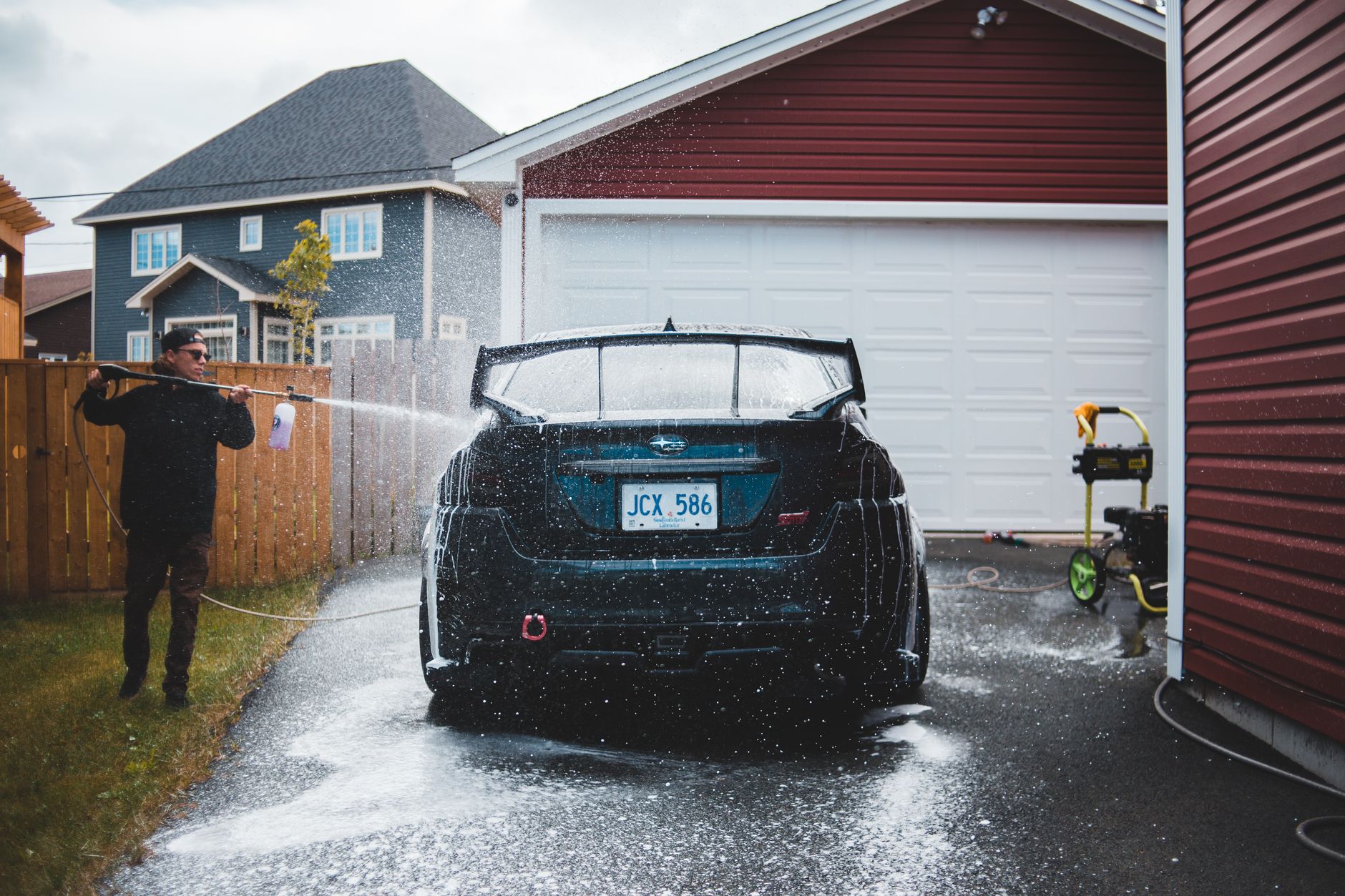
Pressure washing is one of the most accessible outdoor service businesses you can start. The work is visible, the results are immediate, and customers who see a clean driveway or house exterior are often motivated to hire you on the spot. With the right equipment and a basic client acquisition strategy, many new operators make back their startup costs within the first two to three jobs.
This guide covers what equipment to buy, what to charge, how to get licensed, and how to land your first paying clients without spending money on ads you cannot afford yet.
Is There Real Demand for Pressure Washing?
Yes. Homeowners, property managers, restaurants, apartment complexes, and commercial property owners all need exterior cleaning regularly. Driveways, decks, sidewalks, roofs, fences, building facades, and parking lots are all common jobs. The U.S. Bureau of Labor Statistics consistently shows steady demand in the building and grounds cleaning sector, and pressure washing benefits from the fact that results are obvious and immediate, which makes sales straightforward.
Seasonality is real in colder climates. In the South and Southwest, you can work nearly year-round. In the Midwest and Northeast, late spring through early fall is your primary window. Plan accordingly when you forecast startup costs and early income.
What Equipment Do You Actually Need?
Pressure Washer
This is your primary investment. There are two main categories:
- Electric (1,600 to 2,000 PSI): Good for light residential work like fences, cars, and patio furniture. Too underpowered for driveways and house washing at scale. Not recommended if you are building a real business.
- Gas (3,000 to 4,000 PSI): The standard for professional work. Moves more water volume (measured in GPM, gallons per minute) and handles concrete, house siding, and commercial surfaces reliably.
Budget brands like Sun Joe are fine for homeowners. For a business, look at:
- Simpson Cleaning MegaShot (3,400 PSI, 2.5 GPM): Around $350 to $450. Solid entry-level commercial machine.
- Briggs and Stratton 3,100 PSI: Around $400 to $500. Reliable for daily use.
- Mi-T-M or Pressure-Pro (4,000 PSI, 4.0 GPM): $800 to $1,500. Better for high-volume commercial work.
Surface Cleaner
A surface cleaner attachment ($60 to $200) makes flat surface work like driveways and parking lots dramatically faster and streak-free. This is not optional if you are doing driveways. Buy one early.
Hoses, Nozzles, and Accessories
- 50-foot hose extension ($40 to $80)
- Nozzle kit with multiple spray angles ($20 to $40)
- Chemical injector (for applying detergent to house siding) ($20 to $50)
Realistic Startup Equipment Cost
- Bare minimum (residential only): $500 to $700
- Solid starter setup (residential + light commercial): $900 to $1,500
- Full commercial setup with trailer mount: $3,000 to $8,000+
Start with the middle tier. You can add a trailer rig and a hot water unit later once you have cash flow.
Licensing, Insurance, and Business Registration
Licensing requirements for pressure washing are minimal in most states, but you do need to handle a few basics before you take money from clients:
- Business registration: Sole proprietor or LLC. An LLC adds liability protection and looks more professional to commercial clients. Filing costs $50 to $150 in most states.
- General liability insurance: This is non-negotiable. A $1M policy typically costs $40 to $80 per month through providers like NEXT Insurance or Hiscox. Commercial and HOA clients will often require a certificate of insurance before they hire you.
- Business license: Most cities require a general business license ($25 to $75/year). Check your city or county requirements.
- Chemical handling: Some states regulate the disposal of gray water from pressure washing. Know your local rules before you wash near storm drains.
How to Price Pressure Washing Jobs
Pricing in pressure washing comes down to surface area, job complexity, and your local market. Here are common benchmarks:
- Residential driveway (2-car, ~400 sq ft): $100 to $200
- House washing (exterior siding, 1,500 to 2,000 sq ft): $200 to $400
- Deck or patio (200 to 400 sq ft): $100 to $250
- Concrete walkways (per linear foot): $0.20 to $0.40
- Commercial parking lot (per sq ft): $0.04 to $0.10
- Restaurant hood and grease cleaning: $150 to $400 per visit
A typical residential job takes 1 to 2 hours. At $150 per job with 4 jobs per day, that is $600 daily revenue. Many operators work 3 to 4 days per week and earn $1,500 to $2,500 per week in busy season.
Realistic income ranges:
- Part-time (weekends, 2 to 3 jobs/week): $1,200 to $2,500/month
- Full-time solo operator: $4,000 to $8,000/month in busy season
- With 1 to 2 employees and trucks: $15,000 to $40,000+/month
How to Get Your First Pressure Washing Clients
Start With Your Own Block
Seriously. Wash your own driveway first. Then offer to do a neighbor’s driveway for free or at cost. A before-and-after photo from a real job in your neighborhood is worth more than any ad when you are starting out. Post it on Nextdoor and your local Facebook community group with a simple offer.
Door-to-Door and Direct Outreach
Walk neighborhoods and leave door hangers or business cards at homes with visibly dirty driveways, stained siding, or green-tinted concrete. Target homes where it is obvious work is needed. A simple one-sided card with a before/after photo and a phone number is enough. Many operators close 1 job for every 40 to 60 door hangers dropped.
Google Business Profile
Set up a free Google Business Profile the day you launch. Customers searching for “pressure washing near me” need to find you. Add real photos of your work from your first few jobs, collect reviews from every happy customer, and keep your profile updated. Within 60 to 90 days of consistent reviews, you will start getting inbound calls from local search.
Facebook and Nextdoor
Local Facebook groups and Nextdoor are free, targeted, and full of homeowners who post service requests constantly. Join every relevant local group. When someone posts asking for a pressure washer, respond fast. One job in a neighborhood often turns into 3 to 5 as neighbors notice the clean driveway.
Commercial Accounts (The Growth Lever)
Commercial clients like restaurants, apartment complexes, retail strips, and car dealerships need exterior cleaning on a recurring schedule. A single restaurant account paying $250 per visit twice a month is $500 monthly recurring revenue, and one commercial property manager can book multiple locations at once.
Cold call or walk in to local restaurants (especially fast food and drive-throughs with greasy buildup), gas stations, and retail parking lots. Bring a quote and a certificate of insurance. Commercial work takes longer to close but pays better and books more consistently.
Operating Efficiently From Day One
A few operational habits that separate profitable operators from ones who stay stuck at low volume:
- Route your jobs geographically. Driving 45 minutes between jobs kills your effective hourly rate. Book jobs in clusters by neighborhood or zip code.
- Offer package bundles. Driveway plus sidewalk plus steps is a natural upsell. Customers who book a package spend more and need fewer return visits.
- Follow up for recurring contracts. After a driveway job, offer a quarterly or annual maintenance plan. Even if 1 in 10 customers says yes, those recurring clients are your most valuable.
- Track your numbers. Know your average job size, jobs per week, and fuel cost. A simple spreadsheet is fine at first.
If you need help creating estimates, invoices, or a basic website, Fiverr has affordable freelancers who handle exactly this kind of local business setup work.
Before you start taking on commercial clients, it is also worth reading about how to manage client expectations from day one, because a miscommunication on a commercial account can cost you a relationship worth thousands per year.
How Long Until You Are Profitable?
If you start with a $900 to $1,200 equipment investment, you break even after 6 to 10 residential jobs. At 3 jobs per week when you are just starting, that is 2 to 3 weeks to break even. Most operators who commit to active client outreach in week one are profitable within the first month.
This is not a passive income business. It is a physical service business that rewards consistent execution. Show up on time, do thorough work, follow up with every client, and the referrals build themselves.
If you are evaluating multiple service business ideas, check out the full range of side hustle guides on Hustler’s Library to compare what fits your schedule, budget, and local market.
Bottom Line
Pressure washing is one of the most beginner-friendly service businesses available. Low barriers to entry, visible results, repeat-friendly work, and a clear path from solo operator to a crew-based business. The operators who make real money treat it like a business from day one: proper insurance, professional communication, and a system for generating referrals and reviews.
Start small, learn the physical side of the work, build your review count, and stack commercial accounts over time. That is the playbook.
Want more guides like this? Join Hustler’s Library free and get practical business content delivered without the fluff.
Ready to Know Where You Stand?
The Business Journey dashboard maps your exact position across all 13 stages. Track your progress, unlock resources for each step, and build with a framework used by thousands of founders at Hustler's Library.

No credit card required · Takes 3 minutes · Personalized to your stage