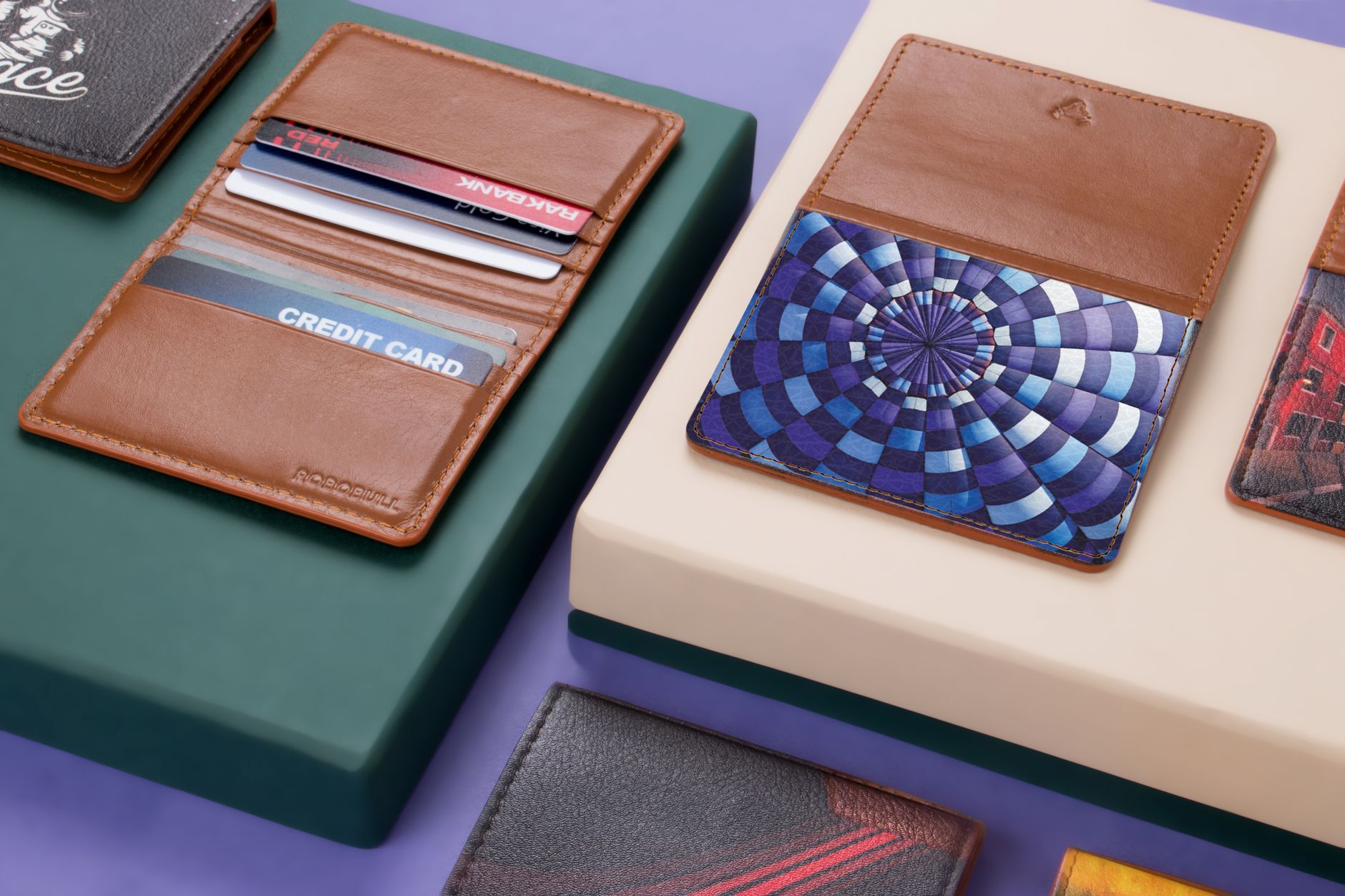
The bifold wallet you’ve been carrying since college is a liability. Not because of what’s in it, but because of what it does to the back pocket of your trousers, how it looks on a restaurant table, and what it says when you pull it out at a client dinner. A thick, worn-out wallet is the equivalent of a creased shirt: technically functional, but not the signal you want to be sending when you’re trying to close business.
Minimalist wallets solve the bulk problem without asking you to sacrifice anything practical. Most people carry fewer than six cards regularly and a small amount of cash. A slim wallet handles this comfortably, sits flat in your pocket, and, at the right price point, becomes a quiet piece of personal branding.
Budget Tier: $30 to $60
At this level, you’re eliminating the bulk problem without spending real money. Both options below are genuinely good products, not gateway drugs to something more expensive.
Bellroy Slim Sleeve
The Bellroy Slim Sleeve (around $50 to $60) is the most popular slim wallet on the market for good reason. Australian-designed and made from vegetable-tanned leather that ages well, it holds six to eight cards in a dual-pocket layout, with a cash band that keeps bills accessible without folding. The profile is about 8mm fully loaded. Bellroy backs it with a three-year warranty. The trade-off: it looks and feels like a quality everyday product, not a statement piece. That’s fine for most situations; problematic at a luxury-tier client dinner.
Ekster Parliament
The Ekster Parliament (around $55 to $79) adds a card ejector mechanism: press a button and your cards fan out for quick selection. It’s a satisfying interaction that some find genuinely useful; others find it gimmicky. The leather quality is decent for the price. RFID blocking is built in. If you hate fishing through wallet slots, the ejector mechanism is worth paying for. If you don’t mind the standard pocket layout, the Bellroy offers better leather for similar money.
Mid-Range: $60 to $120
This tier is where the engineering gets interesting. You start to see materials and mechanisms that justify the price.
Ridge Wallet
The Ridge Wallet (aluminum version around $95, carbon fiber around $125) is two plates held together by a money clip and an elastic band, holding up to twelve cards. That’s it. The simplicity is the point. It’s essentially indestructible, RFID-blocking, and completely flat. Pull it out and it reads as intentional and a little technical, the kind of thing someone who thinks about their tools would carry. The downside is ergonomic: some people find the hard corners uncomfortable in a front pocket, and the card access requires some deliberate retrieval. For front-pocket carry especially, this is the benchmark at its price point.
Bellroy Hide & Seek
The Bellroy Hide & Seek (around $80 to $95) is Bellroy’s answer to the question: what if you want a slim wallet but occasionally need to carry more? It has a hidden section that expands when needed and a compact form when carrying just the essentials. The leather quality is a step above the Slim Sleeve. If you’re not ready to go full metal wallet but want something with more presence than budget options, this bridges the gap well.
Premium: $120 to $300+
At this tier, the wallet becomes an artifact. The leather is typically full-grain or exotic, the construction is handmade or closely supervised, and the product is designed to last fifteen or twenty years. More importantly, at a client dinner when you put this on the table to pay, someone notices.
Ettinger
The Ettinger slim billfold (around $150 to $200) is made in England and has been since 1934. Bridle leather, British craftsmanship, understated design. This is the wallet equivalent of a bench-made shoe: if you know, you know; if you don’t, it still looks quietly expensive. The color-matched interior lining is a signature detail. For entrepreneurs who deal in British or European business contexts, Ettinger carries real cultural weight.
Smythson
Smythson of Bond Street is one of the oldest luxury stationery and leather goods houses in the world. Their slim card cases and wallets run $150 to $350 depending on configuration. Nile Blue suede lining is a Smythson signature. These aren’t purchased for function; they’re purchased because they represent a certain kind of achievement. If you’re regularly meeting clients who have Hermès card cases or Cartier accessories, this is where you compete on their level without being theatrical about it.
Tumi Nassau
The Tumi Nassau series (around $125 to $175) offers the brand recognition of Tumi at a more accessible price than the leather goods tier above. Full-grain leather, RFID blocking, and Tumi’s solid construction. Less heritage than Ettinger or Smythson, but more recognizable in American business contexts. This is a solid choice if you want a premium-looking wallet without the British craft goods positioning.
What Your Wallet Says at a Client Dinner
Consider the moment: you’ve just closed a dinner with a potential client or investor. The check arrives. You reach for your wallet. If you pull out a fat, card-bursting bifold, you’ve slightly undermined every other signal you’ve been sending all evening. If you pull out a clean aluminum Ridge or a slim Ettinger billfold, the message is consistent with someone who runs their life with intention.
None of this is about wealth-signaling for its own sake. It’s about consistency. Entrepreneurs who are meticulous about their tools, their preparation, their follow-through; those are the ones clients trust with real money. Your wallet is one small data point in that picture. According to the Harvard Business Review, first impressions and physical cues form quickly and are hard to reverse. Small details compound.
For more on professional presence and building a business that commands premium rates, read our piece on how to use niche expertise to attract better clients and charge more. And if you’re building your business infrastructure from the ground up, our rundown of AI tools turning one-person shops into real businesses is worth your time.
Summary: Start with the Bellroy Slim Sleeve or Ridge if you’re solving a bulk problem on a budget. Move to the Bellroy Hide & Seek or Ridge carbon fiber for a step up in feel and materials. Reach for Ettinger, Smythson, or Tumi Nassau when the context calls for something that signals at the level of your ambitions.
Want more resources for building a serious business? Join the community at Hustler’s Library (free access here).
Ready to Know Where You Stand?
The Business Journey dashboard maps your exact position across all 13 stages. Track your progress, unlock resources for each step, and build with a framework used by thousands of founders at Hustler's Library.

No credit card required · Takes 3 minutes · Personalized to your stage