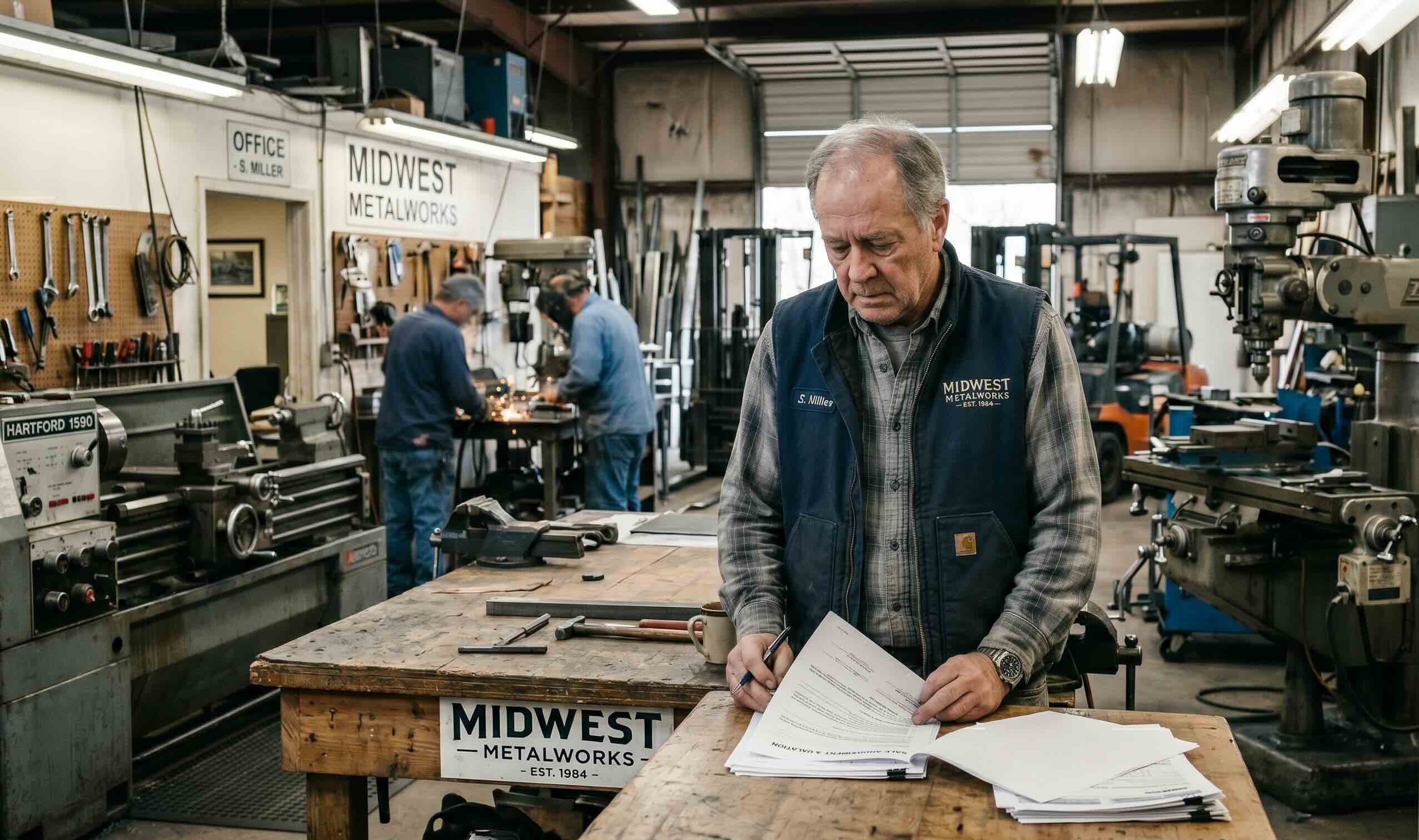
By 2035, roughly six million American small businesses will need new owners. Their current owners — Baby Boomers who built them over decades — are heading into retirement. Most of those businesses don’t have a family member lined up to take over. And a significant chunk of them will simply close.
That’s not a business obituary. That’s the single largest ownership transfer in American economic history, and it’s already underway.
What Changed
On October 29, 2026, Congressman Roger Williams (R-TX), Chairman of the House Committee on Small Business, published an op-ed laying out the numbers behind what analysts are calling the “silver tsunami.” The data draws on McKinsey Institute for Economic Mobility research showing that boomer-owned businesses employ roughly one in six American workers, and a Project Equity study documenting 2.3 million privately-held small businesses at risk of closure or consolidation over the next decade.
That Project Equity data goes deeper: those 2.3 million businesses collectively employ 24.7 million people, generate $5.1 trillion in annual sales, and carry $949 billion in payroll. The SBA’s own District Director, Mark Quinn, called it plainly: employee ownership “is one of the best ways to keep thriving businesses locally rooted into the next generation.”
Williams’ op-ed wasn’t just a warning. It came with a policy announcement: the House has passed two bills specifically designed to make business acquisition easier for the next generation. The Made in America Manufacturing Finance Act and the Main Street Parity Act are both designed to expand financing access for buyers who want to take over established businesses. Combined with the Working Families Tax Cuts — which permanently raised the estate tax exemption to $15 million per individual — the legislative landscape for small business transfer is shifting fast.
By the Numbers
- 6 million small businesses expected to change ownership by 2035 (McKinsey Institute for Economic Mobility)
- 2.3 million privately-held businesses currently owned by aging boomers preparing to retire (Project Equity)
- 1 in 6 American workers employed by boomer-owned businesses (Project Equity / SBA)
- Less than 15% of small businesses are passed down within the family (Project Equity)
- 40% of small business owners plan to retire within the next decade; 70% have little or no formal succession plan (Chase survey, 2026)
- 1 in 3 business owners over age 50 reports having a hard time finding a buyer (Project Equity)
- More than a third of Gen Z and millennial business owners say they plan to buy a business from a retiring owner (U.S. Bank survey)
The Hustler’s Library Take
Here’s the angle nobody’s writing: this isn’t a crisis for entrepreneurs — it’s the best acquisition market in a generation, and most people chasing “startup culture” are completely ignoring it.
Building from zero is hard. Building from an established customer base, proven operations, and existing revenue is a different game entirely. Acquiring a business that a retiring owner can’t sell isn’t just cheaper than starting one — it comes with something no startup pitch deck can fake: a track record.
The problem isn’t opportunity. The problem is that most aspiring business owners are so conditioned to think “start a company” that they’ve never seriously evaluated “buy a company.” Lucas Philips tripled the revenue of a business he acquired with SBA debt to $3M. He didn’t invent anything. He bought something real, then ran it better.
The McKinsey data makes the other thing clear: states like Texas are disproportionately exposed, but this is a nationwide phenomenon spread across every industry. Restaurants, service businesses, manufacturing operations, trade shops — the retirement wave doesn’t care about sector. And the financing tools to execute on it are becoming more accessible, not less.
If 70% of retiring owners have no formal succession plan, that means 70% of them are negotiating from a position of uncertainty. That’s not a red flag for buyers — it’s leverage.
What You Should Do
1. Get on BizBuySell, Acquire.com, and your local SBA office now. The best acquisition opportunities aren’t going to be loud. They’ll be a business owner in your zip code who’s exhausted, has no heir, and just wants to retire with dignity. The SBA 7(a) loan program was built for exactly this moment — and with the Main Street Parity Act expanding eligibility, the window is only getting wider.
2. Run the succession math on YOUR business today. The 70% without a plan isn’t just a stat about other people’s businesses. With small business bankruptcy filings already up 36% in 2026, the businesses most at risk of closing in retirement aren’t the ones with no customers — they’re the ones with no plan. If you don’t know what your business is worth and who could run it after you, you don’t have a business; you have a job you can’t quit.
3. If you’re Gen Z or millennial, skip the startup deck. More than a third of your generation already says they’re open to buying from a retiring owner. The ones who actually do it will inherit decades of brand equity, loyal customers, and operational infrastructure that no VC-backed competitor can build overnight. Deals are being structured right now in every city in the country — and the best ones go to buyers who show up informed and ready.
4. Understand the estate tax change. The $15 million individual estate tax exemption means family businesses that want to stay in the family have less pressure than before to sell. That’s good news if you’re the family. But it also means the best-run family businesses are more likely to stay off the market — pushing buyers toward the messier, underplanned transitions where the real deals live. Small business confidence is still high in 2026 — retiring owners are not distressed sellers. But they are motivated ones.
Sources: House Committee on Small Business (October 30, 2026) | Project Equity Research | SBA 7(a) Loan Program
Want more analysis like this in your inbox every morning? Join Hustler’s Library free and we’ll send it to you.
Ready to Know Where You Stand?
The Business Journey dashboard maps your exact position across all 13 stages. Track your progress, unlock resources for each step, and build with a framework used by thousands of founders at Hustler's Library.

No credit card required · Takes 3 minutes · Personalized to your stage