
In November 2023, a husband-wife team from Utah loaded up their baby carrier brand’s website for a preorder drop and watched something most founders only dream about: $500,000 in revenue in under one minute. Orders poured in so fast the site could barely keep up.
That brand was Mabē (pronounced “maybe”), and the founders behind it are Allie and Hunter Taylor. They didn’t pitch investors. They didn’t raise a Series A. They funded their first product order out of personal savings, went through months of prototype iterations, and launched a $129 baby carrier they believed the market had left behind.
They were right.
What This Actually Means
The baby carrier market has been dominated by utilitarian gear brands for decades: ergonomic straps, ISO certifications, bullet-pointed feature lists. Mabē stepped sideways from all of it.
Allie didn’t build a baby product. She built a confidence product for new mothers who were being told, explicitly or implicitly, that their identity ended when motherhood began. The Monarch Carrier looks like a fashion accessory. It’s priced within reach ($129). And the brand voice talks directly to the woman, not the baby she’s carrying.
That distinction matters enormously. What your brand communicates determines who shows up to buy it. Most founders get this backward: they lead with specs, then hope the right customer materializes. Allie led with identity and emotion, then let the product earn its place in that story.
The contrarian read here is that the $500K-in-a-minute moment wasn’t luck. It was the payoff from building an email list and Instagram following before the product even existed. Mabē had warm buyers ready to spend before checkout went live. That’s a launch strategy, not a viral accident.
The Numbers Behind It
According to Entrepreneur, Mabē launched in November 2023 after just eight months from idea to market. The brand was conceived in March 2023 when Hunter, after hearing Allie describe the gap in fashionable, affordable baby carriers, went looking for it himself and found nothing that hit all three marks: price, aesthetics, and messaging.
The Taylors funded the brand on hundreds of thousands in personal savings rather than seeking outside capital. Their flagship product, the Monarch Carrier, retails at $129. One early preorder sold thousands of units in under 60 seconds, clearing $500,000 before most founders have sent their first sales email.
The baby carrier market sits inside the broader $88 billion global baby products industry. The Taylors didn’t need a big slice. They needed a specific customer to feel deeply seen, and they built the entire brand around that one insight.
This lines up with what the 2026 business formation data keeps showing: the founders breaking through aren’t necessarily the ones with the most funding. They’re the ones who identified a customer whose frustration was real and specific, and built something that matched it exactly.
The Hustler’s Library Take
Here’s the uncomfortable thing about the Mabē story: it exposes how many founders use “market research” as a proxy for actual conviction. Hunter knew there was a gap not because he ran a survey. He knew because the woman he’d been in love with since fourth grade told him something real was missing, and he believed her.
That’s a different category of market intelligence than spreadsheets give you. It’s the kind that makes you say “we’re the right people to do this” and mean it. That conviction drove them to reject early prototypes that weren’t good enough, iterate through months of sampling, and show up to the launch with a product they could actually stand behind.
The difference between a $200K business and a $2M one usually isn’t the product. It’s whether the founders actually believe in what they’re building enough to hold the line on quality and positioning when it gets hard. The Taylors ran months of sampling, rejected bad versions, and refused to launch until they had something they were proud of. That stubbornness is a feature.
Also worth noting: Allie built the audience before she needed it. She ran the Instagram account and email list herself, acting “like a big brand” from day one even when it was just her behind a phone. That’s the kind of consistency that makes a $500K launch minute possible. You’re not building a following at launch. You’re activating one you already have.
What You Should Do
Run the “right people” test before you build. Hunter says the moment he saw the gap, he felt “convicted that we were the right people to do this.” Before you spend another dollar on development, write down specifically why you and your co-founder (or you alone) are uniquely positioned to solve this problem. If you can’t articulate it in two sentences, you don’t have conviction — you have a business idea. Those are different things.
Launch with a warm audience, not a cold market. Mabē sold $500K in under a minute because Allie spent months building relationships with potential buyers before asking for a dollar. Before your next launch, product drop, or service push, spend 60 days publishing content that speaks directly to your target customer’s identity and frustrations. No pitch. Just connection. Then launch into that list.
Make the brand message about the buyer’s life, not your product’s features. Allie framed Mabē around a woman being able to “keep chasing your dreams with your hands free.” Not “ergonomic lumbar support.” Every product in every category can be repositioned this way. What does your customer get to become, do, or feel when they use what you sell? Lead with that. The specs are secondary.
Read the full story at Entrepreneur. For more data on how bootstrapped founders are reshaping the market, see the SBA’s guide to launching a product business.
Want more founder playbooks like this delivered weekly? Join Hustler’s Library for free and get the strategies behind the businesses actually worth studying.
Ready to Know Where You Stand?
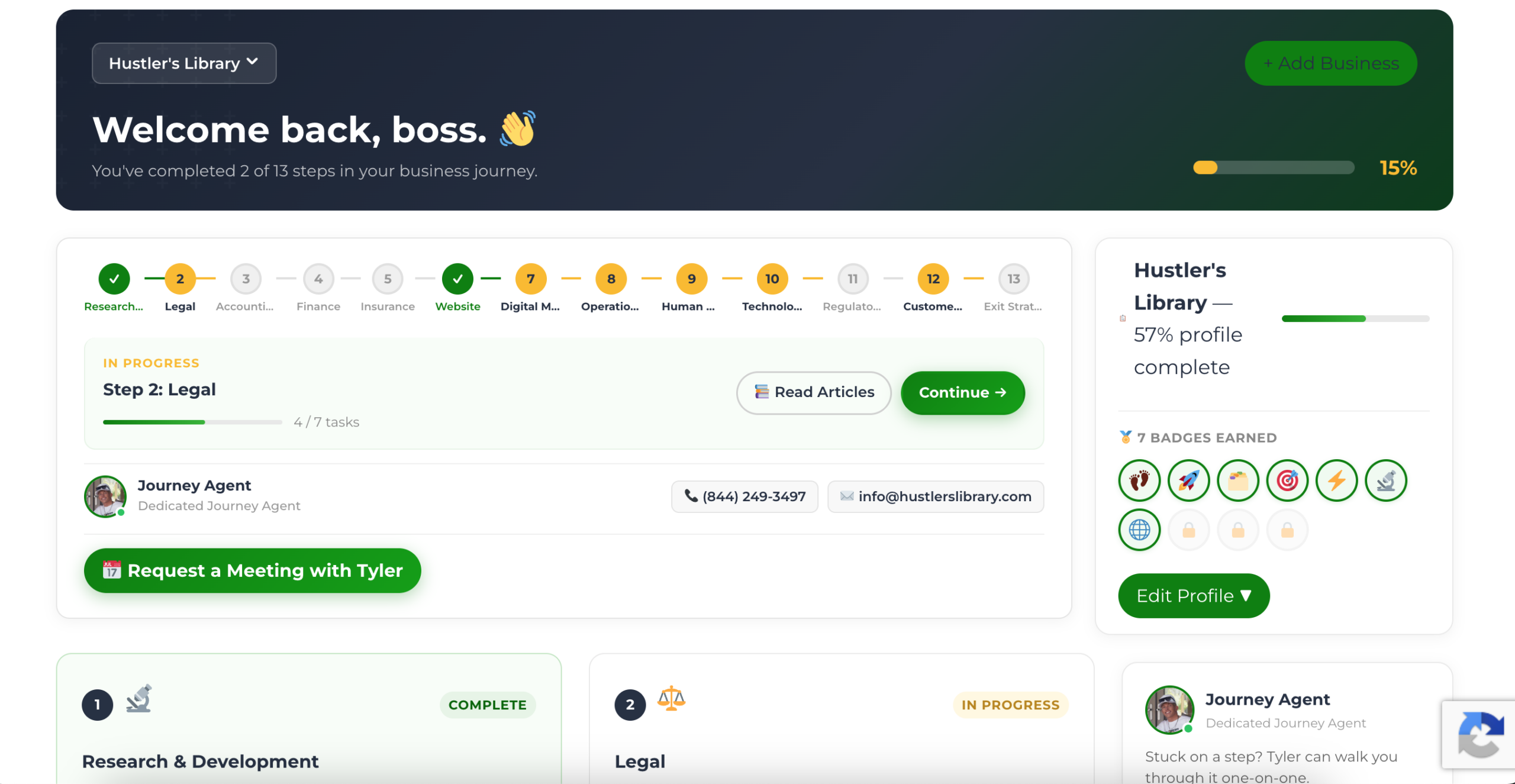
The Business Journey dashboard maps your exact position across all 13 stages. Track your progress, unlock resources for each step, and build with a framework used by thousands of founders at Hustler's Library.
No credit card required · Takes 3 minutes · Personalized to your stage