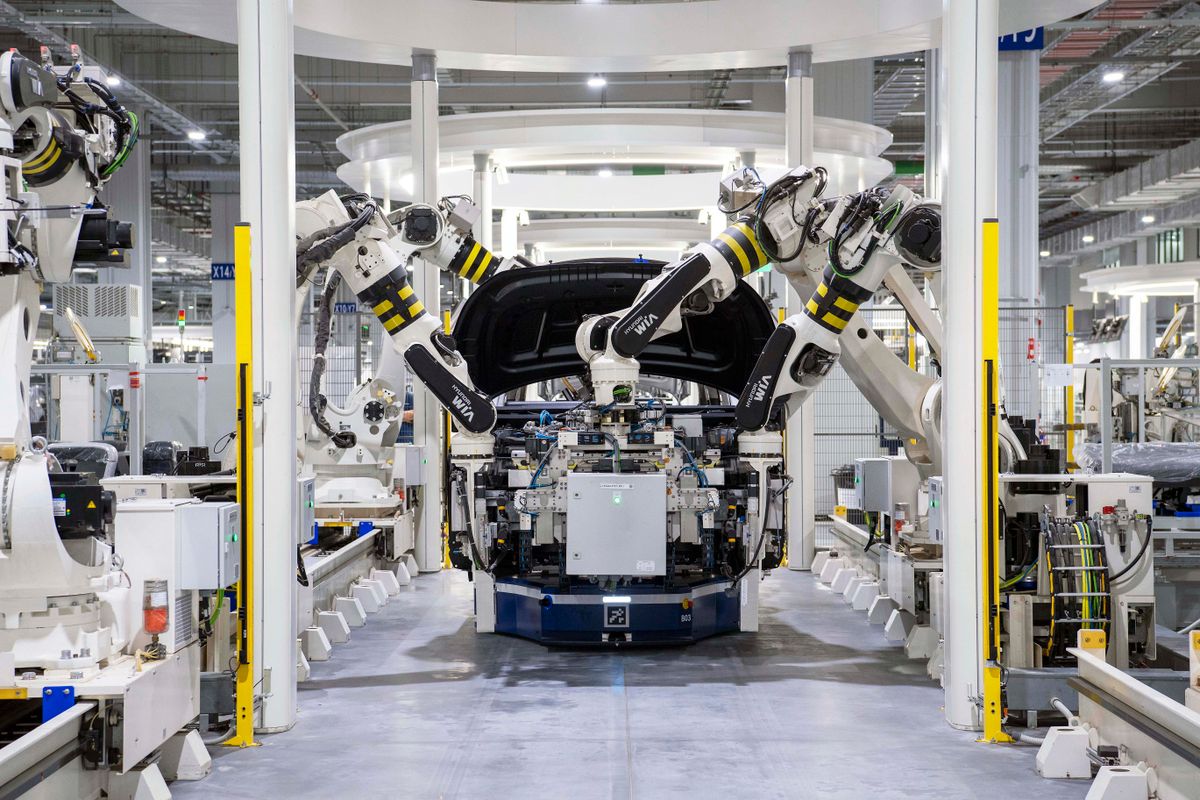
On October 27, 2026, Re:Build Manufacturing — a Boston-based advanced manufacturing platform — announced it had secured $2.1 billion in new funding, led by General Catalyst and JPMorganChase’s Strategic Investment Group. The company has now raised more than $4 billion total since its 2020 founding, and it is not building software. It is building factories.
The raise is notable not just for its size, but for its intent. Re:Build’s model is to partner with industrial companies from the design stage all the way through scaled manufacturing — keeping production on U.S. soil, across aerospace and defense, electrification, medical devices, energy, and robotics. The company currently employs more than 2,100 people and operates more than 2.4 million square feet of manufacturing capacity in the United States.
The Real Story Here
Most billion-dollar raises generate noise and not much else for small business owners. This one is different.
Re:Build isn’t just raising money — it’s building a manufacturing ecosystem that creates demand for suppliers, contractors, and specialized service providers. Co-Founder and CEO Miles Arnone put it plainly in the company’s press release: “By the time production starts, we’ve built a true partnership with our customers.” That partnership model — where manufacturing expertise enters the product design process early — is also a procurement model. Re:Build needs vendors, component makers, logistics partners, and specialized subcontractors to actually deliver.
General Catalyst CEO Hemant Taneja framed the investment in geopolitical terms: “To compete with China, re-industrialize the U.S., and revitalize the towns and jobs that have been left behind, we need platform companies that can operate at genuine scale.” JPMorganChase’s Todd Combs noted the round fits within their Security and Resiliency Initiative — which is essentially a strategic bet that American production capacity is a national asset worth funding.
What that means in practice: capital is flowing toward the infrastructure that makes U.S.-based manufacturing viable again. The companies that get positioned inside that supply chain — even at the small business level — are the ones that win as the trend builds.
By the Numbers
- $2.1 billion raised in this single round, the largest U.S. manufacturing platform raise in recent history
- $4 billion+ total raised by Re:Build since founding in 2020
- 2,100+ employees currently working across Re:Build’s U.S. operations
- 2.4 million square feet of advanced manufacturing capacity in the United States
- Sectors covered: aerospace and defense, electrification, medical devices, energy and environment, robotics and automation
- Per Re:Build’s press release, the company plans to “create tens of thousands of U.S.-based jobs through reindustrialization in the next decade”
For broader context: the U.S. Census Bureau’s Business Formation Statistics show business application filings remain near record highs, with manufacturing-related applications among the fastest-growing categories. The money flowing into Re:Build reflects investor conviction that those new manufacturing businesses need a platform to actually operate at scale.
The Hustler’s Library Take
Here’s what the coverage is missing: this isn’t a manufacturing story. It’s a B2B sales opportunity story for every small business in the industrial supply chain.
Re:Build’s model requires an ecosystem. When a platform company raises $2.1 billion and announces it will scale “across several industries,” that company is about to write a lot of purchase orders. The companies positioned to receive those orders aren’t the ones that find out about it in six months — they’re the ones already building relationships with procurement teams, attending the right industry conferences, and making sure their capabilities are visible to platform operators like Re:Build.
The reindustrialization trend is real. We’ve covered how record startup investment figures can be misleading — but this isn’t a software venture bet. It’s a physical infrastructure play backed by JPMorganChase’s Security and Resiliency Initiative. That kind of institutional conviction is sticky, not cyclical. And for small businesses in advanced manufacturing, logistics, specialized components, or industrial services, it represents a once-in-a-generation procurement wave.
The risk: companies that wait to see where Re:Build’s facilities land before reaching out will be too late. The vendor relationships are being formed now, at the design stage. That’s intentional — it’s built into Re:Build’s Manufacturing Constrained Design methodology.
What You Should Do
1. Audit your capabilities against Re:Build’s sector priorities. If your business touches aerospace, defense, electrification, medical devices, or industrial automation in any capacity — components, tooling, coatings, logistics, engineering services — you have a potential fit. Map your capabilities explicitly to their announced verticals and update your company pitch accordingly. Defining your lane clearly is how you get considered.
2. Get in front of procurement before the expansion wave hits. Re:Build just announced plans to scale significantly. That means procurement teams are being built or expanded right now. Reach out through LinkedIn, industry associations (NTMA, AMT, SME), and regional manufacturing networks before the formal RFPs go out. The companies that win supplier contracts with platform manufacturers almost never find out about them through public postings — they’re already in conversations.
3. Use this raise as a case study to pressure-test your own growth assumptions. Re:Build’s model — entering the design process early, building deep customer partnerships before production begins — is a playbook that works at any scale. Before your next growth push, ask: are you involved at the design stage, or are you competing on price at the commodity end? There’s a big difference in margin.
The reindustrialization of America is no longer a political talking point. It’s a $4 billion capital position with JPMorganChase backing. That’s worth paying attention to — and acting on.
Source: Re:Build Manufacturing press release, October 27, 2026
Want more insights like this in your inbox every morning? Join Hustler’s Library free and stay ahead of the business stories that actually matter.
Ready to Know Where You Stand?
The Business Journey dashboard maps your exact position across all 13 stages. Track your progress, unlock resources for each step, and build with a framework used by thousands of founders at Hustler's Library.

No credit card required · Takes 3 minutes · Personalized to your stage